
As domestic M&A activity stalls, a new pathway to liquidity is emerging for prepared British businesses
For UK business owners planning an exit, 2025 has brought an uncomfortable reality: the domestic M&A market has fundamentally shifted. Deal volumes are down, buyer appetite is cautious, and valuations have compressed across nearly every sector. What once seemed like a straightforward path to liquidity, building a solid business and finding a UK buyer, now requires founders to look beyond Britain’s borders.
The challenge isn’t the quality of UK businesses. British entrepreneurs continue to build exceptional companies across multiple sectors. The problem is access to buyers willing to pay fair valuations in an uncertain economic climate.
“We’re seeing a pattern where UK founders have built genuinely exit-ready businesses, but they’re struggling to generate competitive tension in the market,” explains Rachel Murphy, CEO of growth, scaling and exit prep consultancy The Grafter. “With fewer active UK buyers and private equity firms taking a more selective approach, founders are leaving significant value on the table—or waiting indefinitely for market conditions to improve.”
The US Opportunity
While UK deal activity has cooled, the American M&A market tells a different story. US strategic buyers and private equity firms continue to pursue acquisitions aggressively, particularly for businesses that demonstrate scalable models, recurring revenue, and defensible market positions—exactly the characteristics many UK companies possess.
The opportunity is substantial, but access isn’t straightforward. US buyers operate with different due diligence standards, expect different financial reporting structures, and evaluate businesses through a growth lens that doesn’t always align with how UK founders position their companies.
“American buyers aren’t looking for perfectly polished corporates,” Murphy notes. “But they do expect clean financials, documented processes, and a clear growth narrative. The gap isn’t insurmountable, it’s just that most UK founders don’t realise they need to translate their business into language that resonates with US buyers.”
What Preparation Actually Looks Like
Through The Grafter’s work with 50 UK businesses, typically generating £3-30 million in revenue or having raised Series A funding, several patterns have emerged around what separates companies that successfully access US buyers from those that don’t:
Financial reporting standards matter more than founders expect. While UK businesses might operate with straightforward P&Ls and tax-optimised structures, US buyers want normalised EBITDA, clear working capital positions, and multi-year comparative data presented in formats they recognise.
Customer concentration that seems acceptable in UK deals, perhaps 30-40% revenue from a top client, raises immediate red flags for American buyers accustomed to more distributed revenue models.
Owner dependency must be systematically addressed. US buyers are purchasing businesses, not buying themselves a demanding job. If the founder is still the primary salesperson, key relationship holder, or operational linchpin, the business isn’t ready for a serious US buyer conversation.
“These aren’t cosmetic fixes,” Murphy emphasises. “They’re fundamental business improvements that happen to make companies more attractive to buyers. The Grafter’s methodology works because we’re asking founders to build genuinely better businesses, not just create the illusion of one for a data room.”
Bridging the Atlantic
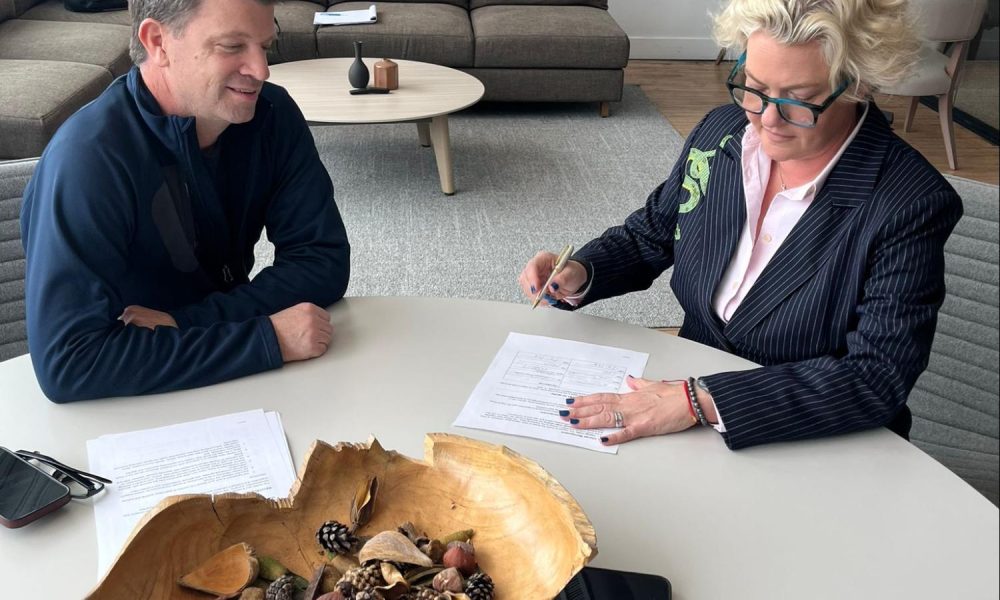
Recognising both the opportunity and the preparation gap, The Grafter has formed a strategic partnership with Detroit-based Exitwise LLC to create a structured pathway from exit preparation to US market access.
Exitwise, founded by serial entrepreneurs Todd Sullivan and Brian Dukes, operates a curated network of US investment bankers and a marketplace of exited founders who provide M&A mentorship. The firm specialises in matching prepared businesses with industry-specific advisory teams and buyer networks.
“We’ve seen firsthand how UK companies can achieve exceptional outcomes when positioned correctly for US buyers,” says Sullivan. “The challenge isn’t quality, it’s about meeting the due diligence standards and growth narratives that resonate with American strategic buyers and private equity firms.”
The partnership works sequentially: The Grafter’s team of “Exiteers” all multi exited founders themselves, work with UK clients through their proprietary “Grow Raise Exit” methodology to address the operational, financial, and strategic gaps that typically cause deals to fail. Once businesses meet the preparation threshold, Exitwise facilitates introductions to US investment bankers who specialise in the relevant sector and deal size.
“Both teams are built by founders who’ve been through exits ourselves,” explains Dukes. “We understand the emotional journey, not just the transaction mechanics. For UK founders, there’s an additional layer of complexity in positioning for US buyers, but that’s exactly where The Grafter excels, getting businesses truly ready for sale to the standards American buyers expect.”
Market Timing
The partnership launches at a strategic inflection point. While UK founders face headwinds from economic uncertainty and compressed domestic valuations, US markets continue to demonstrate appetite for well-run, scalable businesses across a range of industries.
For entrepreneurs who have spent years building their businesses, the partnership offers a route to liquidity that doesn’t depend solely on domestic market conditions improving. The approach isn’t about abandoning UK buyers, it’s about ensuring founders have genuine optionality when the time comes to exit.
“Most founders spend years building their businesses but only weeks preparing to sell them,” Murphy observes. “We built The Grafter because we’ve lived through exits ourselves. We know exactly where founders get stuck and what buyers actually look for. This partnership means UK founders don’t have to limit themselves to domestic opportunities when there’s a much larger market actively looking for well-run, scalable businesses.”
The Practical Implications
For UK business owners considering an exit in the next 24-36 months, the message is clear: preparation timelines need to extend, and thinking needs to expand beyond domestic buyers.
The businesses that will command premium valuations, whether from UK or US buyers, are those that have systematically addressed the fundamentals: clean financials, distributed customer bases, documented processes, and leadership teams that can operate without the founder in every decision.
The difference now is that exceptional preparation doesn’t just improve chances in a challenging UK market. It opens access to an entirely different buyer pool with deeper pockets and different competitive dynamics.
As Murphy puts it: “The founders who win in this environment are the ones who refuse to be constrained by local market conditions. They’re building businesses that deserve international attention, and now they have a practical pathway to get it.”



 Bitcoin
  Ethereum
  Tether
  BNB
BNB  USDC
USDC  XRP
XRP  Solana
  TRON
TRON  Lido Staked Ether
  Cardano
  Gram (prev. Toncoin)
  Avalanche