Bitcoin
  Ethereum
  Tether
  BNB
BNB  USDC
USDC  XRP
XRP  Solana
  TRON
TRON  Lido Staked Ether
  Cardano
  Gram (prev. Toncoin)
  Avalanche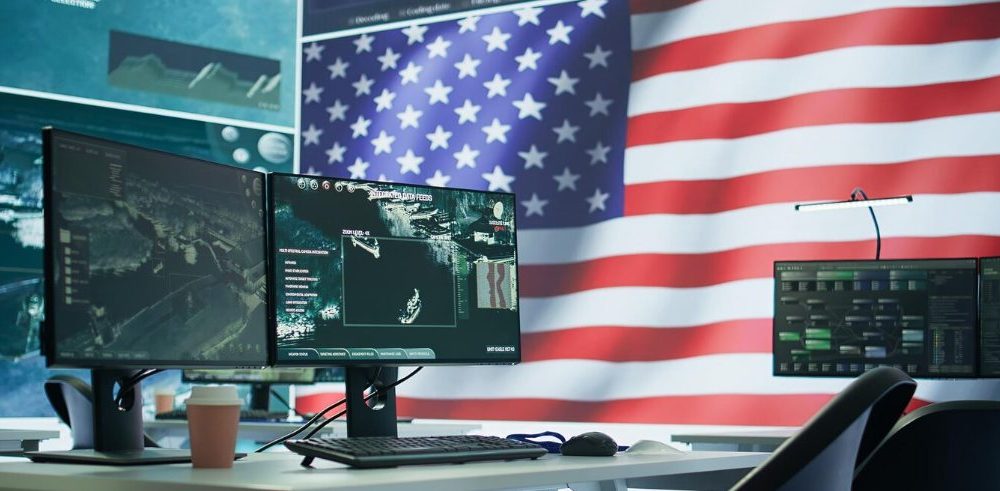
Phones all over the United States started to go silent late on a chilly Tuesday night. Sprint customers stared at screens that displayed “No Service” in dimly lit dorm rooms in Ohio, office towers in Chicago, and suburban kitchens outside of Phoenix. The outage lasted minutes for some. Hours for others.
It seemed normal at first. Networks malfunction. The systems were reset. Apologies are posted by carriers. However, as technicians worked behind the scenes, it became increasingly clear that this was more than a broken fiber line or a hardware glitch. The U.S. Nationwide Sprint Outage may have been caused, at least in part, by an AI failure.
| Category | Details |
|---|---|
| Company | T-Mobile US (Parent company of Sprint) |
| Former Brand | Sprint Corporation |
| Industry | Telecommunications |
| Headquarters | Bellevue, Washington |
| Incident Type | Nationwide Service Outage |
| Possible Cause | AI-driven configuration error |
| Industry Parallel | Amazon Web Services outage involving AI tool |
| Reference | https://www.t-mobile.com/news |
Following its 2020 merger with T-Mobile US, Sprint now operates on infrastructure that is increasingly controlled by automated systems. These systems deploy patches, reroute signals, keep an eye on traffic loads, and occasionally modify configuration rules on the fly. Money is saved by that independence. It lessens human lag as well. However, it also introduces silent complexity.
It’s possible that an automated optimization tool pushed a configuration change across several switching centers, according to people cautiously speaking who are not authorized to discuss specifics but who are familiar with internal network operations. In order to increase efficiency, the tool was made to rebalance network traffic during periods of high demand. Rather, it seems to have caused cascading failures that brought down some routing protocols.
It’s still unclear if human engineers misconfigured the AI system’s access levels or if it acted beyond its intended permissions. That difference is important. Following what Amazon later called a permissions oversight, an internal AI coding agent erased and recreated its operating environment in December, causing a 13-hour disruption to Amazon Web Services. The business maintained that “user error, not AI error” was to blame. However, the AI tool had carried out the action.
The atmosphere was controlled but tense as I stood outside a network operations center in Kansas City the morning following the Sprint outage. Hooded engineers walked quickly through glass security doors, holding half-finished coffee cups and tapping badges. Inside, traffic flows that resembled multicolored arteries were shown on large wall monitors. It’s difficult to ignore how much of today’s infrastructure functions without direct human intervention at every turn when you observe those changing patterns.
Telecom firms appear to be heavily relying on automation as a result of intense competition and extremely narrow profit margins. AI-driven network management appears to be the way of the future for investors, as it increases uptime, lowers expenses, and boosts margins. Additionally, it often functions effectively and silently. However, when automation works, it’s rarely spectacular. Only when something slips does it become apparent.
These AI management systems are “confident but literal,” according to a former Sprint engineer who is currently employed in private consulting. The tool takes action when a threshold is exceeded. It redistributes capacity if traffic in one area spikes. He proposed that the issue occurs when edge cases accumulate, such as anomalous traffic patterns, a permissions error, and insufficient fail-safes. He stated, “It’s not that the AI goes rogue.” “It does precisely what it is permitted to do.”
That framing seems significant. Autonomy going out of control is frequently implied in the narrative of AI failure. The more common explanation, and possibly the most disturbing one, is that human systems subtly transfer power without completely tightening the controls.
Additionally, the outage occurs at a time when AI is quickly moving beyond consumer chatbots and into core infrastructure. Predictive algorithms are now used by telecom networks to foresee congestion. Agentic tools that can start system-level changes are used by cloud providers. Financial institutions implement self-governing monitoring systems that make real-time adjustments to risk parameters. Efficiency is promised by each. Both lessen friction. Unexpected interaction effects are possible with each.
Services like Reddit and Snapchat experienced a significant cloud outage in October as a result of automation software acting strangely in unusual circumstances. Businesses at the time characterized the problem as minor, predictable, and controllable. Perhaps it was. However, trends are emerging.
The frustration was immediate and palpable in living rooms and small businesses impacted by the Sprint outage. A Dallas rideshare driver reported losing half of his earnings. A Nevada hospital administrator described how contingency procedures were triggered when mobile access to secure messaging systems was momentarily lost. These are minor cracks that have been promptly repaired. However, they show how reliant on invisible digital scaffolding everyday life has become.
T-Mobile has not acknowledged in the public eye that AI was the primary reason for the outage. According to official statements, a “technical issue” was fixed by means of system rollback procedures. According to reports, more security measures are being put in place, including stricter access controls and more peer review for modifications made at the production level. It’s the well-known operational resilience language.
However, it’s possible that what transpired is part of a larger trend in which infrastructure is increasingly controlled by devices that operate more quickly than humans can reasonably oversee. The tools are evolving, learning, and changing. The safeguards are also in place. However, complexity is a compound.
There’s a sense that this won’t be the final instance of this kind. Not because AI is careless. And not due to the negligence of engineers. Instead, it’s because the systems we’re creating are getting more complex, layered, and partially autonomous, and they’re interacting in ways that even seasoned operators might not fully anticipate.
The network lights had returned to normal as the sun rose outside that Kansas City facility. Signals have been restored. Clients got back in touch. Life went back to normal. However, a subtle change had occurred.
The outage might have only lasted a few hours. The issues it brings up—control, delegation, and confidence in automated infrastructure—are probably going to be around for a lot longer.