
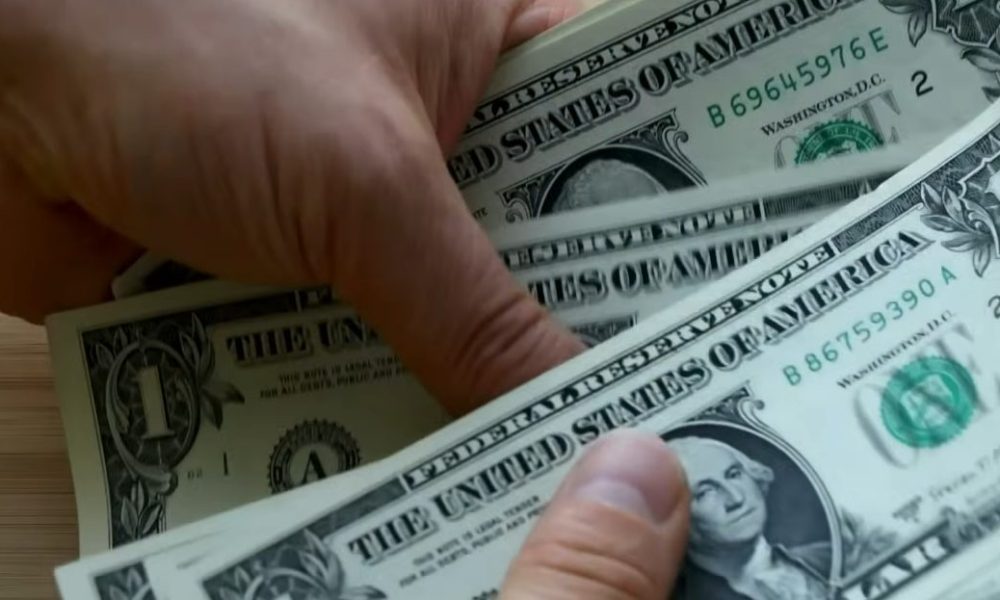
The Three Economic Scenarios for the Second Half of 2026 — Ranked by Likelihood and Devastation

Nine of the last five recessions have been predicted by economists, according to an old joke. Every time, it makes people laugh, in part because it’s true and in part because it hides something truly unsettling: that when the real ones arrive, very few people notice them until it’s too late. That joke seems a little less humorous as I stand here in the middle of 2026 and watch the financial data change in real time.
By the majority of official measures, the world economy has remained stable. UNCTAD projects growth for 2026 to be about 2.7%, which is less than the pre-pandemic average but not a collapse. The rate of inflation is declining. A number of significant economies’ central banks have started to loosen. The ship is still sailing on the surface. However, there’s a certain tension in the air at the moment—on trading floors, in IMF conference rooms, and in the discussions between economists who won’t use the word “recession” in public but will tell you in private that they’re keeping a close eye on three specific scenarios.
These are the actual scenarios, arranged in order of likelihood and potential severity.
The most likely result, which we will refer to as Managed Disorder, is also the most subtly depressing. Depending on the analyst, the probability could be anywhere from 40% to 45%. Technically, growth is still ongoing. A complete collision is prevented. However, like paint on a wall that appeared fine from a distance, the “soft landing” optimism that sustained sentiment through 2025 has begun to fade. Inflation is stickier than central banks expected due to geopolitical tensions, especially those that affect the Strait of Hormuz and Middle East energy flows. Both the Federal Reserve and the European Central Bank are caught in a difficult middle ground: cutting too quickly runs the risk of rekindling price pressure, while cutting too slowly leaves already vulnerable consumers drowning in borrowing costs.
Key Reference Data: Global Economic Outlook H2 2026
| Indicator | Detail |
|---|---|
| Projected Global Growth (2026) | 2.7% (below pre-pandemic average of 3.2%) |
| US Growth Estimate | ~1.5%–2.0% |
| Eurozone Growth | ~1% (sluggish) |
| Global Headline Inflation (2026) | Projected at 3.1% (down from 3.4% in 2025) |
| Top Global Risk (WEF 2026) | Geoeconomic confrontation |
| AI Investment Estimate (to 2030) | ~$8 trillion |
| Recession Probability (with energy shock) | Up to 49% |
| Scenario 1: Managed Disorder | 40–45% probability, moderate devastation |
| Scenario 2: AI Bubble Deflates | 30–35% probability, high devastation |
| Scenario 3: Geoeconomic Fragmentation | Low-moderate probability, extreme devastation |
| Expert Outlook | 50% expect “turbulent or stormy” conditions in 2 years |
| Source Reports | WEF Global Risks Report 2026, UNCTAD WESP 2026, IMF WEO |
The unevenness of this situation is what makes it especially annoying. Growth in the US is predicted to be between 1.5% and 2%. With France’s budget deficit at 5.4% at the end of the year—well above the EU’s mandated ceiling—and Germany’s industrial recovery still up in the air, Europe is still in a slow state. While lower-income households and consumption-driven businesses continue to be squeezed by food, energy, and housing costs that refuse to normalize, the K-shaped economy continues to solidify, with technology and capital-heavy sectors holding up fairly well. It’s the kind of suffering that builds up subtly in lived experience but doesn’t show up prominently in headline GDP figures.
Although it is more difficult to predict, the second scenario could be far more harmful. The financial correction could be dire if the AI investment thesis fails, and 2026 is frequently referred to as the “year of execution” for AI. An estimated $8 trillion will be invested in AI-related projects between now and 2030. That is a huge wager on a technology that has so far yielded impressive results but uneven increases in productivity across the board. “Micro is macro” in the context of AI, as BlackRock has pointed out. The selloff won’t be limited to Silicon Valley if valuations—which are already historically high in the tech sector—begin to diverge from revenue reality.
On its own, an AI correction might be manageable—an orderly repricing instead of a cascade akin to the one that occurred in 2008. However, what it coincides with is a cause for concern. The recession probability estimates that analysts have been covertly monitoring, some of which are getting close to 49%, begin to seem less theoretical if an AI market correction occurs at the same time that oil shocks from ongoing Middle East tensions are pushing energy prices higher. This was made clear in the World Economic Forum’s Global Risks Report 2026: risks related to inflation and economic downturn both increased eight spots in the two-year outlook, while risks related to asset bubbles increased seven. In January, nobody at Davos felt especially at ease.
Because of the uncomfortable implications of naming it bluntly, the third scenario is the one that is discussed in cautious, measured academic language. Full-scale geoeconomic fragmentation would result in trade protectionism solidifying into something akin to economic warfare. limitations on the export of critical minerals and semiconductors. blockades at ports. approved supply networks. The multilateral frameworks that have governed international trade since about 1945 are being abandoned as countries turn inward. According to the WEF survey, 68% of participants anticipate a more divided, multipolar world in the coming ten years. That is now the consensus rather than a fringe viewpoint.
Seeing this develop in the data has an odd feel to it, like a car with a slow tire leak that hasn’t blown out yet, but the system continues to work even though everyone can see the direction of travel. The IMF predicts that through 2026, global growth will stay at 3.3%. At several times this year, the stock markets have been on the verge of all-time highs. However, the overall public debt in developed economies has risen to levels not seen since the Napoleonic Wars, making the debt picture sobering. The US now spends more on interest than it does on defense. Each of these countries—France, Italy, Japan, and China—carries debt loads that, in more peaceful times, would dominate all discussions about the economy.
In these conversations, Warren Buffett’s comment about swimming naked frequently comes up, and it’s appropriate. For the past two years, the wave of cheap money and aggressive government stimulus that supported the world economy during the COVID-19 pandemic, the energy shock to Ukraine, and the tariff wars has been gradually dissipating. Whether certain institutions and sovereign borrowers are exposed is not the question. How many and the nature of the triggering event are the questions.
The ability of policymakers to coordinate responses in the event that multiple risks materialize at the same time remains uncertain. The UNCTAD report, which was published in January, specifically called for “stronger policy coordination” and “multilateral cooperation.” While this may seem reasonable, the WEF’s own survey revealed that only 6% of participants anticipated the revival of multilateral institutions. At the very least, the collective response architecture that handled previous crises is under a lot of strain.
All of this does not imply that disaster is inevitable. According to a recent economist, economic cycles don’t die of old age; rather, they die because of something that happens to them. The question for the second half of 2026 is whether enough people are taking the current developments seriously enough to make a difference.
It’s difficult to shake the feeling that the truth is probably not quite yet.


 Bitcoin
  Ethereum
  Tether
  BNB
BNB  USDC
USDC  XRP
XRP  Solana
  TRON
TRON  Lido Staked Ether
  Cardano
  Gram (prev. Toncoin)
  Avalanche