
Crude Oil Prices Swung $25 in 48 Hours — Welcome to the Most Volatile Energy Market in Modern History

Somewhere in the Persian Gulf, an oil tanker was anchored early on April 8 while dozens of other loaded ships waited. Simply put, the seafarer on board said, “We’ve not moved, and we’re not alone.” Other tankers filled with crude, liquefied natural gas, and cargo headed for refineries in Asia, Europe, and the Americas were visible across the water around them. They were all motionless, waiting for someone to determine whether the precarious ceasefire would last long enough to risk the transit.
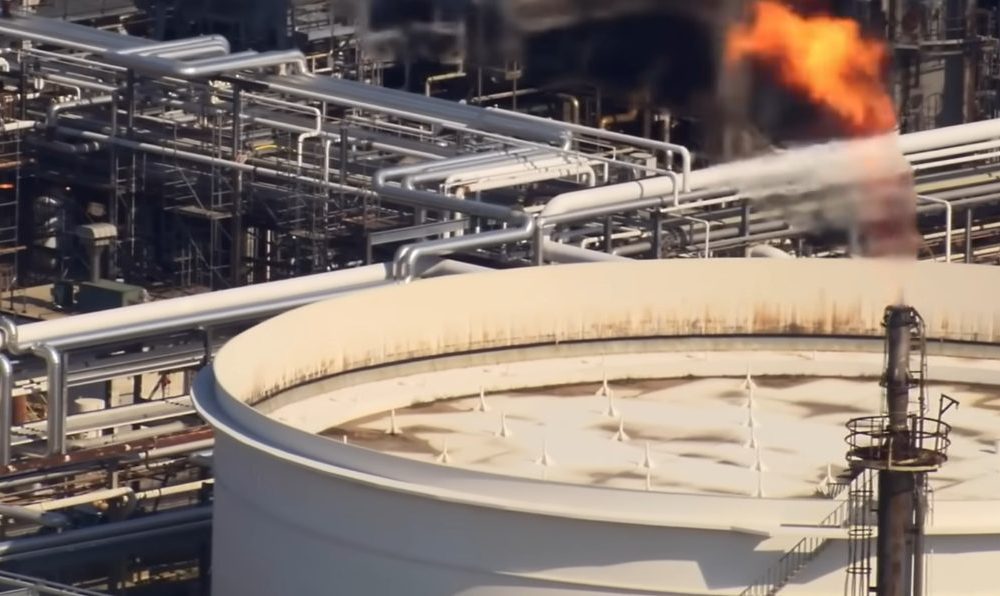
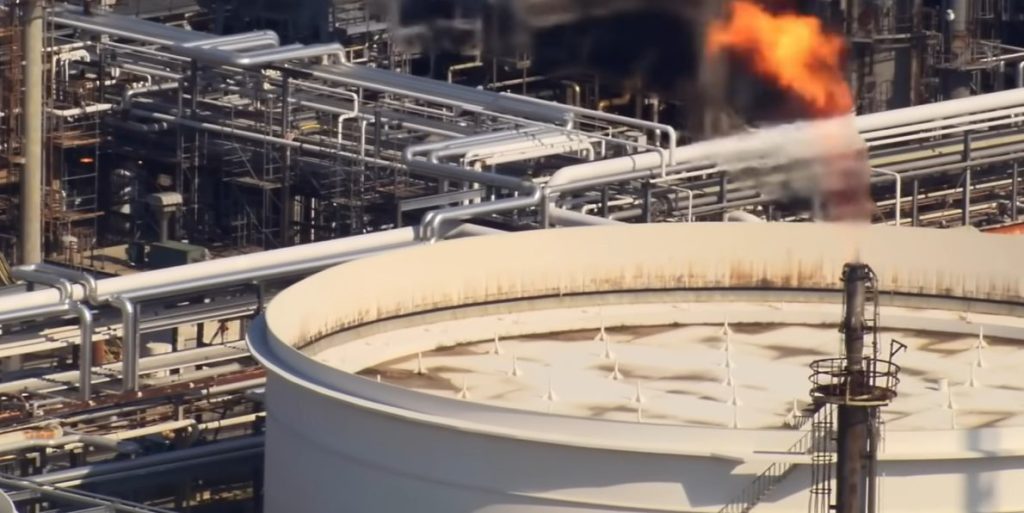
At sea level, $102 oil looks like this.
One story is conveyed by the numbers on the screen. From its pre-conflict level of about $70 in late February, WTI crude is now over $100 per barrel, up more than 77% year to date. In the same time frame, heating oil increased by more than 100%. Gas prices have increased by almost 59% so far this year. The international benchmark, Brent crude, saw its largest single-day decline since the beginning of the Covid pandemic, whipsawing between $92 and $115 in a matter of days before rising back toward $99 within a day as Israeli strikes on Lebanon resumed and ceasefire doubts surfaced. The market’s best estimate of where this ends is shown by the futures curve, which shows near-month contracts trading above $100 with prices gradually declining toward $74 and below by early 2027. The markets are wagering that the crisis will eventually be resolved. They simply don’t think it will be resolved anytime soon.
The Strait of Hormuz, a waterway that is about 33 miles wide at its narrowest point and through which about 20% of the world’s crude oil and liquefied natural gas typically flow every day, was the catalyst for it all. The initial response in the energy markets was not panic when Iran threatened to obstruct passage in response to US and Israeli airstrikes that started in late February. Disbelief was followed by quick recalculation. Prices that had been hovering around $70 quickly increased. The head of the IEA described the situation as worse than the combined impact of the 1973 oil embargo, the 1979 Iranian revolution, and the 2022 Russian invasion of Ukraine by the time WTI futures reached $115 after strikes on Iran’s Kharg Island, one of the most significant oil export terminals in the world. Anyone who recalls the effects of any one of those events on the world economy would not take that comparison lightly.
Key Reference Data: Crude Oil Prices (April 2026)
| Indicator | Detail |
|---|---|
| WTI Crude (Apr 9, 2026) | ~$102.38/barrel (+8.44% on day) |
| Brent Crude (Apr 9, 2026) | ~$99.41/barrel (+4.91% on day) |
| WTI 1-Month Change | +18.47% |
| WTI Year-to-Date Change | +77.60% |
| WTI 1-Year Change | +74.83% |
| WTI Peak (Kharg Island Strikes) | ~$115/barrel |
| WTI Post-Ceasefire Low | ~$92–$95/barrel |
| WTI Pre-Conflict Level (Feb 28) | ~$70/barrel |
| Heating Oil YTD Change | +100.10% |
| US Gasoline YTD Change | +58.76% |
| Strait of Hormuz Share of Global Flow | ~20% of global crude and gas |
| Ships Trapped in Gulf | ~2,000+ vessels; ~20,000 seafarers |
| Qatar LNG Export Capacity Loss | -17% (up to 5 years to repair) |
| EIA Forecast (Brent, Q4 2026) | Below $90/barrel |
| EIA Forecast (Brent, 2027 avg) | ~$76/barrel |
| Urals Oil (Russian) | ~$120/barrel (+119% over 1 year) |
It has been nearly impossible to track what transpired next in real time. On April 8, Trump declared a conditional ceasefire, subject to Iran reopening the strait. As a result, oil prices fell 15%, marking the largest single-day drop since April 2020. The stock market rose. Gas futures in Europe dropped 20%. It appeared to be relief for a few hours. The questions then began. The ceasefire expressly excluded Lebanon. On March 2, Israel launched what was reportedly its largest round of airstrikes against Lebanon since the start of the conflict. Three clauses in the agreement have already been broken, according to Iran’s foreign minister. “Iran is still in control,” stated the editor of Lloyd’s List Intelligence. Nothing has changed, including transit and permission. As traders came to terms with the fact that a ceasefire announcement and an actual ceasefire are two different things, Brent began to rise once more by Thursday morning, surpassing $98.
Significant damage has already been done, and some of it will take time to fix. Attacks on the Ras Laffan industrial hub have reduced export capacity by 17%, and repairs could take up to five years, according to Qatar, which produces about a fifth of the world’s LNG. According to a note released by Goldman Sachs, Brent would remain above $100 for the remainder of 2026 if Hormuz closed for an additional full month. Over $25 billion is the estimated total cost of infrastructure repairs, according to Rystad Energy. According to Exxon, its Middle East oil production fell by 6% in the first quarter. Due to nearly doubled jet fuel prices, Delta Air Lines withdrew its growth plans. Asian airlines have reduced flights and increased fares. Emergency oil reserves have been released by several governments. As the LNG supply crisis worsened, India’s oil minister took a plane to Qatar.
The futures curve shows how the market is truly interpreting this, so it’s worth taking a quick look at it. The near-month WTI contract, which is currently priced at $101.92, is in a steep backwardation, which means that later months will be much cheaper, reaching $73 by early 2027. Instead of a long-term structural change in the supply of oil, that structure represents a market pricing in a significant short-term supply shock that it believes will eventually subside. Whether the ceasefire is maintained, whether Hormuz reopens completely, and whether the infrastructure damage in Qatar and elsewhere is less serious than current estimates indicate will determine whether that reading is accurate. Those are all still very much open questions.
According to the EIA’s current forecast, Brent will average $76 in 2027 and drop below $90 in Q4 2026. This trajectory suggests significant normalization within six to nine months. With the disclaimer that it is “highly dependent” on assumptions regarding Middle East supply, that forecast was released prior to the news of the ceasefire, which added another degree of uncertainty. Slightly less optimistically, the IMF released a report cautioning that a ceasefire does not guarantee a quick return to pre-conflict conditions and that the “economic scars” of war usually take more than ten years to heal.
Observing the oil price fluctuate by several dollars per hour in reaction to every new Gulf news story gives the impression that the market has entered a stage where geopolitics is more important than fundamentals. In an ongoing conflict, that is not out of the ordinary. However, anyone attempting to budget for energy costs over the next six to twelve months—that is, the majority of the global economy—finds it extremely uncomfortable.
The tankers remain anchored. A few are starting to move, very slowly. The majority are holding off on taking the transit until they have more assurance. Currently, the cost of that uncertainty is approximately $102 per barrel.

 Bitcoin
  Ethereum
  Tether
  BNB
BNB  USDC
USDC  XRP
XRP  Solana
  TRON
TRON  Lido Staked Ether
  Cardano
  Gram (prev. Toncoin)
  Avalanche