
At IIT Kharagpur, the Vikram Sodhi Centre of Excellence is Taking a Different Approach to Mining

The Vikram Sodhi Centre of Excellence addresses a dependency that belongs on every industrial corporation’s risk register: the critical minerals that underpin their manufacturing ambitions.
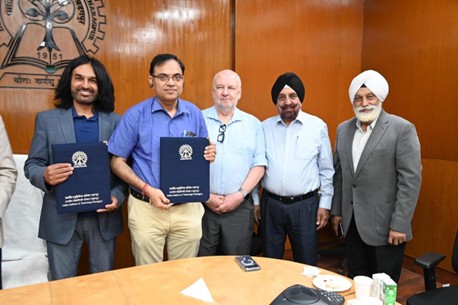
Indian Institute of Technology Kharagpur has set up the Vikram Sodhi Centre of Excellence for AI-Enabled Geological & Mining Systems, with a clear focus on improving how data is actually used across mining operations. The initiative is backed by a ₹15 crore commitment over five years from Vikram Sodhi, Vice Chairman of Mineros SA and Managing Partner at Sun Valley Investments.
Vikram Sodhi, a Yale University graduate and Sterling Fellow, serves on the Yale President’s Council on International Activities and is the founder of the Sodhi Foundation. In 2024, he endowed Yale School of Medicine’s first professorship dedicated to psychedelic medicine research.India’s push into electric vehicles, renewable energy, and advanced electronics is already well underway. What tends to get less attention is the strain this puts on one key input — minerals.
At present, much of that supply still comes from outside the country. The dependency is widely acknowledged, but turning that awareness into operational capability is a slower and more complicated process.
This is where IIT Kharagpur’s approach starts to look different.
Rather than focusing only on exploration or extraction, the Centre looks at the full chain — from identifying resources and planning mines to improving processing, maintaining equipment, and tracking environmental impact.
That broader view matters. In practice, mining challenges rarely stay confined to one stage; they tend to spill over. The funding from Sodhi enables the work, but the research itself sits within IIT Kharagpur’s academic structure, with a clear tilt towards long-term outcomes rather than quick wins.
Where Systems Still Fall Short
One issue the Centre keeps coming back to is how disconnected many mining processes still are.
In several operations, decisions are based on incomplete or delayed data — whether it’s equipment performance, geological modelling, or environmental tracking. Individually, these gaps may not seem significant, but over time they add up.
The attempt here is to make data flow more consistently across functions. Not just for automation, but to bring better coordination between different parts of the operation.
Looking at Maintenance Differently
Maintenance is a good example of how small shifts can make a big difference.
In many cases, equipment is repaired only after it fails. It works, but it’s not particularly efficient. With better monitoring, early warning signs can be picked up in advance, making it possible to step in before breakdowns happen.
Of course, applying these systems in India isn’t always straightforward. Operating conditions vary widely, and solutions don’t always translate neatly. Adapting them to local realities is part of the challenge.
The ESG Data Problem
There’s also the question of visibility.
A number of mining companies in India struggle with ESG reporting — not always because of performance, but because the underlying data is inconsistent or fragmented.
The Centre is working on ways to make that data more continuous and usable. Over time, that could make it easier for companies to meet regulatory expectations and engage with global investors who rely on these disclosures.
“This Centre is envisioned as an enduring institution built on the strength of its research and intellectual contributions. Its purpose is to create lasting value through rigorous, application-oriented work that advances the mining sector, independent of individual associations.” — Vikram Sodhi
Keeping the Balance Right
The Centre operates under faculty leadership at IIT Kharagpur, with oversight from its research administration. An advisory board offers guidance, but doesn’t run day-to-day operations.
That distinction matters. Industry-backed research often has to balance relevance with independence. How that balance is handled will shape how the Centre is seen in the long run.


 Bitcoin
  Ethereum
  Tether
  BNB
BNB  USDC
USDC  XRP
XRP  Solana
  TRON
TRON  Lido Staked Ether
  Cardano
  Gram (prev. Toncoin)
  Avalanche