
SpaceX Is Preparing to Go Public, History Says the IPO Could Be the Largest Since Saudi Aramco

A bronze bust of Elon Musk, the kind of monument a town erects when it decides, for better or worse, that its fortunes are tied to one man, is somewhere in Brownsville, Texas. Just as paperwork was being prepared for what is expected to be the biggest stock market debut in history, it was unveiled earlier this year. The timing didn’t seem subtle. However, SpaceX has never been particularly nuanced.
The company is currently getting ready to list on the Nasdaq under the ticker SPCX, potentially as early as June. The offering’s numbers are hard to take in at once. According to reports, SpaceX hopes to raise between $75 and $80 billion, with a valuation of between $1.75 and $2 trillion. To put things in perspective, Saudi Aramco, the current record holder, raised $25.6 billion in December 2019. SpaceX won’t just shatter that record if it achieves its goal. It will almost triple.
Bankers feel that no one really knows how to price something this big. Goldman Sachs, Morgan Stanley, JPMorgan, Citigroup, BofA Securities, and other heavyweights are reportedly among the twenty-three firms involved in the underwriting. Despite this power, the Wall Street Journal pointed out that the volume may be so unmanageable that trading may not open until the afternoon on debut day. That particular detail conveys something about the occasion. The actual mechanics of selling these shares will depend on what was almost affectionately described as a low-tech, manual process, despite all of SpaceX’s talk about Mars colonies, lunar manufacturing, and solar-powered data centers in orbit. Spreadsheets and phones. human assessment.
The prospectus itself is about 200,000 words long and occasionally reads more like a manifesto than a financial statement. There is mention of asteroid mining. There is mention of passenger transportation to Mars and the Moon. Beneath the optimism, however, is the harsh reality that SpaceX continues to lose money despite being supported by government contracts, Starlink subscriptions, and—possibly most importantly—belief. It appears that investors are purchasing more of the future than the present. That’s nothing new—Tesla has been dealing with similar skepticism for years—but this situation is on a different scale.
It’s important to recall the up-close appearance of prior record IPOs. The 2019 listing of Aramco was a national initiative that was essential to Saudi Arabia’s Vision 2030. Jack Ma became a worldwide celebrity in 2014 after Alibaba made its $21.8 billion debut. The 2012 initial public offering (IPO) of Facebook, which raised about $16 billion, was infamously disorganized due to technical issues that caused the stock to plummet early on. Beyond the numbers, each of those moments had significance. They seemed to be turning points. The SpaceX listing has a similar vibe, though it’s more difficult to identify the potential inflection.
It makes sense that a governance structure that gives Musk almost complete control has drawn criticism. It was dubbed the beginning of a bubble by some early commenters on the Financial Times‘ coverage. Some referred to it as a “money furnace.” Both may be partially correct. In any case, individual investors will soon have the opportunity to watch quarterly earnings calls, vote at annual meetings, and purchase shares in a manner that was not possible when SpaceX was opaque and private.
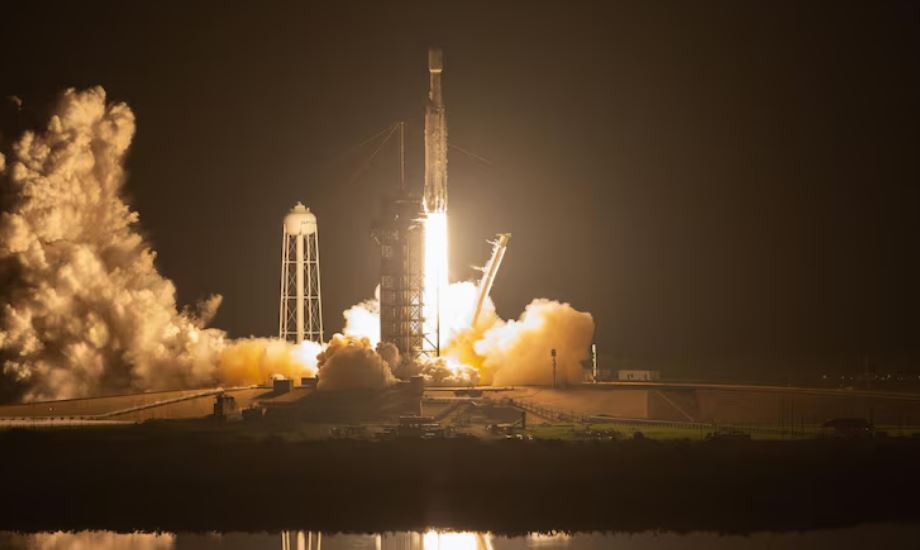
As this develops, it’s difficult to avoid wondering if the IPO will truly feel like a beginning or a sort of conclusion—the point at which a highly ambitious private company is held accountable in ways it never intended to be. The launch pad is ready. It’s another matter entirely whether the rocket flies clean.


 Bitcoin
  Ethereum
  Tether
  BNB
BNB  USDC
USDC  XRP
XRP  Solana
  TRON
TRON  Lido Staked Ether
  Cardano
  Gram (prev. Toncoin)
  Avalanche