
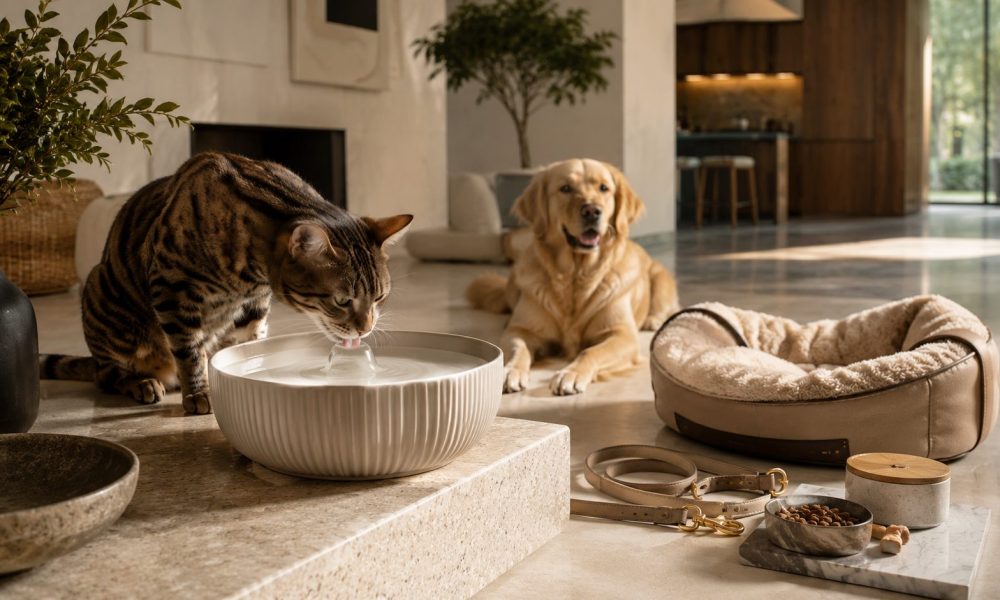
British pet owners now spend nearly £10 billion a year on their animals, according to the Office for National Statistics — a 182 per cent increase since 2005. Globally, the pet care market is on track to hit $350 billion by 2027. But the more interesting story is not just how much people are spending. It is what they are spending it on.
The pet industry is undergoing a premiumisation shift that mirrors what has already happened in food, coffee, and personal care. Owners are trading up from commodity products to higher-quality alternatives across every category, from nutrition to accessories to everyday essentials. And the companies capitalising on this shift are not always the ones you would expect.
From essentials to lifestyle
A decade ago, the average pet owner’s shopping list was straightforward: kibble, a lead, a plastic bowl, maybe a bed. That list has expanded dramatically. The UK pet grooming market alone is now worth £1.2 billion annually. Spending on pet treats runs to roughly £500 per owner per year. One in five British pet owners spends £20 a month on clothing for their animals.
What is driving this is not vanity — or at least, not vanity alone. The underlying shift is the humanisation of pets. Research consistently shows that the majority of owners now regard their pets as family members, and they make purchasing decisions accordingly. When a consumer already pays a premium for organic food, filtered water, and natural skincare for themselves, extending that logic to their pet feels intuitive rather than extravagant.
Product design as a differentiator
The premiumisation trend has created space for a new category of pet product that barely existed five years ago: design-led, aesthetically considered items that owners are happy to leave on display in their homes. This is a significant departure from the traditional pet product market, where function came first and appearance was an afterthought.
Ceramic pet fountains are a good example of how this plays out in practice. The basic need — keeping a cat hydrated — used to be served by a plastic gravity bowl or an electric fountain made from BPA-laden materials. Today, companies like Miaustore, which has sold over $20 million worth of ceramic cat fountains since launch, produce products that look more like tableware than pet equipment. The product works because it sits at the intersection of two trends: the health-conscious move away from plastic and the aesthetic demand for products that do not look out of place in a well-designed home.
Where the growth is
The premium end of the market is proving remarkably resilient even against broader economic headwinds. While eight in ten UK consumers have changed their grocery shopping habits to save money, only one in ten pet owners has cut back on what they spend on their animals. This is consistent with global data: the American Pet Products Association reported that US pet industry spending hit $157 billion in 2025, with premium and specialty categories growing faster than the market overall.
For investors and entrepreneurs, the implication is clear. The pet industry’s growth is no longer just a volume story — it is a margin story. The companies capturing the most value are those that treat pet products as consumer goods first and pet products second, applying the same design thinking, branding, and material quality that buyers expect in every other category of their lives.
The pet economy is not just getting bigger. It is growing up.



 Bitcoin
  Ethereum
  Tether
  BNB
BNB  USDC
USDC  XRP
XRP  Solana
  TRON
TRON  Lido Staked Ether
  Cardano
  Gram (prev. Toncoin)
  Avalanche