
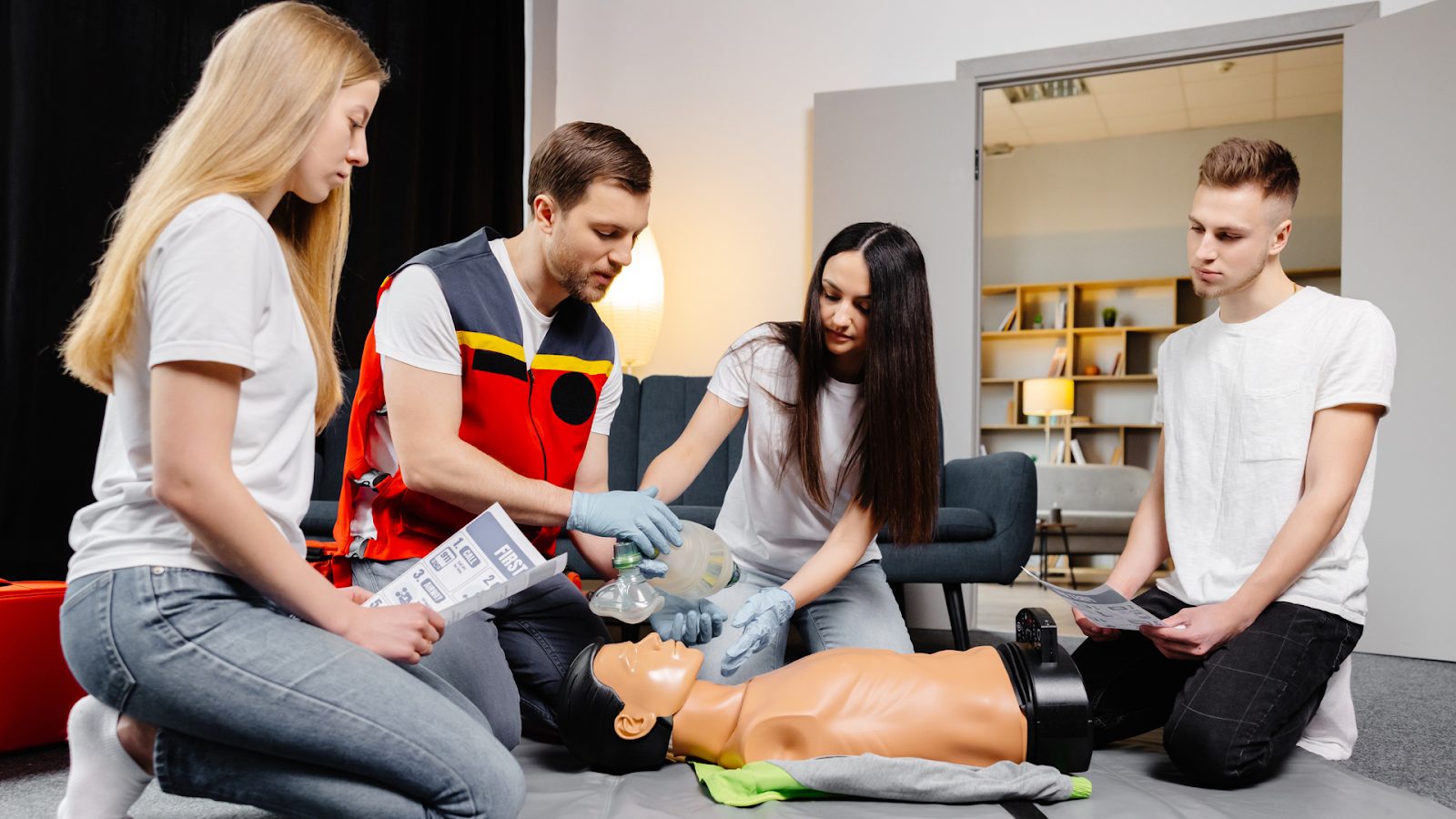
Emergencies don’t wait. Whether it’s a heart attack at a shopping centre, a choking incident over dinner, or a bad fall on a construction site — the first few minutes matter more than most people realise. Professional help can take time to arrive. That’s why first aid course techniques that can help in emergency situations are worth every hour of your time.
Here’s the thing: most accidents happen in ordinary places. Your kitchen. A colleague’s office. The local park.
And yet most people are completely unprepared.
Why First Aid Knowledge Actually Matters
First aid isn’t just ticking a box. The goal is simple — treat someone immediately after an injury or medical event, before qualified help arrives. Preserve life, stop things from getting worse, and give the person the best possible chance at recovery.
Those three objectives sound straightforward. In practice? They require training.
People often assume emergencies are rare. They’re not. A child chokes on a sweet. An elderly neighbour collapses. A coworker slices their hand on broken glass. Anyone nearby becomes the first responder whether they’re ready or not. First aid training closes that gap — it turns bystanders into people who can actually do something useful.
When every second counts, confidence is half the battle.
What You Actually Learn
A solid first aid programme covers far more ground than most people expect. Burns, fractures, severe bleeding, allergic reactions, choking — these are the scenarios that come up in real life. Not hypotheticals. Real situations that happen to real people every week.
CPR is the big one. Cardiopulmonary resuscitation can keep someone’s blood moving during cardiac arrest until paramedics arrive. Early intervention makes a real difference in survival rates — that’s not a marketing claim, it’s documented medicine.
The practical side surprises most participants. Through hands-on exercises and supervised teaching, you get actual experience — not just a booklet to skim through. You rehearse the scenarios before you face them. That’s the point.
Confidence Under Pressure
Panic is the enemy of good decision-making. Staying calm when someone’s hurt — or when someone’s life is on the line — is genuinely hard. Training doesn’t eliminate stress, but it gives you a framework. You know what to check, what to do first, and how to communicate clearly with emergency services.
That mental rehearsal changes how people respond. Less freezing. Less second-guessing. More action.
Providers like Fast First Aid build their programmes around exactly this — practical skills you can use immediately, not abstract theory you’ll forget by next Tuesday.
The Workplace Angle
Employers are waking up to this. Offices, warehouses, retail floors, building sites — accidents happen across all of them. Having trained staff on hand isn’t just good practice; in many industries it’s becoming an expectation.
An employee who completes a first aid course cannon hill can act immediately when something goes wrong — stabilising a situation, reducing harm, buying time for the professionals to arrive. That’s a real, measurable benefit. Businesses that invest in training tend to see stronger safety cultures and better preparedness overall. Not a bad return.
Beyond the Workplace
Parents. Teachers. Coaches. Community volunteers. First aid training techniques that can help in emergency situations aren’t just for professionals — they’re for anyone who spends time around other people.
Kids fall. They always do. Older relatives can have medical episodes that need immediate attention. The more people in a community who know what to do, the better the outcomes for everyone. It really is that simple.
The Bottom Line?
You probably won’t need these skills today. Maybe not this year. But when the moment comes — and statistically, it will — the question is whether you’ll be the person who helps or the person who stands there hoping someone else knows what to do.
That’s worth thinking about.



 Bitcoin
  Ethereum
  Tether
  BNB
BNB  USDC
USDC  XRP
XRP  Solana
  TRON
TRON  Lido Staked Ether
  Cardano
  Gram (prev. Toncoin)
  Avalanche