
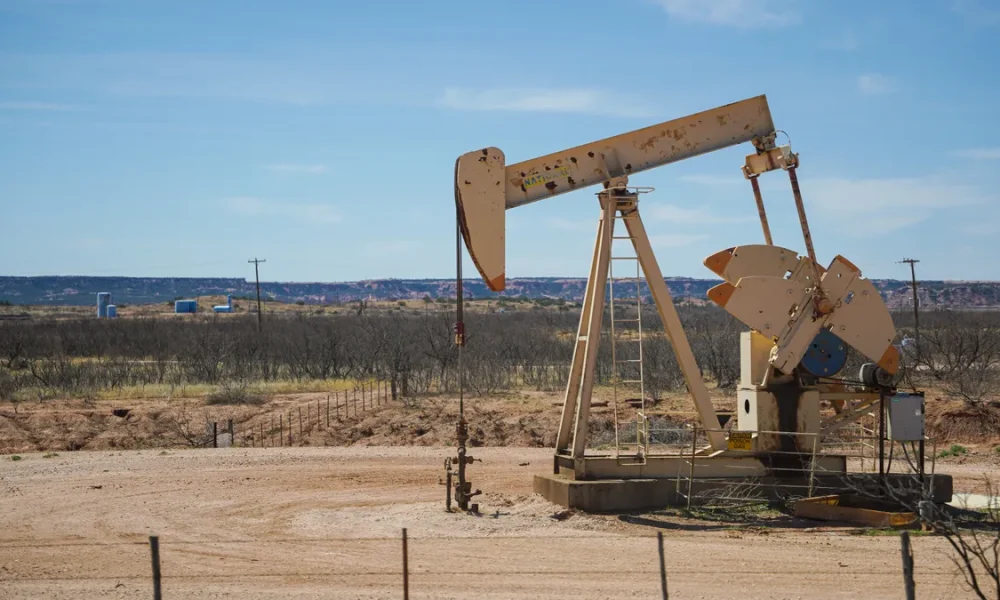
The BP shares supply outlook has shifted since the Iran ceasefire agreement, with the stock losing ground as crude oil prices fell on fading geopolitical risk. The immediate logic is straightforward: reduced threat to Middle Eastern supply removes the risk premium baked into prices. But the more consequential question sits underneath that narrative, and it concerns the structural state of global oil supply buffers rather than any single diplomatic event.
BP Shares Supply Outlook: What the Market Is Missing
The US Strategic Petroleum Reserve (SPR) is the world’s largest emergency crude buffer, and it has been significantly drawn down over the past several years. In July 2023, KCRA reported the SPR hit a 40-year low of 346.8 million barrels after President Biden ordered the release of 180 million barrels to stabilise energy markets. That drawdown was part of a broader coordinated effort: the US Energy Information Administration (EIA) recorded a 17.5 million barrel release from the DOE’s SPR in one discrete phase alone, within a larger 172 million barrel programme.
The reserve has not recovered meaningfully. As of the week ending 5 June 2026, US crude oil held in the SPR stood at 349.19 million barrels, down from 401.82 million barrels a year earlier, a year-on-year decline of 13.10%. At those levels, the cushion that governments previously deployed to soften energy price spikes is a fraction of what it once was.
This matters for oil pricing in a way the ceasefire narrative tends to obscure. Releasing SPR barrels effectively adds supply to the market without requiring producers to invest in new drilling. With the reserve near multi-decade lows, that emergency lever is far less available than it was in prior cycles. Should demand recover sharply or a supply disruption materialise, the market’s ability to absorb the shock is materially reduced.
There is also the investment cycle to consider. Sustained lower oil prices discourage producers from committing capital to new wells. The lag between reduced drilling activity and tighter future supply is not immediate, but it is reliable: the past three cycles have demonstrated that price weakness today tends to compress supply growth twelve to twenty-four months out. The BP shares supply outlook, in this reading, depends less on today’s ceasefire headlines and more on whether that investment retrenchment is already under way in US shale and elsewhere.
Why BP’s Asset Base Matters in a Tighter Market
If supply does prove tighter than the current market implies, asset quality becomes the differentiating factor among oil majors. BP has spent the past two years concentrating its portfolio around fewer, higher-quality production hubs. Its US onshore business, bpx energy, operates in the Permian and Eagle Ford basins in Texas and the Haynesville Basin in Texas and Louisiana, focusing on high-margin barrel production.
Offshore, BP has more than three decades of deepwater experience in the Gulf of America (Gulf of Mexico), operating platforms including Atlantis, Argos, and Thunder Horse. The company has committed further capital to that region: it approved a $5 billion offshore drilling project expected to begin production in 2030, with a new floating platform carrying capacity of 80,000 barrels per day (as described in context by Baird Maritime). Long-life deepwater assets with low per-barrel operating costs are precisely the production base that generates acceptable returns even in a softer price environment, while delivering outsized free cash flow if prices firm.
Beyond the US, BP retains positions in the Middle East and Azerbaijan, and has been selling non-core assets to sharpen the portfolio further. The direction of travel is a leaner, lower-cost production base rather than a diversified energy conglomerate.
The risks are real. A weaker global economy constrains demand. OPEC+ could increase output. US shale has surprised on the upside before. And BP’s strategic repositioning still has execution risk: investors may wait another year or two before the portfolio reshaping shows clearly in the earnings line.
The 2030 production start on the Gulf deepwater project is the next concrete catalyst worth tracking. If the SPR continues to decline and drilling investment softens through the second half of 2026, the supply tightness thesis moves from argument to data point.



 Bitcoin
  Ethereum
  Tether
  BNB
BNB  USDC
USDC  XRP
XRP  Solana
  TRON
TRON  Lido Staked Ether
  Cardano
  Gram (prev. Toncoin)
  Avalanche