
The Rolls-Royce share price is moving again, up 13% in the past month, and the investment case looks increasingly different from the one most observers have been pricing. The market cap now stands at £112bn, and while the price-to-earnings ratio remains elevated at 44, it has pulled back from the 65 peak that spooked investors when the cap first breached £100bn. The five-year gain of 1,116% still defines the narrative — a £10,000 stake placed then is worth £121,600 today — but the question for investors now is whether the next leg is built on something more durable than post-pandemic recovery.
What Is Driving the Rolls-Royce Share Price?
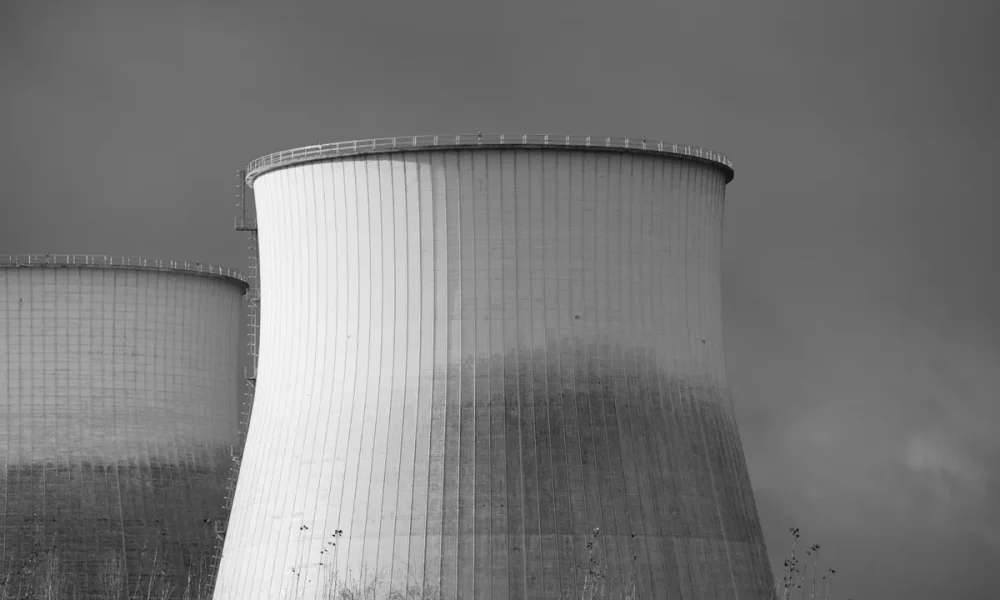
The civil aerospace, defence and power systems divisions are all running at or near capacity, and the market has rewarded that alignment generously. But the conversation has shifted. Chief executive Tufan Erginbilgic has staked his growth thesis on small modular reactors (SMRs), describing the global market as worth more than $1 trillion, with the ‘potential’ to make Rolls-Royce the most valuable company in the UK by market capitalisation. He told The Times he expects around 400 SMRs installed worldwide by 2050.
That target market cap would require at least a doubling from current levels. Ambitious, certainly. But the contract pipeline now stretching across multiple countries gives the thesis more structural grounding than it had even twelve months ago.
An SMR Pipeline Taking Shape
The UK anchor was confirmed in July 2025, when Rolls-Royce SMR was selected as preferred bidder by Great British Energy – Nuclear (GBE-N) to supply the UK’s first SMRs. The chosen site is Wylfa on Anglesey, which is expected to deliver up to 1.5GW of low-carbon electricity to the grid and support 8,000 jobs across the UK. Each Rolls-Royce SMR plant is designed to power a million homes for at least 60 years.
In October 2024, CEZ selected Rolls-Royce SMR to deploy up to 3GW of electricity in the Czech Republic. Sweden is also in play: Rolls-Royce SMR has reached the final two in Vattenfall’s process to select a nuclear technology partner.
The industrial supply chain is being assembled in parallel. On 1 August 2025, Curtiss-Wright Nuclear signed a multi-million dollar strategic partnership with Rolls-Royce SMR to deliver non-programmable diverse Reactor Protection Systems for a global fleet of SMRs, with the work performed from its facility in Dorset. Then on 2 February 2026, Yokogawa Electric Corporation announced a strategic relationship with Rolls-Royce SMR to deliver data processing and control systems for the programme, with design and delivery work running from Yokogawa’s facility in Runcorn, Cheshire, alongside sites in the Czech Republic and the Netherlands.
The Japan opportunity cited in recent commentary — SMRs to power factories, data centres and military bases — sits alongside this broader framework of named industrial partners and awarded contracts. This is no longer a speculative pipeline on paper.
On the capital allocation side, Rolls-Royce disclosed a multi-year share buyback programme of between £7.0bn and £9.0bn across 2026 to 2028, as set out in an offering circular filed with the London Stock Exchange on 26 February 2026. Erginbilgic has also ruled out a secondary listing in New York, according to the BBC, a choice that keeps the stock anchored to the FTSE 100 and its UK shareholder base.
Where the Thesis Can Break Down
The risks are substantial and should not be dismissed by the excitement around the contract wins. SMR technology remains unproven at commercial scale. Each reactor costs approximately £2.2bn to build, and Rolls faces established competition in commercialising the technology. AI data-centre demand, which underpins much of the long-run energy story, could slow or re-route to different technologies. On the existing engine business, United Airlines has publicly accused Rolls of ‘gouging’ carriers, and any resolution in Ukraine or Iran — welcome as that would be on humanitarian grounds — would soften defence spending. It is also worth noting that a P/E of 44, even after its retreat from 65, still prices in a great deal of execution.
The valuation leaves little room for operational setbacks. Two or three contract delays in the SMR programme, or a technical setback in the civil engine fleet, would be enough to compress the multiple sharply.
The next material test for the Rolls-Royce share price is Erginbilgic’s ability to convert preferred-bidder status in the UK into a binding contract and break ground at Wylfa. Until that happens, the SMR thesis remains a future option priced into a very present valuation.



 Bitcoin
  Ethereum
  Tether
  BNB
BNB  USDC
USDC  XRP
XRP  Solana
  TRON
TRON  Lido Staked Ether
  Cardano
  Gram (prev. Toncoin)
  Avalanche