
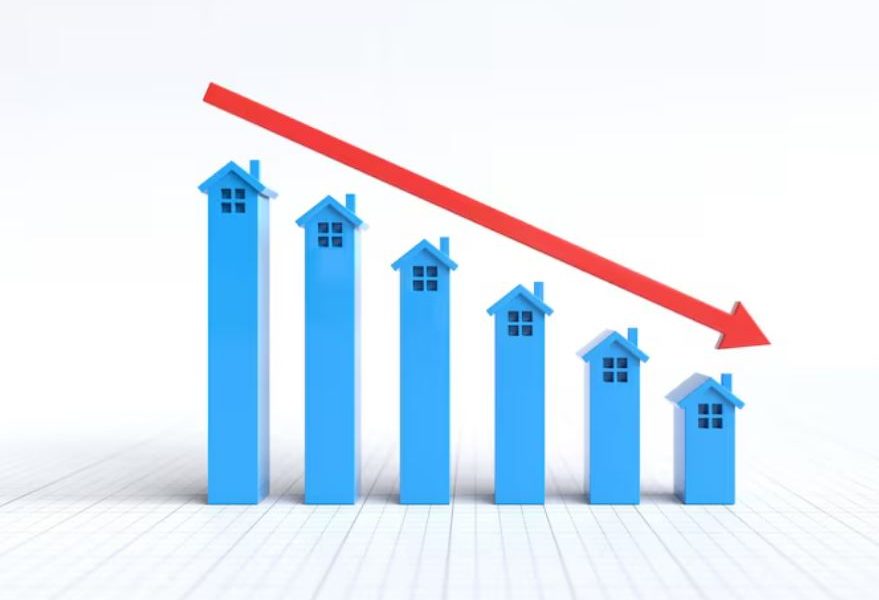
As July approached, mortgage rates fell to their lowest point in roughly six weeks, providing buyers who have spent the majority of the year witnessing erratic rate swings with a small but noticeable respite. In the week ending July 2, the average 30-year fixed mortgage was at its lowest level since mid-May, at 6.43%, down from 6.49% the previous week. It’s not overly dramatic. However, even a slight decline tends to be noticed in a market that has consistently felt antagonistic to consumers.
This particular period of relative calm is intriguing because it comes after one of the more turbulent springs the mortgage market has experienced recently. Rates rattled both lenders and buyers as they jumped from 6.22% in late March to over 6.5% by late May. In contrast, it seems almost intentional that rates have been in a narrow range around 6.5% for six weeks in a row, as if the market has finally stopped fidgeting. The question of whether that stability persists throughout the summer is quite different.
This dip’s mechanics are quite simple. Mortgage rates are more closely correlated with changes in the bond market, especially yields on U.S. Treasury securities, than they are with decisions made by the Federal Reserve. Recently, investors have been pricing in indications of a slowing economy, which has caused long-term rates to slightly decline. The market was keeping a close eye on the jobs report and other economic data that were released around the July 4th holiday. Increased hiring could result in higher rates. Weaker numbers could cause the decline to last a little longer.
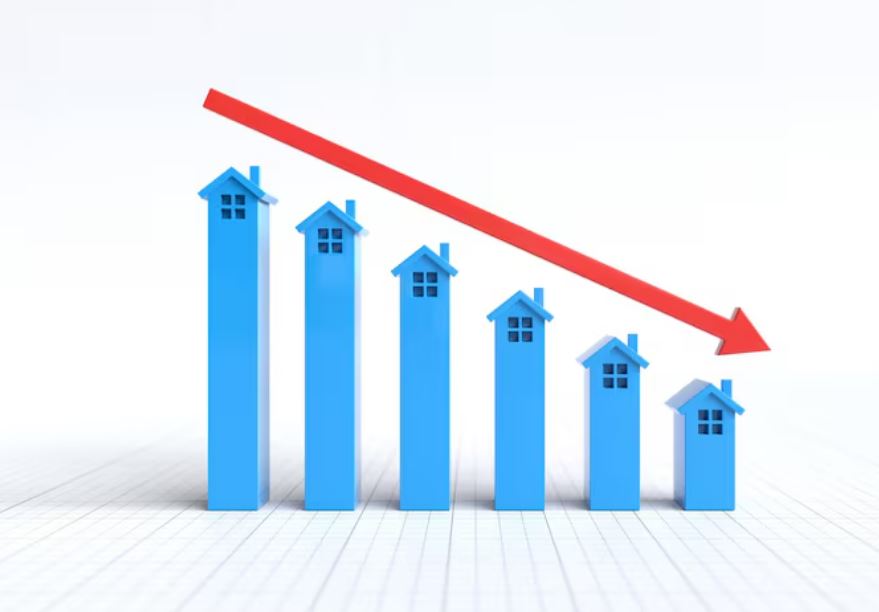
Additionally, inflation is the bigger picture that currently shapes everything. Due in large part to pressure on shipping through the Strait of Hormuz and oil prices associated with the ongoing conflict in Iran, the consumer price index increased to 4.2% in May, its highest reading since 2023. Due to this environment, mortgage rates have remained significantly higher than what many economists predicted they would be at this time of year. Earlier in the year, the prospect of sub-6% rates seemed realistic, but it has now quietly faded. In short, rates will probably stay between 6.50% and 6.70% through the end of the year, possibly longer, according to Joel Berner, senior economist at Realtor.com.
It’s worth considering the implications for regular consumers. After a 20% down payment, a family purchasing a median-priced home—roughly $429,300 in May—at current interest rates would pay about $2,166 per month in principal and interest. That amounts to roughly 24% of the monthly income of the average family. Reasonably priced by some historical standards. However, it still feels like a lot when paired with continuing home price increases and the overall weariness of a market that hasn’t provided much respite.
Sellers seem to be making subtle adjustments. It is noteworthy that listing prices have decreased year over year for seven straight months. There has been a noticeable cooling of some of the frothiest markets. If sellers accept the new pricing reality, the inventory picture may gradually improve, though this process is often uneven and slow.
Economists who keep a close eye on this market generally advise against trying to time it. Rates may ease slightly if economic conditions soften, but waiting for a meaningful drop could mean waiting well into 2027. Buyers who can make the numbers work at 6.5% are probably better served moving than holding out for a rate floor that may not arrive on any useful timeline. There’s something almost clarifying about that kind of certainty, even when it isn’t the certainty anyone was hoping for.



 Bitcoin
  Ethereum
  Tether
  BNB
BNB  USDC
USDC  XRP
XRP  Solana
  TRON
TRON  Lido Staked Ether
  Cardano
  Gram (prev. Toncoin)
  Avalanche