
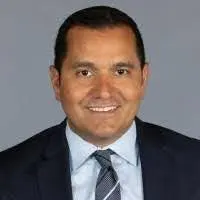
Mauricio Pincheira serves as Vice President of Automotive and Industrial Operations at The Chemico Group, one of North America’s largest minority-owned chemical management and distribution enterprises. The position carries operational responsibility across the United States, Canada, and Mexico, spanning three regulatory environments, three labor markets, and a customer base concentrated in sectors where process failure carries immediate financial and safety consequences.
The profile that emerges from more than 25 years of work in automotive, industrial, and energy operations is not that of a specialist who accumulated adjacent credentials over time. It is the profile of a leader whose technical qualifications, sector range, and commitment to workforce equity developed together, each reinforcing the others.
A Role Defined by Scale and Technical Complexity
Chemical management and distribution occupies an unusual position in industrial supply chains. The work involves sourcing, handling, tracking, and disposing of materials whose performance characteristics are tightly specified and whose mishandling creates regulatory exposure. For automotive and industrial clients, chemical management is embedded directly in production continuity: a lapse in supply, specification, or documentation stops a line.
Directing that function across three countries adds a further layer. Cross-border operations require harmonized standards that still accommodate jurisdictional differences in environmental regulation, transport rules, and labor practice. Within that context, the operational leadership Mauricio Pincheira provides at The Chemico Group is less about issuing directives and more about designing systems that produce consistent outcomes without constant intervention.
More Than 25 Years of Cross-Sector Development
The automotive, industrial, and energy sectors share a vocabulary of throughput, uptime, and quality control, but they do not share the same performance standards or workforce cultures. Automotive operations run on tightly synchronized schedules and supplier hierarchies built around just-in-time delivery. Industrial manufacturing tends toward longer cycles and greater product variation. Energy operations carry a distinct regulatory and safety posture, with capital timelines measured in years.
Working across all three has produced a comparative frame that single-sector careers rarely generate. Practices that appear universal within one industry become visible as choices when observed against another. That perspective informs how Mauricio Pincheira evaluates operational problems: not by importing a template, but by identifying which conditions in a given environment actually drive the outcome under review.
Certification as Methodology, Not Ornament
Mauricio Pincheira holds certification as a Six Sigma Master Black Belt, among the most advanced credentials in process improvement methodology, along with Project Management Professional certification. Both represent formal validation of technical capability. More significantly, both represent a way of approaching organizational questions.
Six Sigma at the Master Black Belt level is fundamentally about variation. The discipline asks what a process is actually producing, how consistently, and which factors explain the difference between intended and observed results. Project Management Professional governance contributes a complementary structure: defined scope, assigned accountability, staged review, and documented handoff.
Applied together, these frameworks turn operational improvement into something measurable and repeatable rather than dependent on individual judgment. The approach extends beyond production floors. Quality systems, supply chain governance, and workforce development all involve processes that can be defined, measured, and improved, and Mauricio Pincheira applies the same analytical standard to each.
Diversity, Equity, and Inclusion as Operating Structure
A distinguishing feature of this leadership profile is the treatment of diversity, equity, and inclusion as an operational discipline subject to the same structural requirements as any other business system. That means DEI expressed through hiring criteria, supplier qualification standards, and advancement pathways rather than through statements of intent.
Supplier qualification illustrates the difference. A diversity commitment articulated as a value produces occasional sourcing decisions. A diversity commitment embedded in qualification criteria produces a documented process with defined thresholds, tracked results, and review cycles. The second version can be audited. The first cannot.
The Chemico Group’s identity as a minority-owned enterprise gives this consistency a visible reference point. Operating within an organization whose ownership structure reflects the same commitment makes internal practice verifiable against external claim, and the operations Mauricio Pincheira leads are structured to hold up under that comparison.
Environmental Stewardship Within Chemical Management
Sustainability in chemical management is not a communications function. Material selection, container handling, waste stream tracking, and disposal documentation are operational activities with measurable environmental outcomes, and they run through the same processes that govern cost and quality.
Guiding large-scale sustainability initiatives across multiple operational geographies means reconciling differing regulatory baselines while maintaining a single internal standard. That work has been part of the operational portfolio Mauricio Pincheira oversees, treated as a dimension of operational excellence rather than a separate compliance obligation running alongside it.
Recognition and Corporate Representation
In 2012, the Hispanic Association on Corporate Responsibility named Mauricio Pincheira a Young Hispanic Corporate Achiever. The award recognizes Hispanic professionals demonstrating leadership impact within major corporate environments, and it functions here as third-party validation of an approach already in practice rather than as the starting point for one.
Visible senior leadership within a minority-owned North American enterprise carries a representational dimension beyond the operational one. The combination of technical authority, multinational operational scope, and sustained commitment to equitable workforce structures describes a career built deliberately, across sectors and across borders, on the premise that operational rigor and organizational fairness are governed by the same methods.



 Bitcoin
  Ethereum
  Tether
  BNB
BNB  USDC
USDC  XRP
XRP  Solana
  TRON
TRON  Lido Staked Ether
  Cardano
  Gram (prev. Toncoin)
  Avalanche