
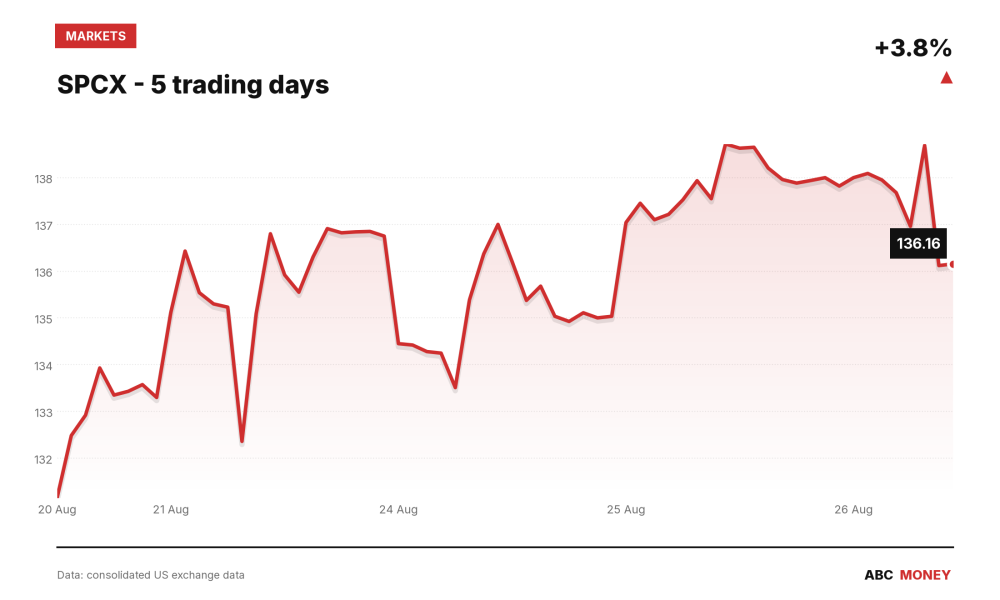
SpaceX (NASDAQ: SPCX) has confirmed plans for a $100bn Louisiana Starship spaceport, a second “Starbase” to be built on a 125,000-acre former Exxon site in Vermilion Parish, roughly 200 miles west of New Orleans. The announcement, made at a state event on 25 August and reported by Reuters, adds a second home for the rocket programme alongside its original Boca Chica site in Texas.
Louisiana Gov. Jeff Landry, who compared the deal’s significance to the Louisiana Purchase, appeared alongside SpaceX chief operating officer Gwynne Shotwell to unveil the project, according to CBS News/AP. The scale of the pitch – and the headline number attached to it – has drawn coverage from Reuters, CNBC, the New York Times and TechCrunch within hours of each other, an unusually synchronised rollout for what is, at bottom, an industrial siting decision.
What Louisiana is putting on the table
The state’s incentive package is concrete even where the corporate commitment is aspirational. Vermilion Parish will receive $25m a year for 25 years, with an escalator, plus a $20m upfront payment – a package worth more than $820m over its life, according to Quartz. Louisiana’s legislature has also passed laws this year exempting some aerospace projects from public review and making unauthorised entry onto a spaceport site a felony, part of the courtship that landed SpaceX the deal, per CNBC.
The Louisiana Starship spaceport, by the numbers
The $100bn figure that dominated Monday’s headlines is best read as a multi-year investment commitment rather than a cheque SpaceX is writing today, a distinction the Motley Fool flagged in its rundown for investors. Timelines diverge too: SpaceX says construction starts in 2027 with a first Starship launch targeted for 2029, while Louisiana Economic Development’s own estimate has “initial operations” arriving a year later, in 2030 – a gap worth watching as the project moves from press conference to permits, as TechCrunch noted.
A bet-the-company scale of spending
What makes the Louisiana pledge notable isn’t the headline number in isolation but the pile it sits on top of. SpaceX already spent $28.5bn on capital projects in the first half of 2026, even as the underlying business is growing fast: revenue reached $7.8bn in the second quarter, up 92% year-on-year, per the Fool’s analysis. Losses are narrowing but still real. SpaceX’s 10-Q, filed with the SEC on 4 August, showed a net loss of $541m for the quarter ended 30 June 2026 (diluted loss per share of $0.09), against a $1.008bn loss (loss per share of $0.34) in the comparable prior-year quarter, according to SEC EDGAR. Layering a $100bn, multi-decade infrastructure commitment onto that balance sheet is a statement of confidence in Starship’s eventual reusability – a capability the vehicle has not yet fully demonstrated.
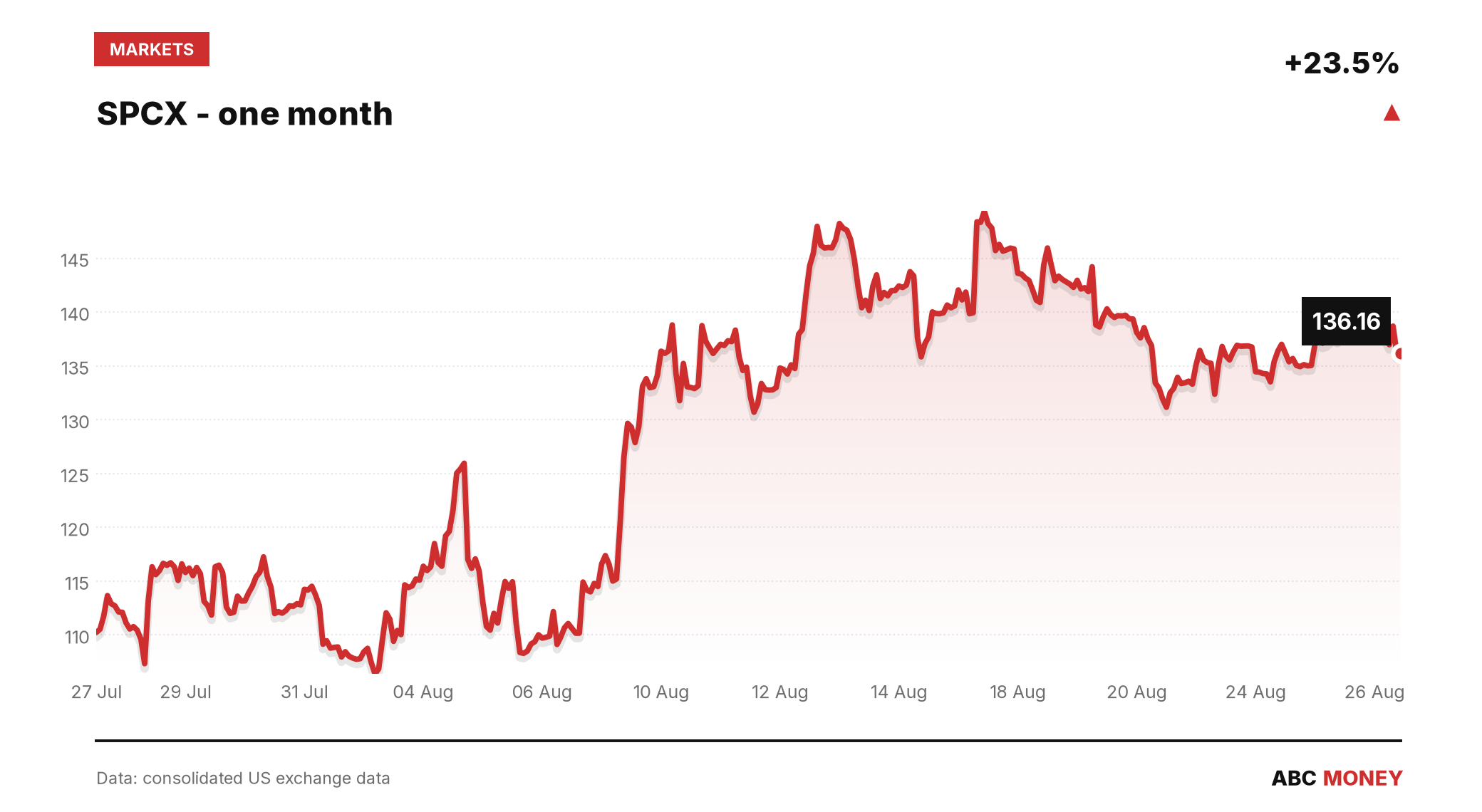
SPCX shares closed at $135.85, down 1.56% on the day but up 18.2% over the prior 20 trading sessions, with volume running at only 0.38 times the 20-day average – a muted response given the size of the number attached to the announcement. Short-sale volume on the stock, tracked daily by FINRA, ticked up only modestly, from a ratio of 0.579 on 12 August to 0.606 on the day of the announcement itself – hardly the mark of a market bracing for disappointment, but not one pricing in outsized upside either.
The Boca Chica precedent
SpaceX’s original Starbase in Boca Chica, Texas offers a cautionary template. A 2023 Starship test flight there sent launchpad debris into a nearby state park and wildlife habitat, triggering fines and lawsuits, as CNBC has recounted. The Louisiana site, near the small community of Pecan Island, sits in sensitive Gulf Coast wetlands and has already generated local objections over noise, light and wildlife disruption, according to the Louisiana Illuminator, which covered the announcement event on the ground. The felony-trespass and reduced-review laws the state passed earlier this year were designed, in part, to pre-empt exactly this kind of friction.
Financing conditions, for what it’s worth, are no obstacle at present: the 10-year Treasury yield stood at 4.70% as of 24 August, essentially unchanged from the prior reading, per FRED data from the St Louis Federal Reserve. The harder question for SpaceX watchers isn’t the cost of capital – it’s whether a rocket still proving out full reusability can justify committing $100bn to a second continent-scale launch site before the first one has finished paying for itself.
This article is for information only and is not investment advice or a recommendation to buy or sell any asset. Markets move quickly; figures are correct as sourced at the time of writing. Always do your own research before making financial decisions.

 Bitcoin
  Ethereum
  Tether
  BNB
BNB  USDC
USDC  XRP
XRP  Solana
  TRON
TRON  Lido Staked Ether
  Cardano
  Gram (prev. Toncoin)
  Avalanche