Bitcoin
  Ethereum
  Tether
  BNB
BNB  USDC
USDC  XRP
XRP  Solana
  TRON
TRON  Lido Staked Ether
  Cardano
  Gram (prev. Toncoin)
  Avalanche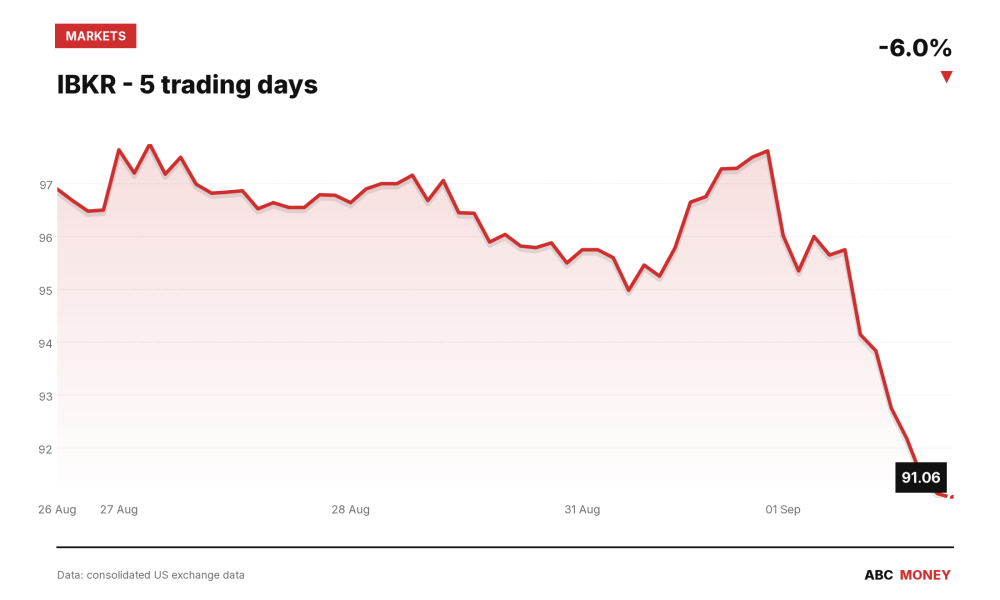
The Interactive Brokers stock slide that knocked shares of Interactive Brokers Group (NASDAQ: IBKR) down as much as 6.3% on Tuesday has been widely attributed to the broker’s own August numbers. That’s not quite right. The company’s monthly metrics, released the same day, showed record client equity and record account growth. What actually moved the shares was a UBS downgrade that arrived within hours of the release.
By the close, IBKR had fallen 4.99% to $90.975, according to consolidated exchange data, with turnover running 1.83 times its 20-day average – a sign plenty of investors were repositioning at once, not merely a quiet drift lower.
What actually moved the stock
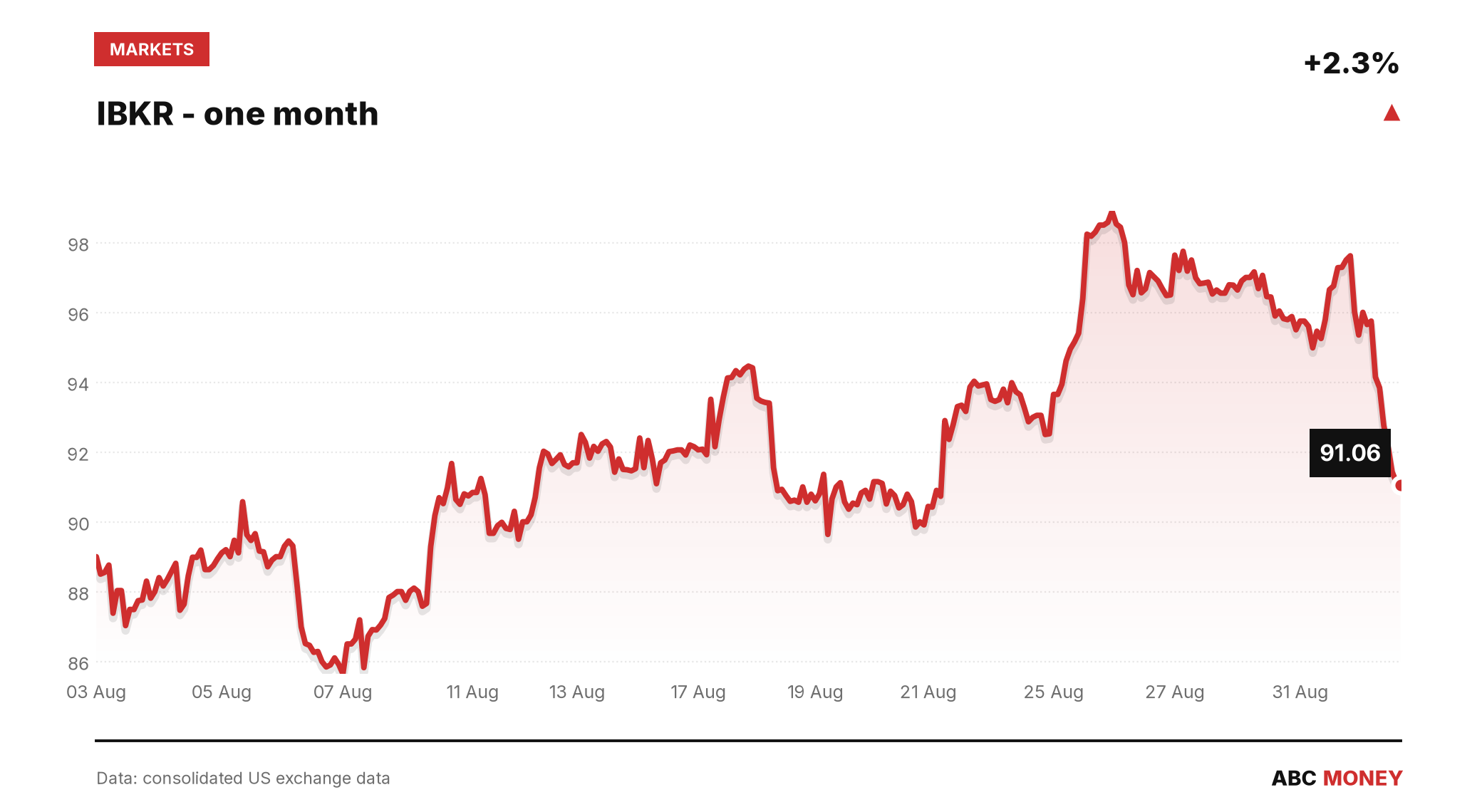
UBS analyst Michael Brown cut his rating on Interactive Brokers to Neutral from Buy, even as he lifted his price target to $102 from $50 – a target still above where the stock traded after the fall. The move was about valuation, not the business: The Motley Fool reported that shares were trading near 39 times trailing earnings and 36 times forward earnings heading into the note, multiples UBS judged had run ahead of the fundamentals. Separate coverage from Investing.com, citing Reuters, put the same-day decline at 5.3%. Brown reportedly kept a favourable view of the underlying franchise, calling it a best-in-class broker with a genuine growth runway – the downgrade was a call on price, not on prospects.
That distinction matters for anyone reading the headline that the stock “slid following August metrics.” The metrics were the backdrop against which the downgrade landed, not its cause.
The numbers UBS was pricing, not panicking over
Interactive Brokers reported 4.276 million Daily Average Revenue Trades (DARTs, a standard industry measure of client trading activity) for August – up 23% from a year earlier but down 3% from July. That sequential dip is the detail most coverage has fixed on. It sits awkwardly next to everything else in the release.
Total client accounts reached 5.46 million, up 35% year-on-year and 3% from July – roughly 143,000 new accounts added in a single month. Ending client equity climbed to $962.8bn, up 35% year-on-year and 6% from July, edging the platform closer to the trillion-dollar mark. Client margin loan balances – money clients borrow against their portfolios – rose to $101.5bn, up 41% year-on-year and 1% above July, a figure that typically expands when investors are adding risk, not retreating from it.
None of that reads as a company in trouble. It reads as a broker still compounding its user base and balance sheet at a pace few peers can match, with one soft data point – trading velocity – inside an otherwise clean set of numbers.
A two-month pattern, and a market backdrop
The August cooling in DARTs isn’t isolated. July’s metrics had already shown a steeper 16% month-on-month drop in trading activity, even as client equity and account counts set new highs that month too. Taken together, the two releases describe a business where trading frequency is decelerating gently while the underlying client base and asset pool keep growing – not the kind of divergence that typically drives a near-6% single-day share slide on its own.
The broader rate backdrop offers some context for why high-multiple financial stocks were vulnerable to a valuation-led downgrade in the first place. The 10-year US Treasury yield rose to 4.73% by 28 August, from 4.67% previously, according to Federal Reserve data – a move that raises the bar for growth-priced equities generally, brokers included.
Positioning was already shifting
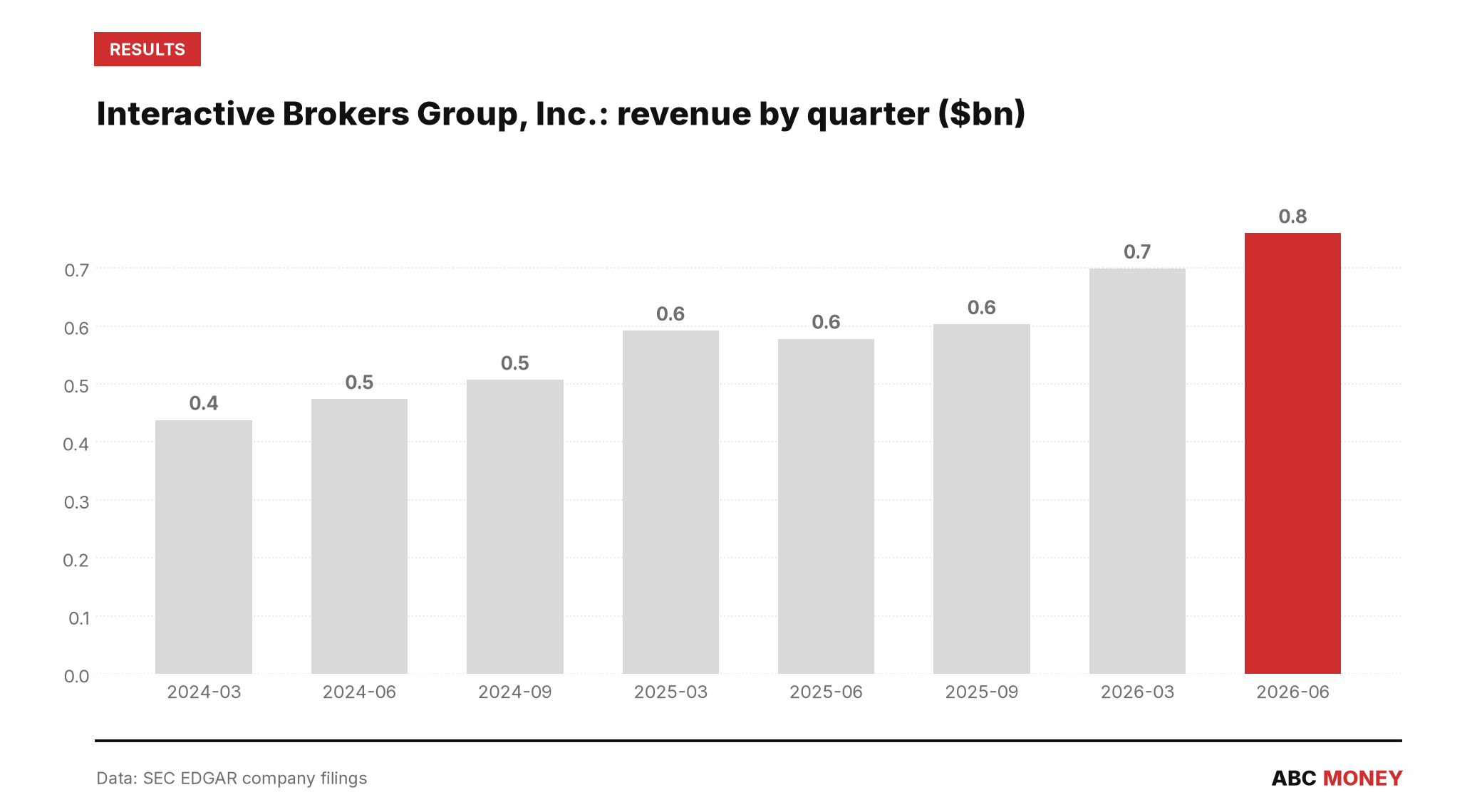
Options and short-side activity had been building into the release. The daily short-sale ratio for IBKR – the proportion of a day’s trading volume attributable to short sales, essentially bets the price will fall – climbed from 0.317 on 18 August to 0.662 by 31 August, according to FINRA’s daily short-sale data. That doesn’t prove traders knew a downgrade was coming, but it shows scepticism was already accumulating around a stock that had run up sharply on the back of genuine operating momentum, including diluted earnings per share that rose from $0.59 in the first quarter of 2026 to $0.69 in the second, filings show.
The next test for the stock is less about whether Interactive Brokers keeps adding clients – the trend line on that is hard to argue with – and more about whether a valuation built on 30-plus times earnings can hold up if trading volumes keep cooling from their post-pandemic highs, even as the balance sheet keeps swelling underneath it.
This article is for information only and is not investment advice or a recommendation to buy or sell any asset. Markets move quickly; figures are correct as sourced at the time of writing. Always do your own research before making financial decisions.