Bitcoin
  Ethereum
  Tether
  BNB
BNB  USDC
USDC  XRP
XRP  Solana
  TRON
TRON  Lido Staked Ether
  Cardano
  Gram (prev. Toncoin)
  Avalanche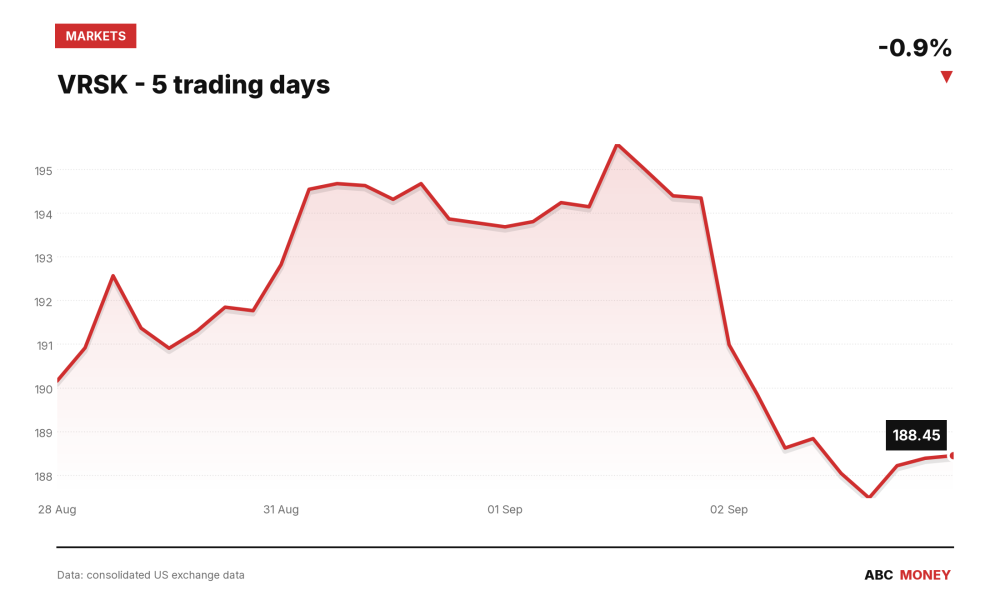
Verisk Analytics (Nasdaq: VRSK) has built a data center exposure database covering more than 2,500 facilities across the United States, giving insurers, reinsurers and brokers a building-by-building view of a risk pool that has grown up almost overnight alongside the AI boom. The Boston-based analytics firm announced the launch on 3 September 2026, framing it as a direct response to what it calls “one of the fastest-growing concentrations of risk” in the US property market.
The facility count and framing were corroborated independently by Benzinga, whose report matched Verisk’s own figures on the day of release. That matters more than it might for a routine product update: data-centre risk is a genuinely new underwriting category, and insurers have had precious little structured data to work from as hyperscale AI campuses have multiplied across the country.
What the database actually contains
According to a summary carried by StockTitan, the product bundles flat-file records, building footprint shapefiles and a 90-metre disaggregation grid, feeding directly into Verisk’s Synergy Studio and Touchstone modelling platforms – the tools insurers already use to price catastrophe and property risk. In practice, that means an underwriter can now overlay a specific data centre’s footprint against flood zones, windstorm exposure or grid infrastructure risk, rather than relying on generic commercial-property assumptions that were never designed for buildings stuffed with racks of GPUs and enormous cooling and power demands.
The launch is not a one-off. Verisk rolled out a re-engineered US Tropical Cyclone model on the same Synergy Studio platform in June 2026, and the data-centre database reads as the next module in a broader push to rebuild its exposure-modelling stack around emerging concentrations of physical risk rather than legacy property categories.
The market Verisk is chasing
The commercial logic is straightforward. Global data-centre insurance premiums are estimated at roughly $10bn in 2026, with industry projections cited by StockTitan pointing to as much as $23bn by 2030 – a near-tripling driven by the sheer pace of AI infrastructure construction. Bloomberg reported on the same dynamic back in April, describing the build-out as a potential windfall for insurers willing to underwrite it properly. The catch, for carriers, has always been a lack of granular data on where these facilities sit, how they’re built, and what risks cluster around them – power grid strain, water stress for cooling, wildfire exposure in some regions. Verisk’s pitch is that it can be the data layer underneath that entire emerging line of business, much as it already is for hurricane, wildfire and flood risk in more established property markets.
Verisk’s numbers and the market’s shrug
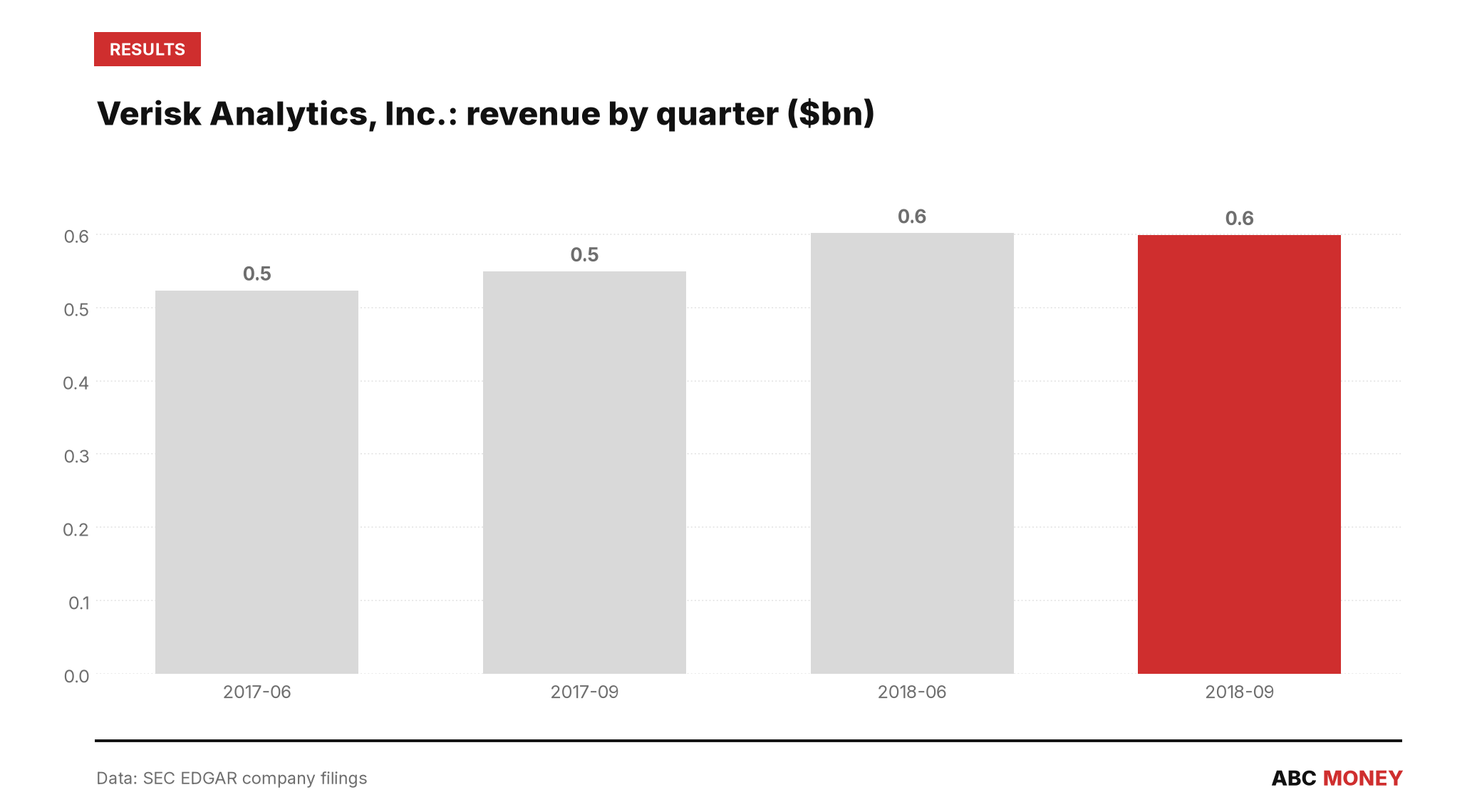
The launch arrives against a backdrop of steady, unspectacular financial performance. Verisk’s first-quarter 2026 filing showed revenue of $782.6m, net income of $234.2m and diluted earnings per share of $1.73. That builds on a full 2025 in which the company reported revenue of $3.07bn, net income of $908.3m and diluted EPS of $6.48, per its annual filing. Nothing in the product announcement is likely to move those figures in the near term – this is a data and software launch, not a new revenue line with disclosed pricing – but it fits a pattern of Verisk methodically extending its platform into new categories of insurable risk.
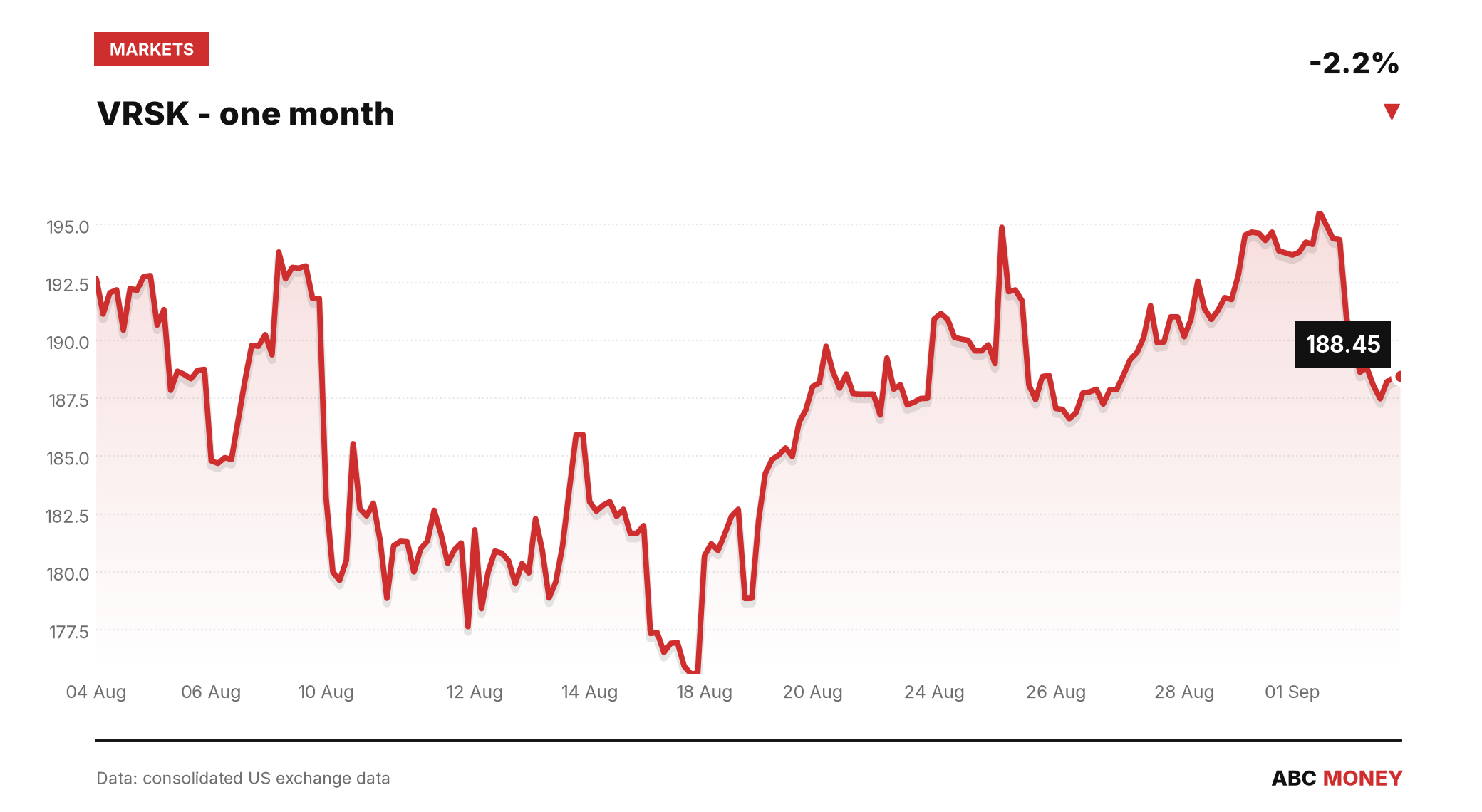
The stock’s reaction was correspondingly muted. VRSK closed at $188.45 the day the news broke, down 0.74% on the session but still up 3.37% over the preceding 20 trading days, with volume running at 0.85 times its 20-day average – hardly the signature of a market-moving event. Short-sale activity told the same story: FINRA’s daily short-volume ratio for VRSK sat in a narrow band of 0.28 to 0.63 through late August and into September, showing no build-up of bearish positioning around the launch. In short, traders treated this as what it appears to be – a sensible product extension rather than a catalyst.
What will matter more than the launch itself is adoption. Verisk’s success in categories like hurricane and wildfire modelling came from insurers embedding its data into their own pricing and capital models over years, not weeks. Whether the same happens with data-centre risk – a market moving fast enough that today’s $10bn premium pool could look small within a few years – is the question reinsurers and specialty underwriters will now be testing against Verisk’s new building-level view, one renewal cycle at a time.
This article is for information only and is not investment advice or a recommendation to buy or sell any asset. Markets move quickly; figures are correct as sourced at the time of writing. Always do your own research before making financial decisions.