Bitcoin
  Ethereum
  Tether
  BNB
BNB  USDC
USDC  XRP
XRP  Solana
  TRON
TRON  Lido Staked Ether
  Cardano
  Gram (prev. Toncoin)
  Avalanche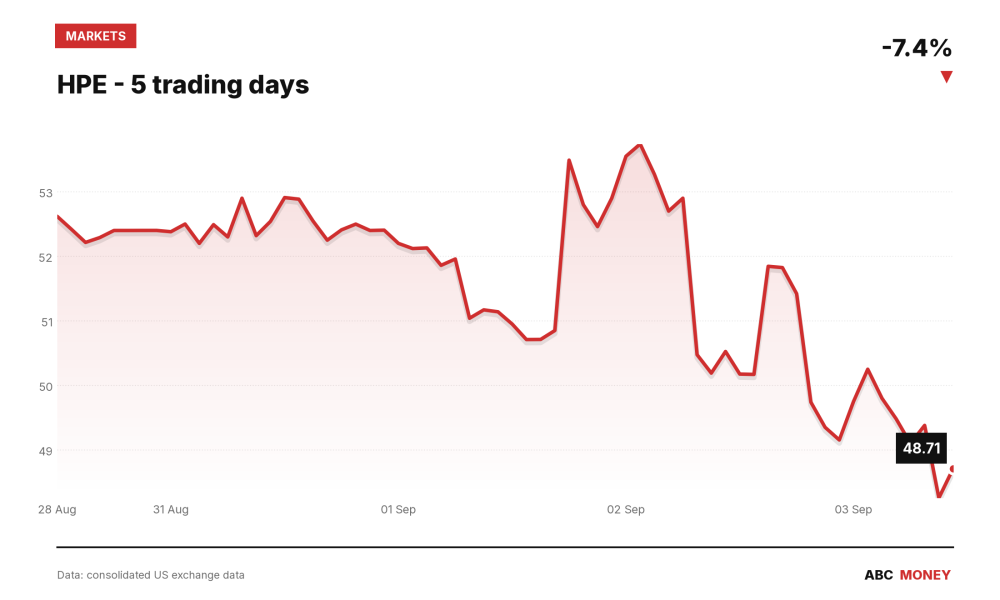
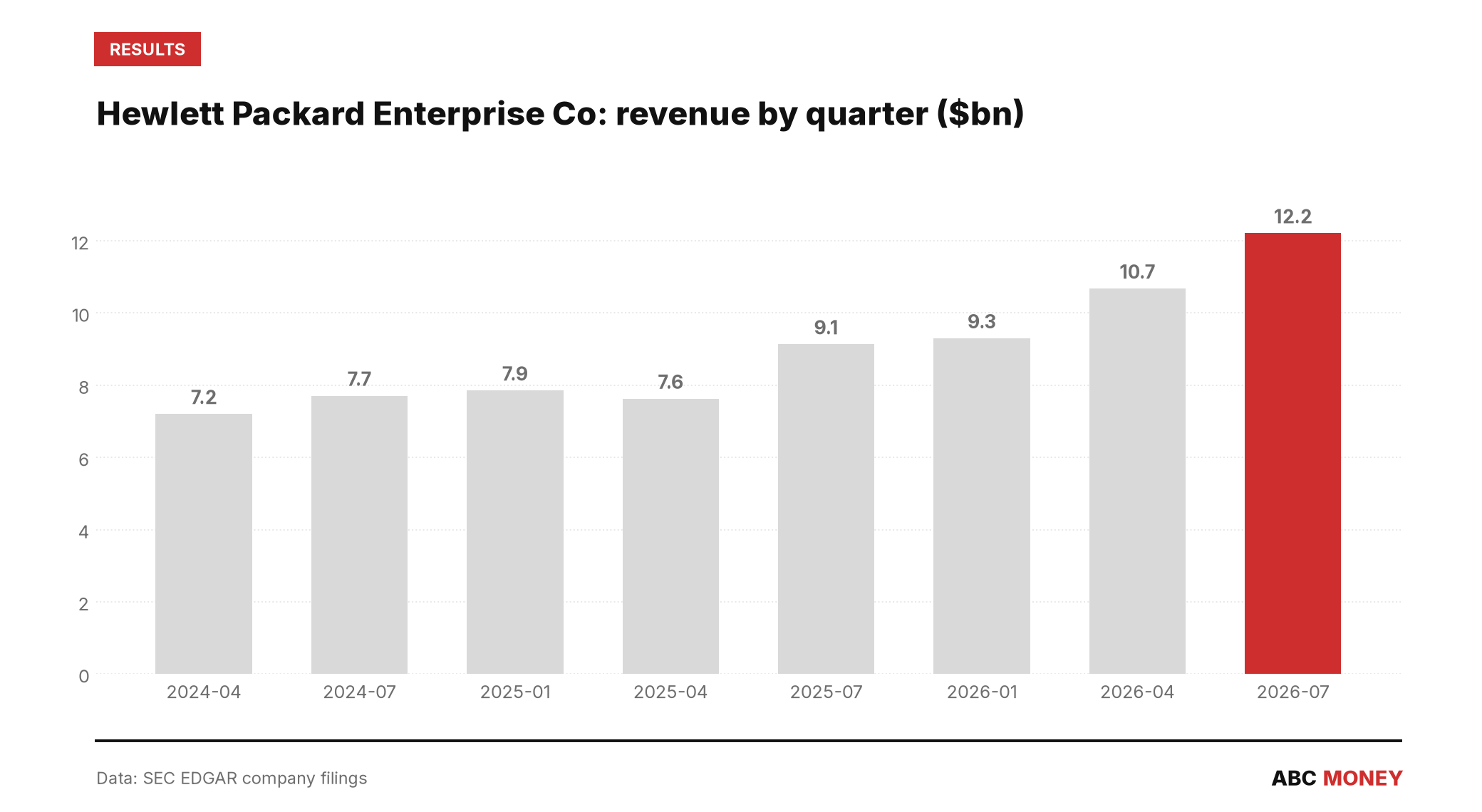
Hewlett Packard Enterprise’s (NYSE: HPE) Q3 revenue reached a record $12.2 billion for the quarter ended 31 July, up 34% on the same period last year, and net income more than quintupled to $1.54 billion from $305 million a year earlier, according to the company’s 10-Q filing. Diluted earnings per share came in at $1.06, against $0.21 in the same quarter of fiscal 2025.
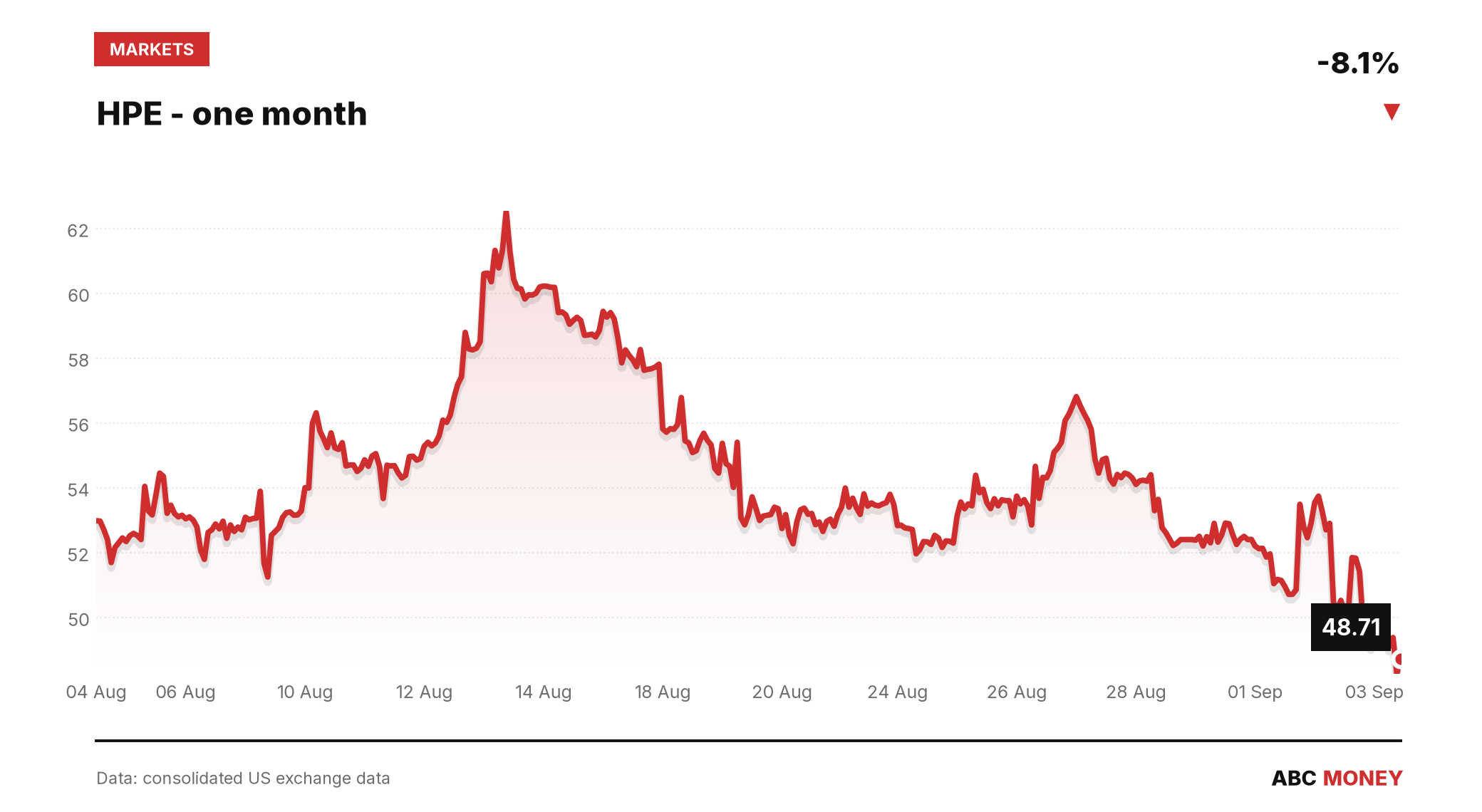
By any normal measure, this was HPE’s best quarter as a standalone company. Yet the stock closed at $48.78 on 3 September, down 1.95% on the day and 19.27% over the preceding 20 trading sessions, with volume running at 2.32 times its 20-day average – a sign that plenty of investors were trading the print, and not all of them buying.
A quarter that beat on every line
HPE’s own 8-K filing put GAAP operating profit up 464% year-on-year and non-GAAP operating profit up 155%, to roughly $2 billion. Non-GAAP diluted EPS of $1.11 was up 152% on the year. Against Wall Street’s going-in estimates of $11.93 billion in revenue and $0.92 in adjusted EPS, HPE beat on revenue by about 2.3% and on EPS by nearly 21%, according to an Investing.com transcript of the earnings call.
The trajectory is the more striking part. Quarterly revenue has climbed from $7.2 billion in the second quarter of fiscal 2024 to $9.1 billion a year later, $10.7 billion last quarter, and now $12.2 billion – four consecutive quarters of acceleration as AI server and networking demand has built. Net income swung from a $1.05 billion loss in the second quarter of fiscal 2025 to five straight profitable quarters since, culminating in this one.
Management also raised guidance twice over. Fiscal 2026 revenue growth is now expected at 34% to 37%, up from a prior range of 29% to 33%, and for fiscal 2027 HPE is guiding to 13% to 17% revenue growth, EPS of $4.40 to $4.60, and free cash flow of at least $5 billion, according to Reuters reporting carried by Yahoo Finance.
So why did the shares fall?
The answer sits inside HPE’s own order book. Orders grew 42% on a normalised basis – comfortably outpacing revenue – which would ordinarily read as an unambiguous positive. Instead, according to Motley Fool’s account of the call carried by Yahoo Finance, executives flagged that shortages of memory, NAND flash and other components are the binding constraint on how quickly that backlog can be converted into shipped, billed revenue. Demand isn’t the problem; getting enough parts is.
That is a subtly different story to the one investors had been pricing in over the summer. HPE shares had already slid from a 52-week high of $64.25 to the low $50s by late August, reflecting broader anxiety about AI capital spending and supply chains rather than anything specific to this quarter, based on historical trading data. The post-earnings move – shares falling as much as 5% at one point, per Yahoo Finance – extended that slide rather than reversing it.
Positioning data adds a little texture. FINRA’s daily short-sale figures – the share of trading volume executed by sellers without an existing long position – show HPE’s short-volume ratio climbing from 0.308 on 28 August to 0.655 on 2 September, the day of the earnings call, per FINRA’s short sale volume data. That is a pickup in short-side activity into the print, consistent with traders positioning for exactly the kind of “beat but disappoint” reaction that followed, rather than evidence of a broader bet against the stock.
What the guidance raise is really underwriting
The nuance for readers is that HPE’s numbers and its narrative are not in conflict – they’re simply about different things. The 10-Q confirms the record quarter; the call confirms that management is confident enough in demand to raise both this year’s and next year’s targets even while acknowledging it cannot yet ship as fast as customers want to buy. A free cash flow target of at least $5 billion for fiscal 2027 implies HPE expects the component bottlenecks to ease enough to convert backlog into cash, not just bookings.
For investors, the practical question shifts from “is the AI order book real” – it plainly is, on the company’s own filings – to how quickly memory and component supply normalises, and whether HPE’s raised fiscal 2027 targets prove conservative or optimistic once that happens. The next data points worth watching are HPE’s fiscal fourth-quarter results and any commentary on component lead times, which will show whether the gap between orders and shipped revenue is narrowing or still widening.
This article is for information only and is not investment advice or a recommendation to buy or sell any asset. Markets move quickly; figures are correct as sourced at the time of writing. Always do your own research before making financial decisions.