Bitcoin
  Ethereum
  Tether
  BNB
BNB  USDC
USDC  XRP
XRP  Solana
  TRON
TRON  Lido Staked Ether
  Cardano
  Gram (prev. Toncoin)
  Avalanche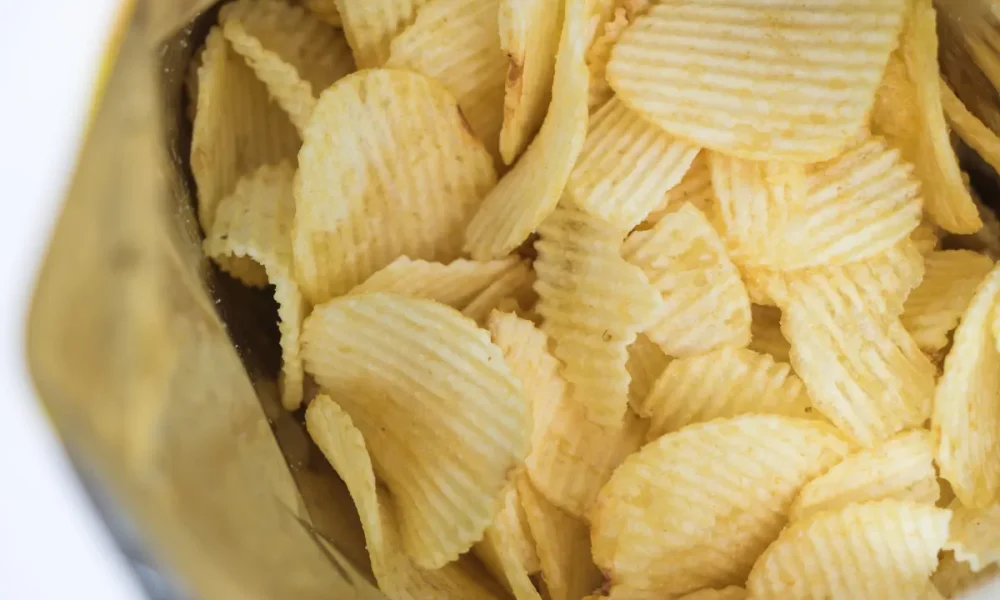
The shrinkflation investor signal has been hiding in plain sight on supermarket shelves for years, but the cleaner read is now arriving in company filings. When Pringles narrowed its canister and cut contents from 200g to 165g while the shelf price moved towards £2.25, the arithmetic was unforgiving: a 118% increase in the price per gram. Consumers noticed the gap at the top of the tube. Investors should have been reading the accounts.
Why Shrinkflation Is a Pricing-Power Diagnostic
Economist Pippa Malmgren coined the term in 2009 to describe reducing pack size while holding the headline price flat or nudging it higher. The mechanism exploits a simple behavioural fact: shoppers track the shelf price far more readily than the net weight printed on the label. For manufacturers under cost pressure, shrinking the pack is a quieter way to recover margin than announcing a price rise and absorbing the consumer backlash.
When pack reductions become too visible, the next step is skimpflation: substituting cheaper ingredients without changing the product’s appearance. Tesco cut the pork content of its Finest sausages from 97% to 90%; Morrisons reduced the beef content in its ready-meal lasagne. Executives dress this up as ‘revenue growth management’ or ‘pack architecture optimisation.’ The investor reading is simpler: a company with genuine pricing power does not need to hide its price increases.
The strategy has limits that compound over time. Used sparingly in an inflationary spike, modest pack reductions can preserve margin without lasting brand damage. Repeated across cycles, they train loyal customers to question whether the brand still represents value, and once that question takes hold, private-label alternatives become an easier switch. Recovering lost brand equity takes years and costs more than the margin saved.
Mondelēz and the Shrinkflation Investor Signal in the Accounts
The Mondelēz International results for FY 2025 illustrate the dynamic precisely. The company reported 4.3% organic net revenue growth for the full year, which looks adequate in isolation. The decomposition tells a different story: pricing contributed 8.0 percentage points, while volume and mix reduced growth by 3.7 percentage points. Revenue rose; customers bought less.
Behind that top-line split, the income statement shows significant pressure. Mondelēz’s FY 2025 10-K filing with the SEC shows net revenues of $38,537 million against cost of sales of $27,602 million, leaving gross profit of $10,935 million. That compares with gross profit of $14,257 million in 2024, a decline driven primarily by cocoa cost headwinds and unfavourable product mix. The company’s FY 2025 earnings release puts the gross profit margin at 28.4%, down 1,070 basis points year on year. Adjusted gross profit margin fell 580 basis points to 32.0%. Adjusted EPS came in at $2.92, down 14.6% on a constant currency basis.
The company generated $3.2 billion in free cash flow for the full year and returned $4.9 billion to shareholders through dividends and buybacks. Chief executive Dirk Van de Put attributed the margin compression to ‘unprecedented cocoa cost headwinds’ and outlined plans for 2026 centred on ‘improved volumes, brand investments, structural cost savings and disciplined capital allocation coupled with stabilizing cocoa costs.’
The 2026 guidance, as of 3 February 2026, calls for organic net revenue growth of flat to 2% and adjusted EPS growth of flat to 5% on a constant currency basis, with free cash flow of approximately $3 billion. The volume trajectory is the number to watch: if pricing moderates and volumes do not recover, the revenue line will struggle to grow at all.
Nestlé’s Volume Recovery Changes the Comparison
The Nestlé picture for FY 2025 offers a partial counterpoint, though not an unambiguous one. Nestlé’s full-year 2025 results press release shows organic sales growth of 3.5%, with pricing contributing 2.8 percentage points and real internal growth, the company’s measure of physical volume, contributing 0.8%. Full-year sales were CHF 89,490 million, down from CHF 91,354 million in 2024 in reported terms, largely because of adverse currency translation.
The snippet’s characterisation of Nestlé’s real internal growth as negative refers to earlier quarters rather than the full year: first-half 2025 data showed RIG of just 0.2%, recovering from a negative first quarter. The full-year 0.8% RIG, modest as it is, suggests the company has begun to stabilise volume after a prolonged period of price-led growth. Whether that holds as pricing eases is the next test.
What the Regulatory Shift Means for Margins
The environment that allowed shrinkflation to operate quietly is tightening. Reforms to the UK Price Marking Order, effective April 2026, require unit prices to be displayed more clearly and consistently. French supermarket Carrefour has already placed shrinkflation notices beneath affected products during pricing disputes. UK retailers continue expanding own-label ranges that compete directly on value.
For investors, the lesson is not to avoid every company that has trimmed pack sizes. Commodity cost spikes sometimes leave management teams with difficult choices, and a modest reduction may genuinely be preferable to a price rise that drives customers to cheaper substitutes. The operative question is whether shrinkflation has been a one-cycle response to an input cost shock or a recurring tool for margin management.
Looking beyond headline organic growth to the pricing/volume split in quarterly disclosures is the most direct way to answer it. Mondelēz’s Q1 2025 filing and the Q2 2025 results both show volume/mix running negative against positive pricing, a pattern that persisted through the first half of the year. For Mondelēz, the 2026 volume trajectory is the line that will either validate or undermine the investment case.