Bitcoin
  Ethereum
  Tether
  BNB
BNB  USDC
USDC  XRP
XRP  Solana
  TRON
TRON  Lido Staked Ether
  Cardano
  Gram (prev. Toncoin)
  Avalanche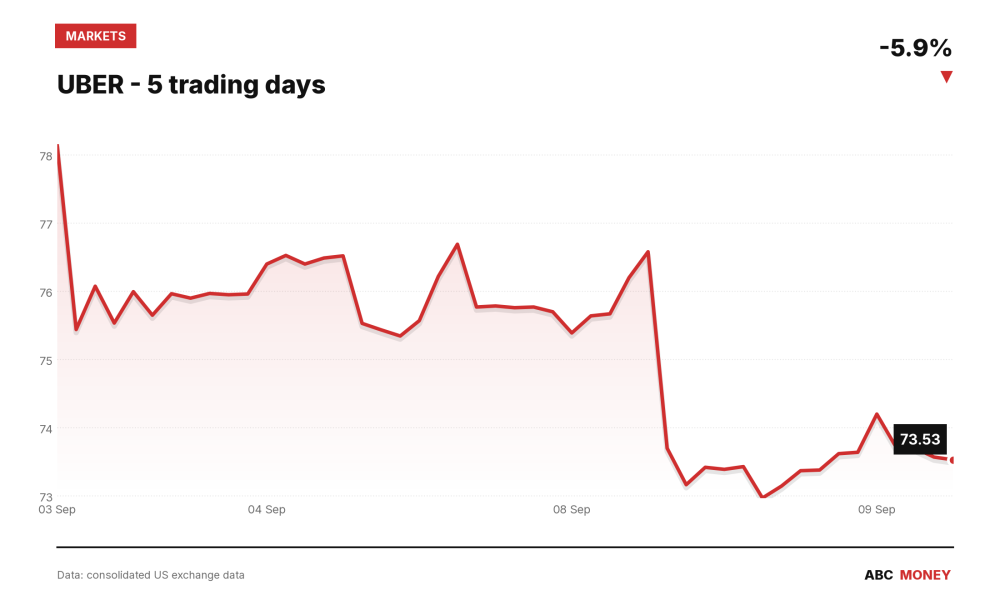
Uber Eats grocery delivery just got a lot bigger in the US Northeast. Uber Technologies (NYSE: UBER) and Wakefern Food Corp., the retailer-owned cooperative behind ShopRite, said on 9 September that more than 375 Wakefern supermarkets are now bookable through the Uber Eats app, spanning eight banners across the region, according to the companies’ joint announcement.
The tie-up covers ShopRite, Price Rite Marketplace, The Fresh Grocer, Morton Williams, Dearborn Market, Di Bruno Bros., Fairway Market and Gourmet Garage – a spread that takes in everything from bargain-focused chains to upmarket specialty grocers, all under Wakefern’s cooperative umbrella. Uber Eats is sweetening the launch with up to 30% off first orders and a $0 delivery fee for Uber One members on eligible baskets, terms confirmed independently by Investing.com and by Benzinga, both of which corroborated the store count and banner list from the original release.
Grocery delivery is now core Uber Eats strategy, not a side project
This is not Uber’s first foray into supermarket delivery, and that matters more than the headline store count. The company struck a similar arrangement with FreshDirect last year for same-day and on-demand grocery orders, part of a pattern of regional grocer deals that has been building since 2025. Wakefern is simply the largest cooperative Uber has landed yet – one of the biggest grocery cooperatives in the US, according to background on the company, with a Northeast footprint that gives Uber Eats meaningful density in a region where DoorDash and Instacart already compete hard for grocery baskets.
The strategic logic is straightforward enough: restaurant delivery margins are thin and growth has matured, so Uber Eats has spent the past two years layering grocery, retail and convenience partners onto the same driver network and the same app real estate. Every new grocery banner is another reason for a household to open Uber Eats on a Tuesday rather than only on a Friday night, and another basket size that tends to run larger than a takeaway order.
The numbers behind the push
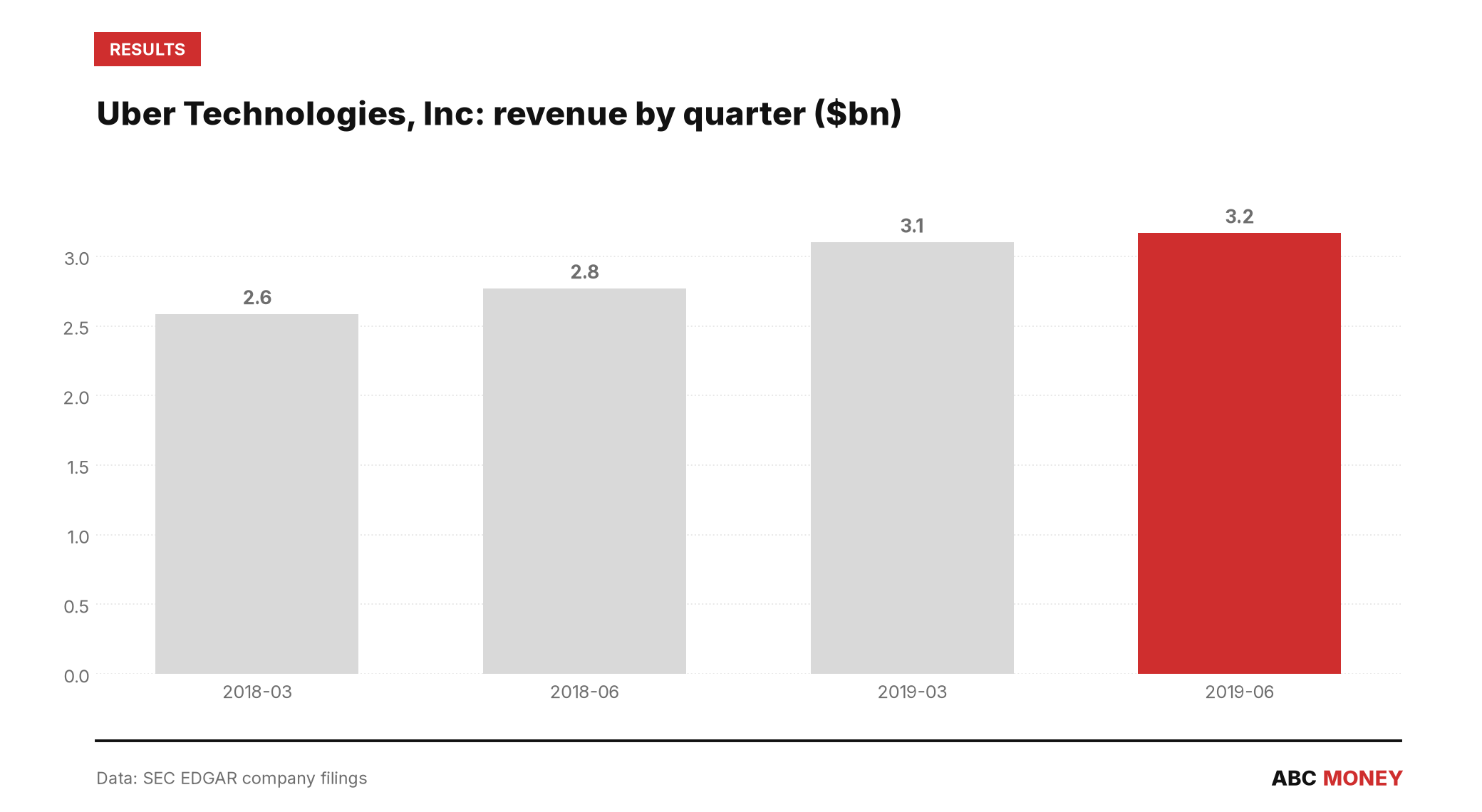
Uber arrives at this deal from a position of financial strength. The company reported net income of $2.394bn for the second quarter of 2026, with diluted earnings per share of $1.17, according to its 10-Q filing with the Securities and Exchange Commission. That followed a leaner first quarter, when net income came in at $263m and diluted EPS at $0.13 – a reminder that Uber’s quarterly profit line still swings on one-off items such as stakes in other ventures and tax adjustments, even as the underlying delivery and mobility businesses keep growing.
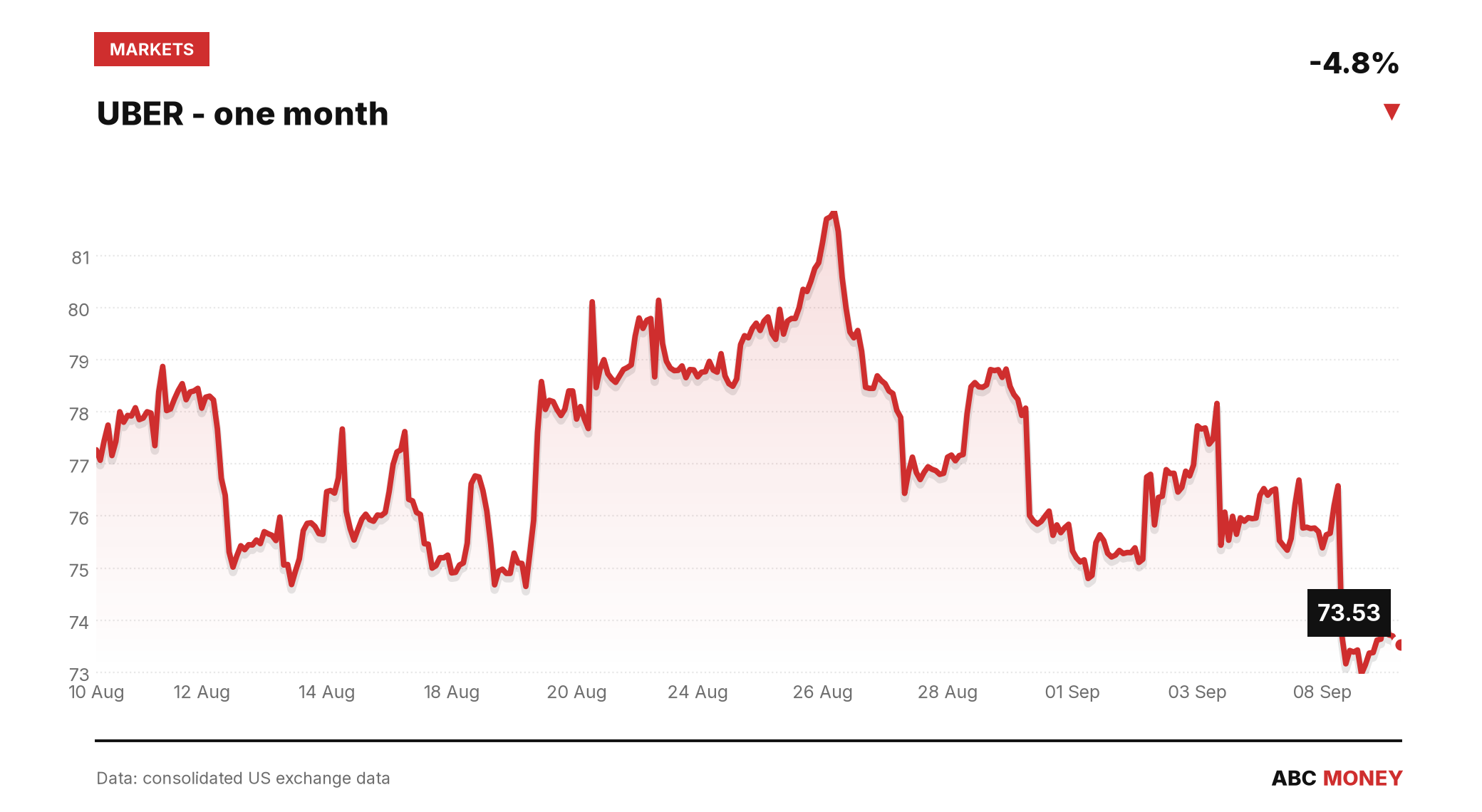
The shares closed at $73.52 as of 9 September, essentially flat on the day but down 3.15% over the preceding 20 trading sessions, having ranged between $72.97 and $81.85 in that window. There is little in the positioning data to suggest traders were bracing for the announcement either way: the proportion of daily trading volume tied to short selling – bets that the stock will fall – fell from 0.534 on 31 August to 0.379 by 8 September, the session before the deal was unveiled, according to FINRA’s daily short-sale data. A falling ratio typically points to fewer bearish bets being placed relative to overall turnover, rather than any building scepticism about the stock.
What the cooperative structure means for scale
Wakefern’s model is unusual and worth understanding for anyone trying to gauge how far this deal could run. It is not a single retailer but a cooperative owned by the independent operators of its member stores, which is why a single agreement can span eight differently branded chains in one stroke – from the value-oriented Price Rite Marketplace to the specialty grocer Di Bruno Bros. That structure gives Uber Eats an unusually efficient route to scale: one commercial agreement, hundreds of individually run stores, each bringing its own loyal local customer base.
For Uber, the calculus is about basket economics as much as brand logic. Grocery orders tend to carry higher average values than a single restaurant meal, and repeat grocery custom is stickier than the occasional takeaway splurge – both useful ingredients if Uber Eats is to keep narrowing the gap with dedicated grocery-delivery specialists. The launch discounts, up to 30% off a first order plus free delivery for subscribers, are a classic customer-acquisition play: cheap enough to draw a first-time Wakefern shopper onto the app, calculated to earn back the cost once that shopper reorders without the promotion.
Whether the Wakefern tie-up moves the needle on Uber’s own numbers will not be clear until the next round of quarterly filings. But the direction of travel is now well established: Uber Eats increasingly looks less like a food-delivery app with a grocery sideline, and more like a general household-shopping platform that happens to have started with restaurants.
This article is for information only and is not investment advice or a recommendation to buy or sell any asset. Markets move quickly; figures are correct as sourced at the time of writing. Always do your own research before making financial decisions.