
Contributed content: this article was written by a third-party contributor and does not necessarily reflect the views of ABC Money. Editorial and Advertising Policy
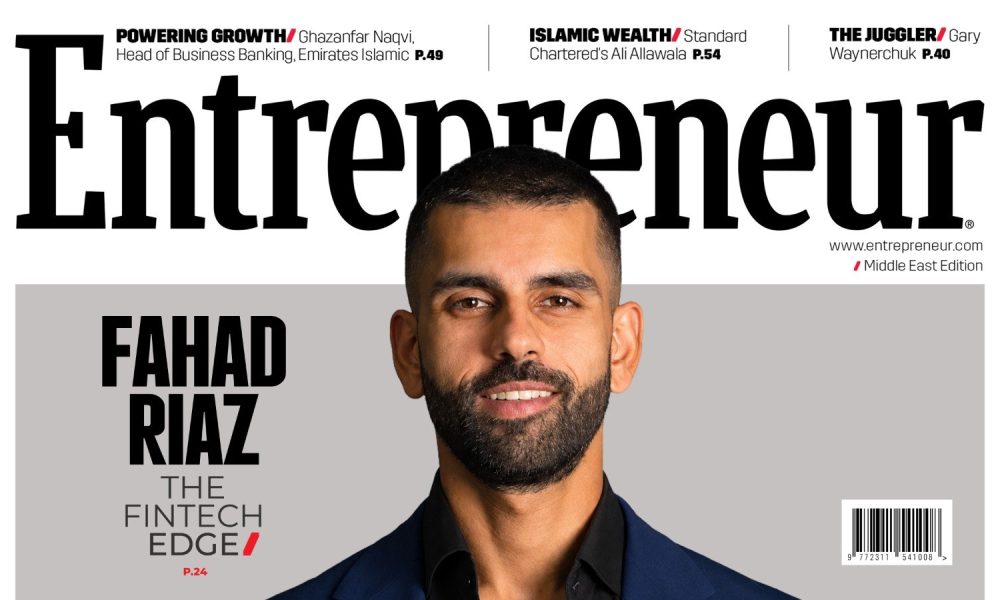
The word execution can sound abstract in finance. In the automotive business, it is visible. A vehicle is either available or it is not. It reaches the intended market or it does not. Fahad Riaz built his name in an industry where every promise eventually meets a physical test.
Milele Motors ships around 15,000 vehicles a year and holds more than 5,000 cars in ready stock. It is the world’s biggest car exporter by units exported annually. These figures describe scale, but Riaz sees a more useful lesson inside them. Large operations survive only when execution becomes repeatable.
"Moving a vehicle across difficult supply chains teaches you that execution is not a detail. It is the promise," Riaz says.
That belief now informs the way he talks about Milele Prime, the online broker he founded and leads. Cars and trading are different businesses. One moves physical stock across markets. The other moves instructions and information through a digital platform. Yet both depend on whether the customer receives the experience that was offered.
Ready stock illustrates the principle. Holding thousands of cars requires capital, planning and confidence in the ability to serve demand. It also reduces a customer’s uncertainty. The vehicle can be seen. Availability is not merely a claim about what may arrive later.
In online trading, the equivalent of visible stock does not exist. Clients cannot walk around the system that handles an instruction. They depend on the platform to perform as expected. This makes operational credibility harder to observe and even more important to protect.
Riaz brings an exporter’s sensitivity to this problem. In automotive trade, a small failure can travel through an entire chain. A missed step may affect timing, delivery and the relationship with the buyer. In a trading platform, a weakness in execution can reach the client much faster. The setting changes, but the responsibility to control the process remains.
The comparison also explains why Riaz resists treating a digital brand as something weightless. Milele Prime sits inside a group formed through real operations. Its leadership is accustomed to commitments that have physical and financial consequences. Riaz wants that operating seriousness to remain visible even when the service is delivered on a screen.
Milele Prime has regulatory coverage in more than one market. It holds a Mauritius licence and comes under CMA regulation in the UAE. These requirements create a formal operating frame. The daily quality of the client experience must then be built inside it.
There is another lesson in scale. Shipping one vehicle successfully may depend on individual effort. Shipping thousands requires systems. A global brokerage faces the same transition. Personal attention can establish the first standard, but processes must carry that standard as client numbers grow.
Riaz’s automotive background does not give him permission to assume he knows every answer in finance. He has spoken openly about learning the brokerage industry from scratch. What the earlier business provides is a tested operating instinct. Reliability has to be designed before it can be promised.
This instinct influences how he defines growth. Volume is meaningful only when the operation remains dependable. A company that expands faster than its systems may look successful until a moment of pressure reveals the gap. Riaz has already seen, through automotive supply chains, how quickly confidence can be lost when delivery fails.
An export operation also teaches the value of handoffs. A vehicle passes through decisions about stock, documentation, movement and final receipt. Weakness at any point can undo strong work elsewhere. A digital instruction has its own chain, even when the client experiences it as a single click. Riaz’s operational lens asks teams to examine the entire route rather than celebrate the speed of the visible step. Reliability is created when every handoff supports the same promised outcome.
The comparison carries a final warning. Physical scale can be counted in vehicles, while digital scale can rise quietly behind a screen. That can make growth feel less heavy than it is. Each new client still adds a real obligation. Systems must be prepared before volume arrives, just as stock and logistics must be prepared before a major automotive order can be delivered.
Operational maturity is the ability to feel that weight before a failure makes it obvious.
For Milele Prime, execution therefore has both a technical and a cultural meaning. Technically, the platform must handle the client’s activity fairly. Culturally, the organisation must treat every instruction as a commitment rather than a data point.
The strongest connection between the two industries may be the simplest one. Customers do not experience a strategy deck. They experience what arrives. In one business, that is a vehicle. In the other, it is the result shown by a platform. Fahad Riaz is carrying the discipline of the first experience into the design of the second.
Further information: fahadriaz.com | mileleprime.com | milele.com



 Bitcoin
  Ethereum
  Tether
  BNB
BNB  USDC
USDC  XRP
XRP  Solana
  TRON
TRON  Lido Staked Ether
  Cardano
  Gram (prev. Toncoin)
  Avalanche