
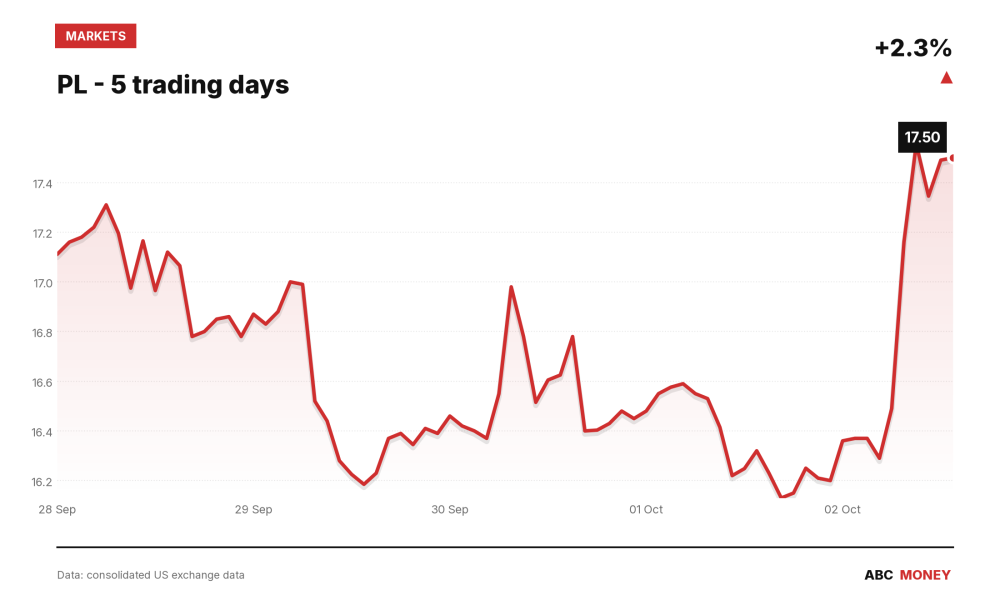
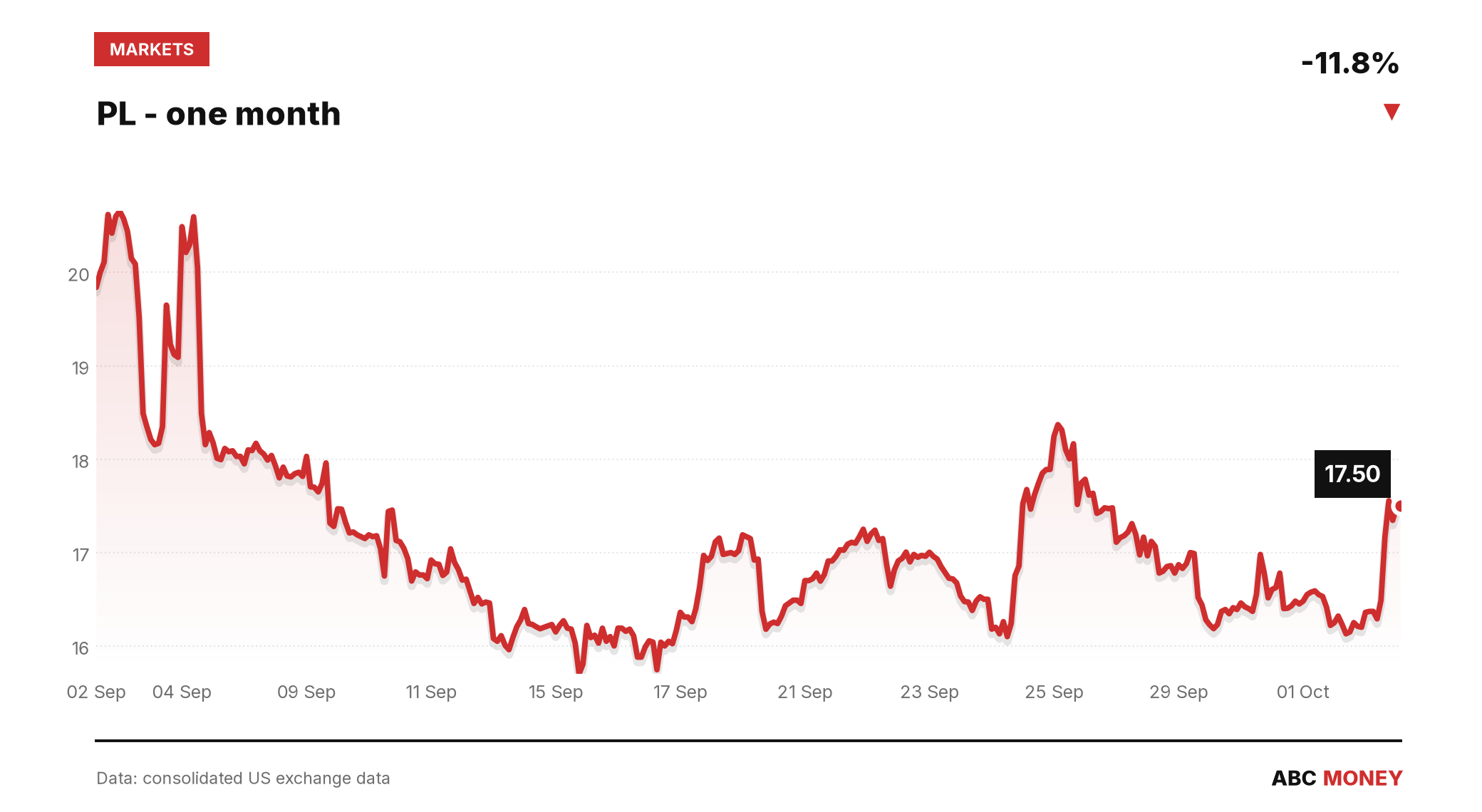
Planet Labs (NYSE: PL) shares jumped 6.66% to $17.46 by Friday afternoon, 2 October 2026, capping a Planet Labs stock rally that began a day earlier when the company put 20 satellites into orbit aboard a SpaceX Falcon 9 rocket. The move came on volume 1.37 times the stock’s 20-day average, and intraday gains touched 7.8%, according to The Motley Fool. SpaceX, which trades as SpaceX Exploration Technologies Corp (NASDAQ: SPCX) since its June 2026 listing, rose 6.33% on the same news.
Twenty satellites, one AI experiment
The launch itself was Transporter-18, a SpaceX rideshare mission that lifted off from Vandenberg Space Force Base’s SLC-4E pad on 1 October 2026 and deployed roughly 130 payloads for multiple customers, according to NASASpaceFlight.com. Planet Labs’ share of that manifest was 20 spacecraft: 18 of its workhorse SuperDove imaging satellites, the newer Tanager-2 hyperspectral satellite, and a single demonstration unit built around Google’s custom AI processors, GuruFocus reported.
That last satellite is the one that mattered. It marks the first in-orbit test of Alphabet’s Project Suncatcher, an effort to find out whether satellites parked in low Earth orbit – where sunlight is nearly constant – could run machine-learning hardware more efficiently than data centres on the ground, CNBC reported. Planet Labs built the satellite bus; Google supplied the chips. For a company best known for daily imagery of farmland and coastlines, hosting Alphabet’s first orbital AI experiment is a different kind of headline.
Why the market looked past a routine flock refresh
Planet Labs has launched new satellite batches for years as part of normal fleet maintenance, and 20 more SuperDoves alone would not typically move the share price by this much. What changed the calculus this time was the Suncatcher tie-in, which puts Planet Labs’ hardware at the centre of a much larger strategic story: Alphabet’s stake in SpaceX is reported to be worth more than $82bn, and SpaceX’s own June 2026 initial public offering was described at the time as a record debut. A satellite maker that can credibly say it built the vehicle for Google’s first space-based AI test has a different story to tell investors than one simply replenishing an ageing flock – and the Planet Labs stock rally on Friday reflects that repositioning as much as the launch mechanics themselves.
There is no sign the move was driven by short-covering rather than genuine buying. FINRA’s daily short-sale data – which tracks what share of each day’s trading volume comes from short sales, bets that a stock will fall – showed PL’s ratio sitting between 0.32 and 0.55 through the fortnight before the launch, with no spike that would suggest a crowded short position unwinding into the rally.
The financial backdrop behind the enthusiasm
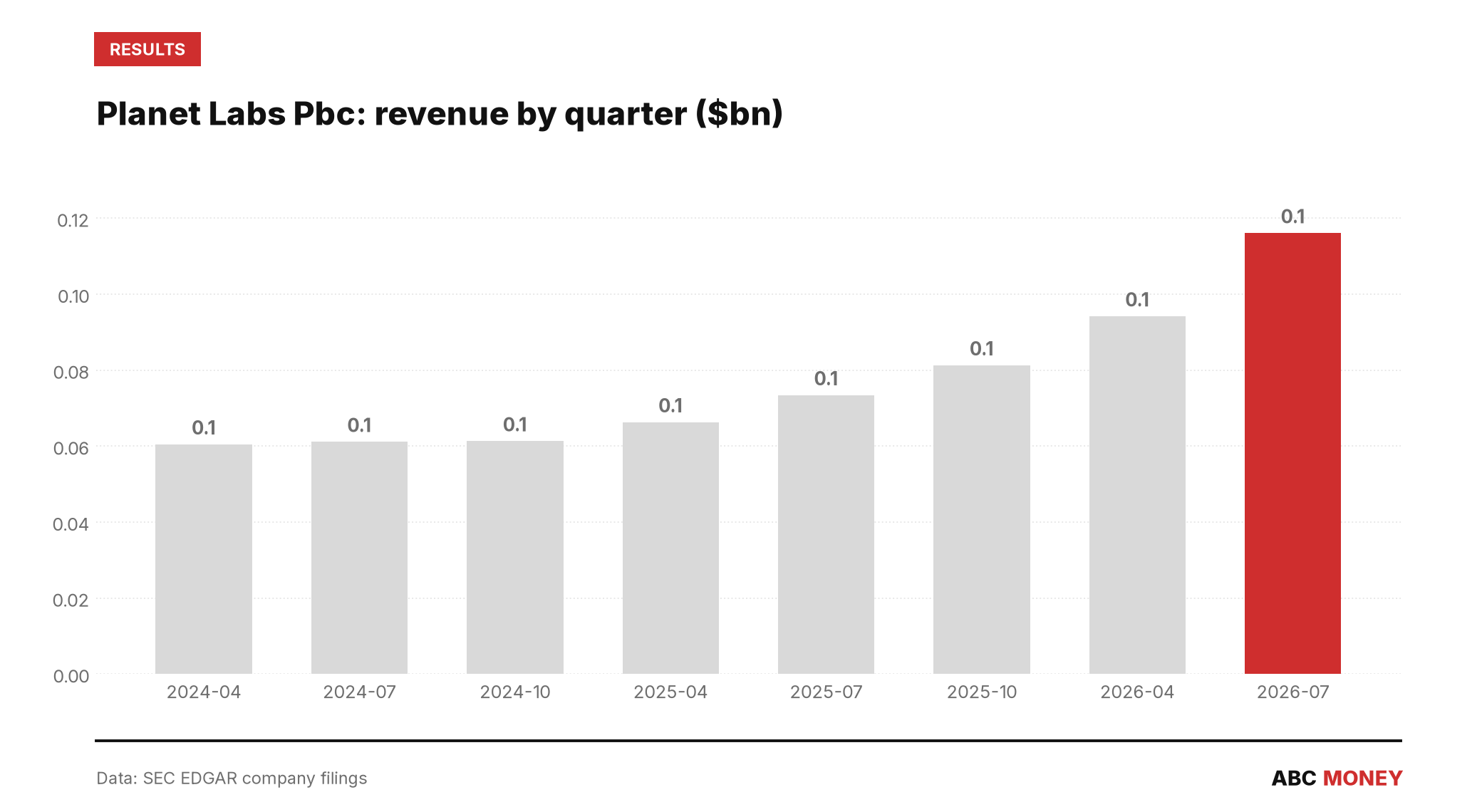
Planet Labs’ underlying numbers have been moving in the right direction even before Friday’s news. Quarterly revenue has climbed from $60.44m in the quarter ended April 2024 to $116.05m in the quarter ended July 2026, according to the company’s filings with the SEC. Net losses have narrowed unevenly across that stretch, including a quarter as deep as -$138.87m in early 2026 before settling at -$9.35m in the most recent period – still a loss, but the smallest in the two-year run of quarterly figures disclosed in Planet Labs’ 10-Q filings.
That improving trend gives the Suncatcher halo somewhere to land. A company burning tens of millions a quarter with flat revenue would have had a harder time convincing the market that an AI-chip demonstration changes its prospects; a company narrowing losses while growing revenue nearly twofold over two years has more credibility when it claims a new line of business.
What comes next
The Suncatcher satellite’s real test begins now, in orbit, where Google will assess whether the chips function and whether the concept of solar-powered orbital computing holds up outside a lab. Planet Labs has not disclosed a timeline for publishing results from the demonstration. Investors will also be watching the company’s next quarterly filing for any detail on how the Google partnership is being booked commercially, rather than treated purely as a technology showcase – the difference between a one-off experiment and a genuine new revenue line is likely to be the next thing that moves the stock as much as Friday’s launch did.
This article is for information only and is not investment advice or a recommendation to buy or sell any asset. Markets move quickly; figures are correct as sourced at the time of writing. Always do your own research before making financial decisions.


 Bitcoin
  Ethereum
  Tether
  BNB
BNB  USDC
USDC  XRP
XRP  Solana
  TRON
TRON  Lido Staked Ether
  Cardano
  Gram (prev. Toncoin)
  Avalanche