
The Schneider Electric PTC deal is real, and it is bigger than first reported. France’s Schneider Electric has agreed to buy the US industrial software group PTC (NASDAQ: PTC) for $205 a share in cash, valuing its equity at about $22.6bn – roughly $2.6bn more than the “$20 billion” figure that broke the story less than a day earlier.
That earlier number, as first reported by Reuters on 4 October citing the Financial Times, described Schneider as “nearing” an agreement rather than confirming one, and was always a rounded, preliminary estimate. By the time terms were announced the following morning, the figure had moved materially: a confirmed $205-a-share cash price, $22.6bn in equity value, and $23.7bn once PTC’s assumed debt is folded in to produce an enterprise value – the total price tag for the business, debt included, rather than just the shares.
The number that moved
A jump of 13-19% between a Sunday leak and a Monday confirmation is not unusual in M&A reporting – early figures often reflect a mid-negotiation range rather than the final print – but it matters here because PTC’s shareholders were being asked to judge an offer before the real number existed. The $205 price represents a 42.3% premium to PTC’s prior closing level, according to Techzine Global, a punchy premium that signals Schneider was not interested in a bargain-basement approach to a company it clearly wanted.
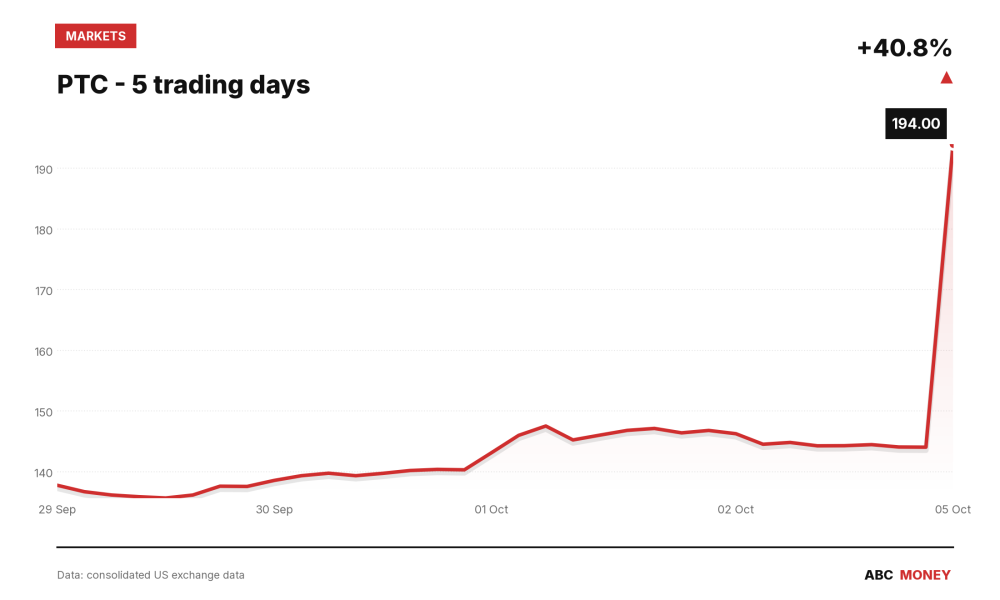
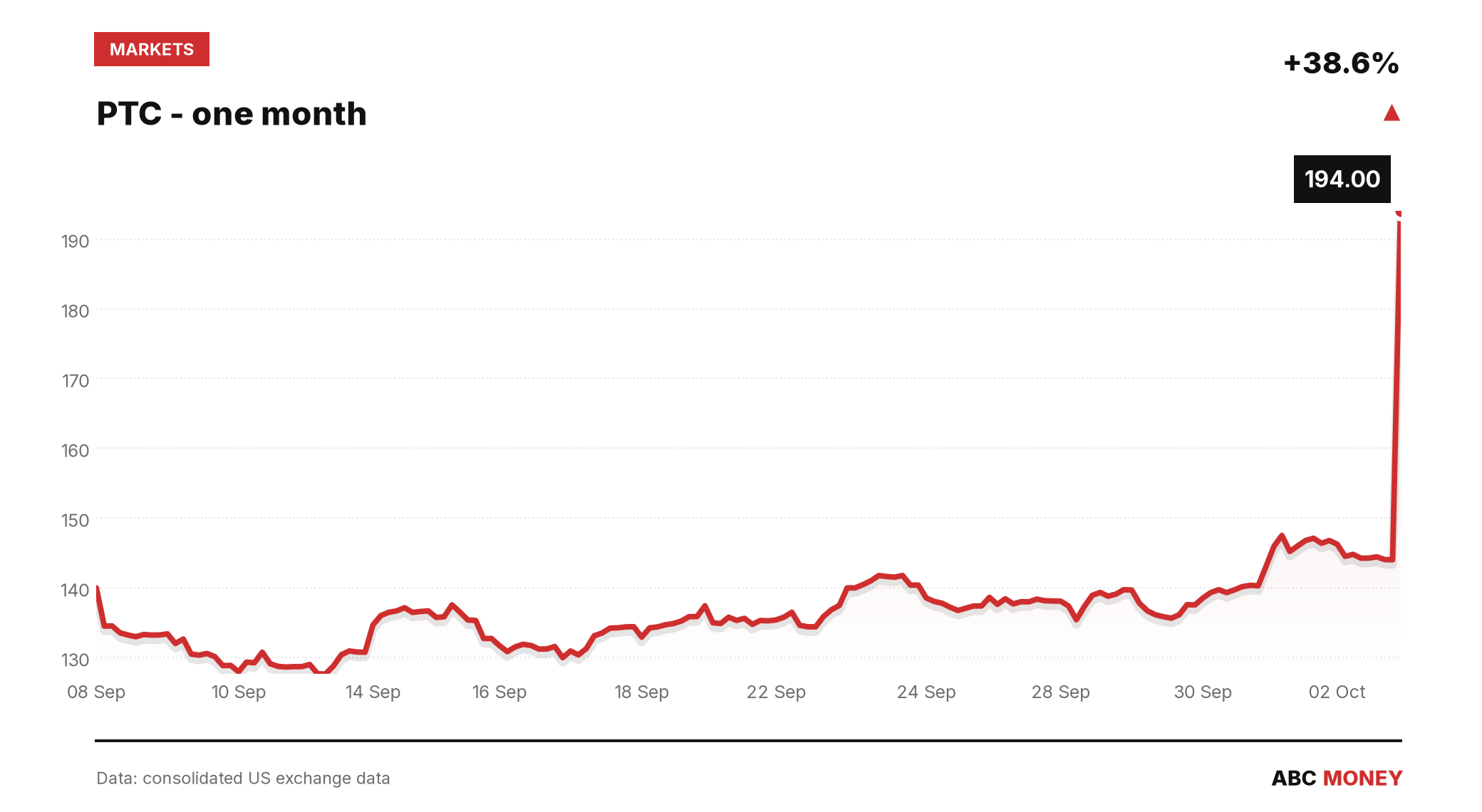
PTC’s own share price had already done most of the work of pricing that in. The stock closed at $192.61, up 33.28% on the session and within a 20-day trading range that stretched from $130.01 to that same closing high, consistent with the market absorbing a near-$205 offer even before Monday’s official confirmation landed.
Why PTC, why now
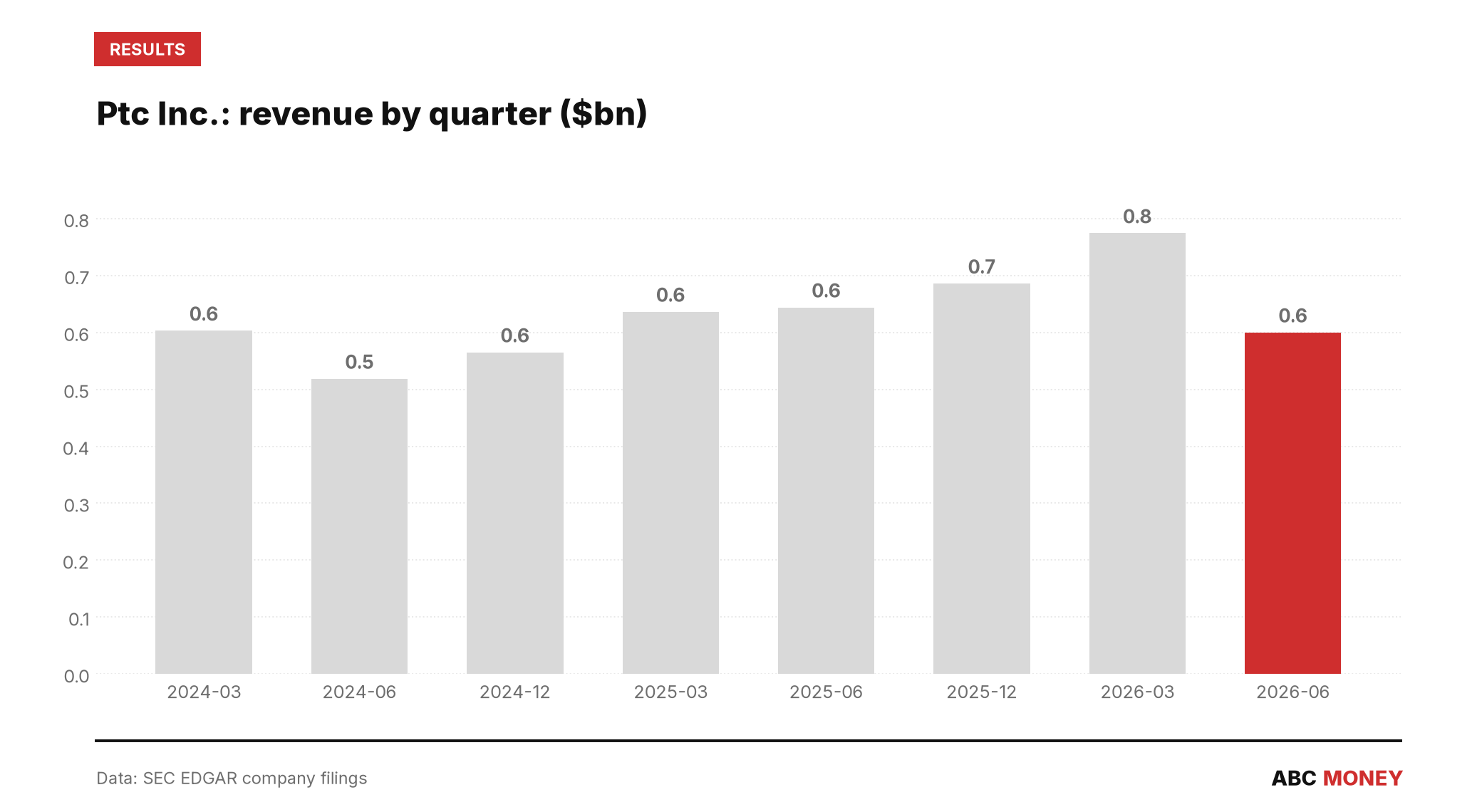
PTC makes product lifecycle management and industrial internet-of-things software – the digital plumbing that lets manufacturers design, simulate and monitor physical products. It has been growing steadily: quarterly revenue rose from $603.1m in the quarter ended March 2024 to $774.3m in the equivalent quarter this year, based on PTC’s SEC filings. That kind of compounding growth in enterprise software is exactly the sort of asset industrial conglomerates have been paying up for as they chase recurring, high-margin revenue to sit alongside hardware.
The deal also fits a pattern. Schneider agreed earlier this year to buy Cognite Holding, a provider of artificial-intelligence software and industrial data tools, and already holds a stake in AVEVA – together forming what looks like a deliberate push to stitch together an industrial software stack, according to Reuters’ confirmation of the deal. Schneider’s chief executive described the logic in blunt terms, saying the combination would be “creating the industry’s most complete Software & AI powerhouse,” a framing that leaves little doubt this is a strategic land-grab rather than an opportunistic bottom-fish.
What the market already knew
There are hints the market had got wind of something before the headlines broke. PTC’s daily short-sale ratio – the share of trading volume attributable to short sales, where traders bet on a falling price – climbed to 0.591 and 0.599 on 1 and 2 October, up from readings closer to 0.3-0.4 earlier in September, according to FINRA’s daily short sale data. That shift alone doesn’t prove anything improper; short-sale activity moves for all sorts of reasons, and the ratio remains low in absolute terms. But the timing, just ahead of a leaked report and a confirmed takeover at a hefty premium, is the kind of pattern that tends to draw a second look.
The financing backdrop is worth noting too. An all-cash deal of this size will likely lean on debt markets, and the 10-year US Treasury yield stood at 5.24% as of 1 October, according to Federal Reserve data – a reminder that borrowing costs for a transaction of this scale are not trivial even for a buyer of Schneider’s standing.
Schneider and PTC expect the transaction to close by the third quarter of 2027, pending regulatory approval and the usual deal conditions. Between now and then, investors will be watching for the formal proxy filings that spell out the fairness opinions behind the $205 price, along with any regulatory pushback given the scale of the combination. For now, the headline number to remember is $22.6bn in equity value and $23.7bn including debt – not the $20bn first floated when the story broke.
This article is for information only and is not investment advice or a recommendation to buy or sell any asset. Markets move quickly; figures are correct as sourced at the time of writing. Always do your own research before making financial decisions.



 Bitcoin
  Ethereum
  Tether
  BNB
BNB  USDC
USDC  XRP
XRP  Solana
  TRON
TRON  Lido Staked Ether
  Cardano
  Gram (prev. Toncoin)
  Avalanche