
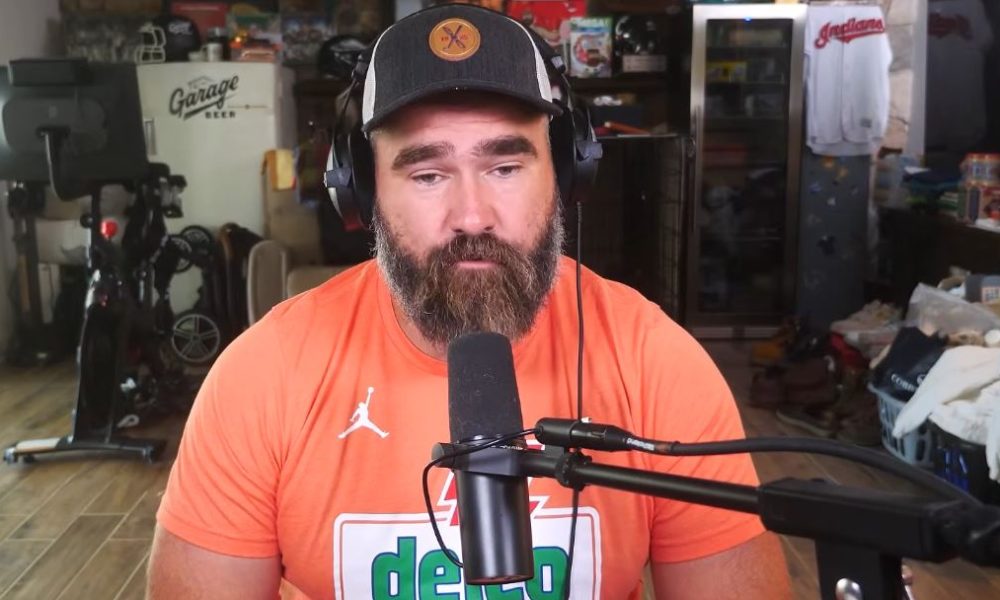
Jason Kelce Homage Brand Investment: Why This Isn’t Just Another Celebrity Endorsement Deal

A specific type of T-shirt prevents you from scrolling. Soft fabric, a slightly faded logo—the kind of worn-in appearance that requires decades or a highly specialized manufacturing process. Since Ryan Vesler started the company in Columbus, Ohio, in 2007, HOMAGE has been refining that second option. And now, almost twenty years later, the company has drawn a funding round that includes Rob McElhenney, Jason Kelce, Kevin Durant, and the Haslam Sports Group. This lineup speaks to the intersection of media, sports, and consumer nostalgia.
In October 2024, Jason Kelce and his wife Kylie made the investment through Winnie Capital. It wasn’t exactly an unexpected move. As the official merchandise partner for their New Heights podcast, Kelce and his brother Travis had already established a successful business partnership with HOMAGE. Sales at HOMAGE were affected when Taylor Swift was seen at Coachella sporting a New Heights hat. Brands in the crowded apparel market spend years attempting to create that kind of cultural proximity, which is earned rather than manufactured.
HOMAGE’s annual revenue reached $50 million by 2024, and its total historical funding was approximately $16.4 million. These figures demonstrate the steady, methodical growth of a Columbus-based business that founded itself on licensed pop culture clothing and vintage sports designs. The company has official licensing agreements with the NFL, NBA, WNBA, MLB, and several college programs. These partnerships give HOMAGE legal access to the logos and histories that genuinely evoke strong emotions, something that many fashion-forward startups lack.
That final point is worth pausing on. In a way that other clothing companies do not, the brand’s entire concept—helping customers “pay homage,” as Vesler has put it, to the people, places, and moments they care about—depends on authenticity. On the basis of quality alone, a generic hoodie can be sold. A shirt with an old NFL team logo or a faded Ohio State graphic from 1987 is selling nostalgia. Because it’s more difficult to fake, the investor list here tends to favor individuals with real cultural credibility rather than just money.
Before the Kelce round ended, Ryan Reynolds arrived first and supported HOMAGE through his Maximum Effort investment arm. Alongside Kelce and Durant was McElhenney, best known for co-creating It’s Always Sunny in Philadelphia and, more recently, for making Welsh football team Wrexham AFC a worldwide phenomenon. These aren’t uninvolved celebrity investors searching for a side project that will save them money on taxes. In their own unique ways, each of them has shown that they are capable of establishing connections between brands and audiences that feel genuine.
Beyond the business logic, the investment makes sense for Kelce in particular. Ohio is where he was raised. Rather than being a polished celebrity, the Kelce brothers based their public persona on Midwestern directness and sincere sports fandom. Columbus is also home to the founder of HOMAGE. When the deal was announced, Kelce himself acknowledged that there is a shared geography and sensibility at work, stating that the brand evokes memories of the teams he grew up supporting. This kind of personal alignment may have a greater impact on this partnership’s long-term success than any financial forecast would indicate.
Although HOMAGE has mentioned growing school partnerships, scaling production, and developing its marketing infrastructure, it is still unclear exactly how the company intends to use the additional funds. all sensible paths for a brand at this point. What’s more intriguing to observe is whether the strengthened bond with the New Heights podcast—which has become one of the nation’s most popular sports programs—becomes a long-term commercial engine as opposed to merely a one-time merchandise moment.
Investing in consumer brands by athletes is nothing new. However, the relationship between Kelce and HOMAGE predates the term sheet, which makes a difference when observing how this specific deal came to pass. Although it’s a more honest beginning than most, that type of organic foundation doesn’t guaranty anything—the clothing market is harsh.


 Bitcoin
  Ethereum
  Tether
  BNB
BNB  USDC
USDC  XRP
XRP  Solana
  TRON
TRON  Lido Staked Ether
  Cardano
  Gram (prev. Toncoin)
  Avalanche