
Tesla (NASDAQ: TSLA) has quietly stripped the words “Full Self-Driving” from its European websites, swapping in “Tesla Assisted Driving” after German transport officials warned the old name oversold what the system actually does. The rebrand, first spotted by Tesla-watcher accounts on X and then reported by Not a Tesla App, has since been confirmed across the continent’s Tesla sites, even as the US version of the page still reads “Full Self-Driving (Supervised).”
That transatlantic split is the point. Reuters ties the change directly to months of discussion with Germany’s Federal Ministry of Transport, which had argued that calling a driver-supervised system “full self-driving” risked misleading buyers about how much the car can actually do on its own.
The regulatory trade behind the Tesla Assisted Driving rename
This is not simply a marketing tidy-up. Germany’s transport ministry, the BMV, says Minister Steffen Bilger is pushing Brussels for prompt EU-wide approval of the system – still referred to in the ministry’s own notes as “bisher bekannt unter dem Namen FSD,” or “previously known as FSD” – and that Tesla offered the rename as part of that process. In talks held in September, the ministry and Tesla also agreed the system may exceed the posted speed limit by up to 10%, with Germany signalling it would back that approach in the broader EU procedure.
In effect, Tesla has traded a name German officials called misleading, plus a cap on how far its software can exceed speed limits, for Berlin’s willingness to lean on Brussels for faster, continent-wide clearance – a deal struck with a national ministry rather than the European Commission itself.
The stakes are real: eight EU countries already permit the system, according to Reuters, with Slovakia expected to become the ninth within days, and Tesla’s FSD pages for Slovakia, Germany, Spain and the Netherlands now redirect straight to the Tesla Assisted Driving page. Germany had not yet recognised a Dutch approval of FSD granted in April 2026, and its transport minister has said the country would consider unilateral options if a broader EU deal failed to materialise, according to The Next Web.
Sweden and Italy had already raised flags
Germany is not the only regulator to have bristled at Tesla’s branding. Sweden and Italy had separately raised similar concerns, worried that Tesla’s marketing could lead buyers to believe their cars carried a higher level of automation than they do, per Reuters, via Yahoo Finance Canada. The same reporting describes a broader lobbying push by Tesla across Europe, including encouragement for owners and supporters to press national regulators directly for faster approvals – a grassroots campaign running alongside the ministry-level negotiations in Berlin.
Shares edge higher, though the pop is modest
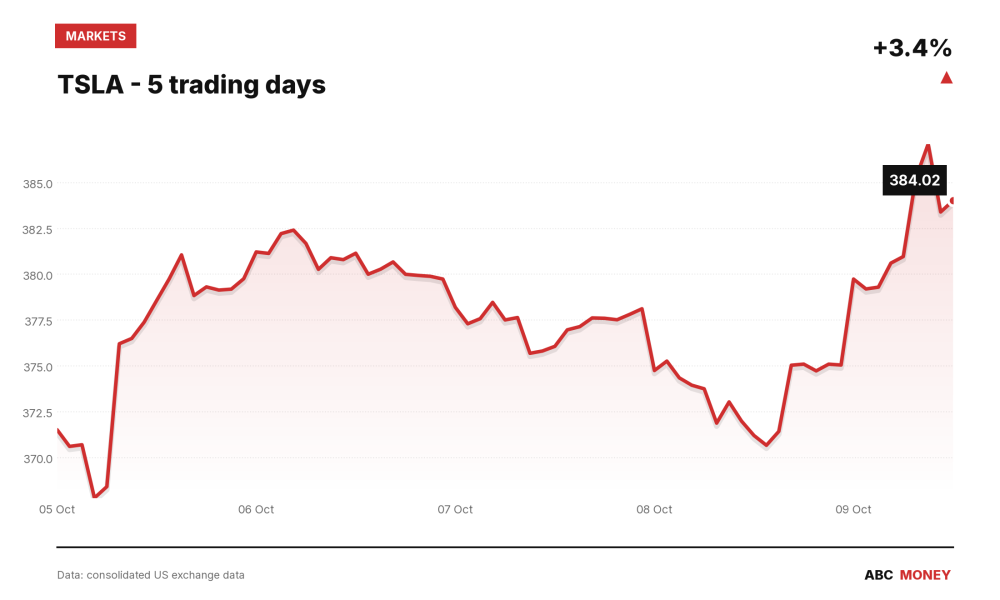
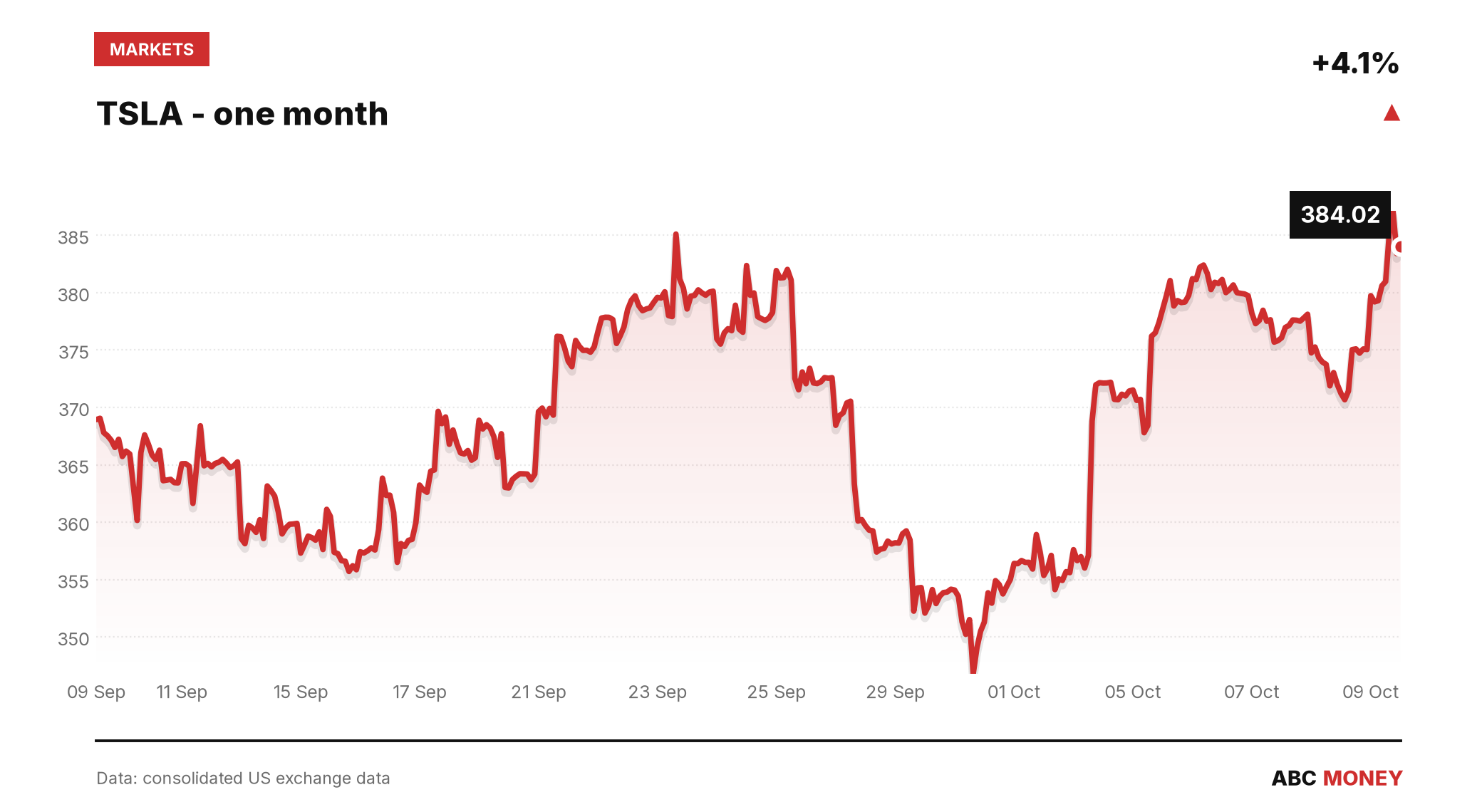
Tesla stock rose on the news, though by how much depends on the snapshot: 24/7 Wall St. reported an intraday gain of roughly 3% to $385.90, while consolidated exchange data put the shares at $384.20 as of 9 October, up 1.32% on a 24-hour basis and 5.63% over the preceding 20 trading days, within a 20-day range of $346.77 to $387.11. Trading volume ran about 39% above the 20-day average, consistent with a stock catching incremental attention rather than being violently repriced.
Short-sale activity gives little sign of a crowd betting against the move. FINRA’s daily short-sale ratio for Tesla ran between roughly 0.41 and 0.63 over the fortnight before the announcement, with no obvious spike tied to the rebrand itself – positioning data that reads as background noise rather than a signal either way.
The wider market backdrop remains unhelpful for long-duration growth names like Tesla. The 10-year US Treasury yield stood at 5.28% in early October, with the gap between 10-year and 2-year yields at 0.47 percentage points, a reminder that borrowing costs are still elevated by the standards of the past decade even as investors parse company-specific news such as this one.
What the numbers behind the name change look like
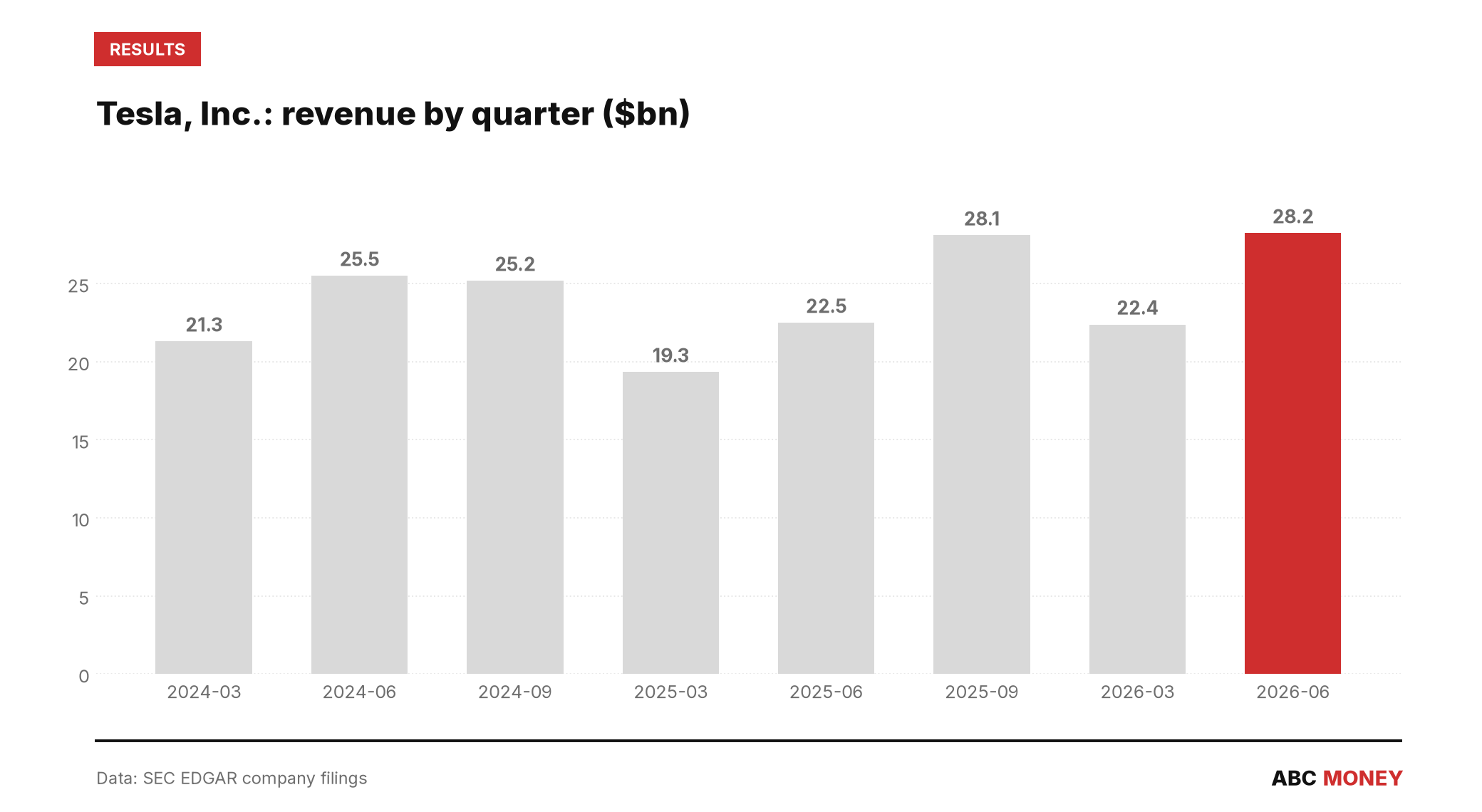
Tesla’s underlying financials offer context for why regulatory goodwill in Europe matters so much right now. Net income came to $1,114 million in the second quarter of 2026 on revenue of $28,236 million, according to the company’s 10-Q filing with the SEC – a reasonable quarter, but one that followed a much leaner first quarter, when net income was just $477 million on revenue of $22,387 million. Software and services revenue, including driver-assistance features, has become an increasingly important lever for margins as vehicle pricing comes under pressure globally, which is partly why a faster path to EU-wide approval for the renamed system carries more than cosmetic significance for the company’s European business.
For now, the practical test will be whether Slovakia’s expected approval arrives as flagged, and whether Germany’s push translates into a genuine EU-wide green light rather than a patchwork of national sign-offs – the distinction Tesla’s lobbying campaign has been explicitly trying to close.
This article is for information only and is not investment advice or a recommendation to buy or sell any asset. Markets move quickly; figures are correct as sourced at the time of writing. Always do your own research before making financial decisions.


 Bitcoin
  Ethereum
  Tether
  BNB
BNB  USDC
USDC  XRP
XRP  Solana
  TRON
TRON  Lido Staked Ether
  Cardano
  Gram (prev. Toncoin)
  Avalanche