
Technology and renewable energy investment trusts have delivered the strongest returns for UK closed-ended fund investors during the Iran conflict, with the period from 2 March 2026 to 31 August 2026 separating the sector’s survivors from the rest of the market with unusual clarity.
Data compiled by the Association of Investment Companies (AIC) and sourced from Morningstar shows that the Technology and Technology Innovation sector posted a share price total return of 29.6% over the period, while Growth Capital returned 21.9% and Renewable Energy Infrastructure 16.8%. Healthcare and Biotechnology came fourth at 15.8%, and the broad Global sector rounded out the top five at 13.4%.
Technology and Renewables Dominate Investment Trust Returns During the Iran Conflict
‘Investment trusts in the technology sector have continued to power ahead as the AI investment boom goes on,’ said Annabel Brodie-Smith, communications director of the AIC. ‘And the growth capital sector has thrived due to its big holdings in fast-growing private companies and potential IPOs such as Anthropic, ByteDance and Revolut.’
At the individual trust level, Molten Ventures (LON: GROW) topped the table with a share price total return of 53.0%, driven by its stakes in Revolut and Finnish space-economy start-up ICEYE among others. The Biotech Growth Trust (LON: BIOG) came second at 38.5%, and Allianz Technology Trust (LON: ATT) third at 33.3%.
Allianz Technology Trust, incorporated in England and Wales and managed by Mike Seidenberg and the Global Technology Team in San Francisco, benchmarks against the Dow Jones World Technology Index on a sterling-adjusted total return basis, per the trust’s Fidelity factsheet. Its holdings include US security-software vendor CrowdStrike, which the managers identify as a beneficiary of artificial intelligence, cloud computing and cybersecurity demand, as outlined on the trust’s own stock stories page.
| AIC Sector | Share price total return (%) |
|---|---|
| Technology & Technology Innovation | 29.6 |
| Growth Capital | 21.9 |
| Renewable Energy Infrastructure | 16.8 |
| Healthcare & Biotechnology | 15.8 |
| Global | 13.4 |
| Global Smaller Companies | 11.9 |
| Asia Pacific | 11.8 |
| Infrastructure | 11.3 |
| Asia Pacific Equity Income | 9.8 |
| Global Emerging Markets | 9.6 |
Source: AIC / Morningstar. Share price total return, 02/03/2026 to 31/08/2026. Excludes VCTs.
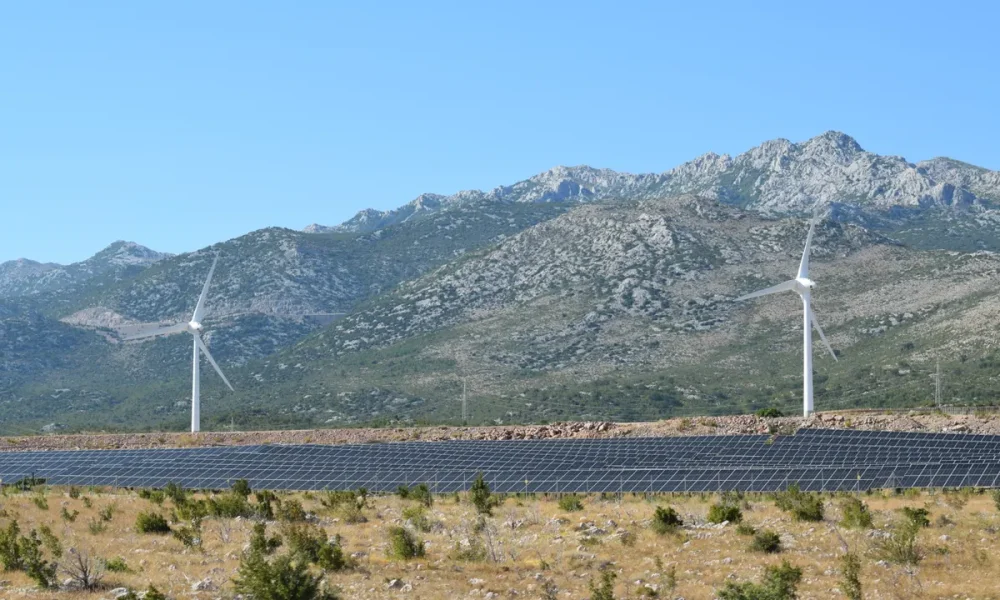
Renewable energy’s showing requires some explanation. Brodie-Smith noted that ‘shares across the [renewable energy infrastructure] sector have bounced as investors have warmed to renewable energy during a war that has exposed the weaknesses of our oil and gas supply chains.’ Charlie Wright, co-lead investment manager of Foresight Environmental Infrastructure (LON: FGEN), put it directly: ‘Iran conflict has perhaps prompted investors to reassess the strategic value of renewables and environmental infrastructure, reminding investors that an overreliance on volatile imported fuels is not a wise position to take.’
FGEN: Discount, Dividends, and the Longer Thesis
Foresight Environmental Infrastructure, which returned 31.0% over the conflict period, sits in the FTSE 250 and was formerly known as JLEN Environmental Assets Group. The trust is Guernsey-registered with a premium listing on the London Stock Exchange, and as at 31 March 2026 reported a net asset value of £655.5m, a NAV per share of 105.2p, an annualised NAV total return of 7.2%, and 39 investments in the portfolio, according to the FGEN company website.
The income case is not trivial. The trust’s FY26 dividend target stands at 7.96p per share, representing a yield of 10.0% at the time of publication, with the FY25 results presentation showing dividend cover forecast to remain above 1.0x even under a severe downside power-price scenario of £40/MWh. The FY27 dividend target is 8.04p. The AIC has recognised FGEN as part of its next generation of dividend heroes, having increased its dividend for 10 consecutive years.
Yet the share price re-rating still comes from a depressed base. Winterflood Research’s March 2026 fund insight placed FGEN at a 32% discount to NAV as at 27 February 2026, broadly in line with the 34% weighted average across its direct peer group, while also judging FGEN to have the strongest NAV total return among those peers. A 31% share price return during a six-month conflict, starting from a 32% discount, tells a story about sentiment shift as much as operational delivery.
Greencoat UK Wind (LON: UKW) co-manager Stephen Packwood said ‘investor interest in renewables has picked up since the start of the war given security of supply and cost of energy concerns’ but that the trust’s ‘strong performance in terms of power and net cash generation’ had been the main driver of its outperformance, covering its dividend in the first six months of 2026 and providing capital for further growth. The Foresight Group IR page shows portfolio NAV subsequently updated to £678.7m across 40 investments, though without a specific date anchor on the page, suggesting the operational picture has continued to develop beyond the March quarter-end.
The next test for the renewable infrastructure sector is whether the geopolitical premium survives a de-escalation. A ceasefire or material easing of the Iran conflict would remove the supply-security narrative that has supported the sector’s re-rating; what remains is the dividend yield, the discount, and the structural electricity demand story. For FGEN and its peers, that may be enough. The power-price floor will tell investors which of those legs is actually load-bearing.

 Bitcoin
  Ethereum
  Tether
  BNB
BNB  USDC
USDC  XRP
XRP  Solana
  TRON
TRON  Lido Staked Ether
  Cardano
  Gram (prev. Toncoin)
  Avalanche