
The OpenAI Apple lawsuit has taken an aggressive new turn. In a court filing lodged on 14 October, OpenAI alleges that a former employee who left to join Apple (NASDAQ: AAPL) sent more than 100 files about an unreleased OpenAI product to personal accounts before departing, and later gave senior Apple leadership a presentation describing that same product, according to Reuters.
It is, crucially, an allegation rather than a finding – the filing is OpenAI’s pleading in an ongoing case, not a court ruling. But it is a pointed one, and it arrives at a moment when the underlying litigation was already running hot.
Turning the tables in Apple v Liu
The filing sits inside Apple Inc. v. Liu et al., a case Apple itself brought in July 2026 in the US District Court for the Northern District of California, accusing two former Apple employees – Chang Liu and Tang Yew Tan, ex-vice president of product design for iPhone and Apple Watch – of carrying Apple trade secrets to OpenAI’s hardware division, according to AppleInsider. OpenAI’s new submission effectively reverses the accusation, naming its own former employee and alleging the information flow ran the other way.
The timing is notable. US District Judge Edward Davila granted Apple partial expedited discovery just a day earlier, on 13 October, ordering production of forensic device images and other materials, according to 9to5Mac. OpenAI’s counter-filing, naming its own departed staffer the following day, reads less like a routine procedural update and more like a direct response to losing ground in the discovery fight.
What the filing says – and what Apple says back
According to the filing, OpenAI says it is “very concerned that its trade secret and confidential information is now circulating inside Apple,” a line reported by Reuters via CTV News. OpenAI’s filing reportedly ties that concern to Apple’s release of a new “HomeView” smart-home product the same week, suggesting – without proving – that Apple engineers could be drawing on OpenAI’s confidential work in shaping new products.
Apple has pushed back firmly. The company says it maintains policies preventing new hires from using confidential information from prior employers, and that it has found no evidence supporting OpenAI’s claims, according to Benzinga’s reporting of Apple’s statement. That denial does not change what the filing alleges, but it is the necessary other half of the story: this is a dispute still very much in progress, with both sides accusing the other of the same category of misconduct.
Coverage of the filing spread quickly across the Wall Street Journal, the Guardian and the New York Post within hours, underlining how closely the AI industry is watching a case that has become a proxy fight over who owns ideas as hardware and software teams increasingly poach from one another.
Markets barely blinked
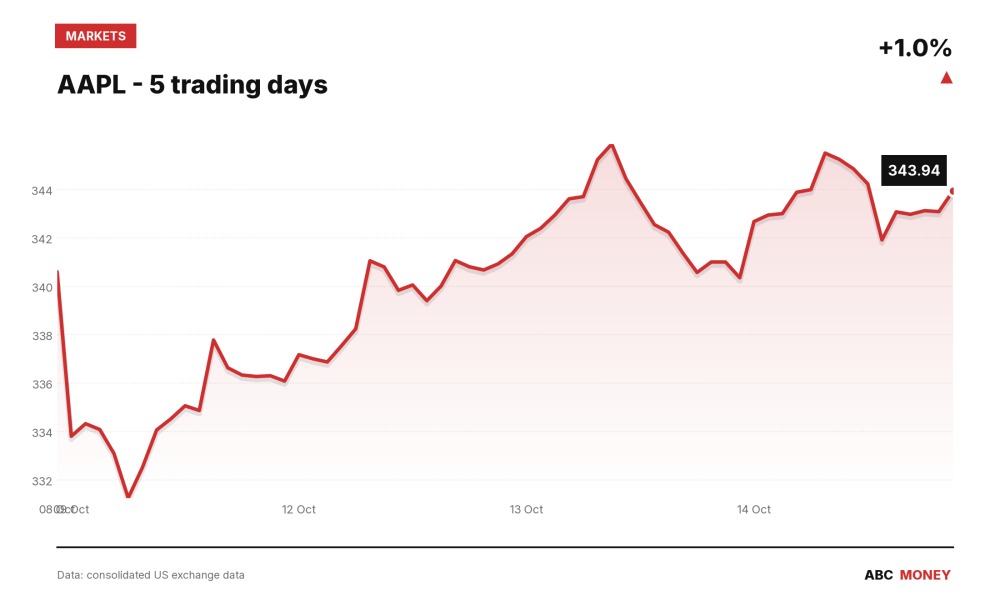
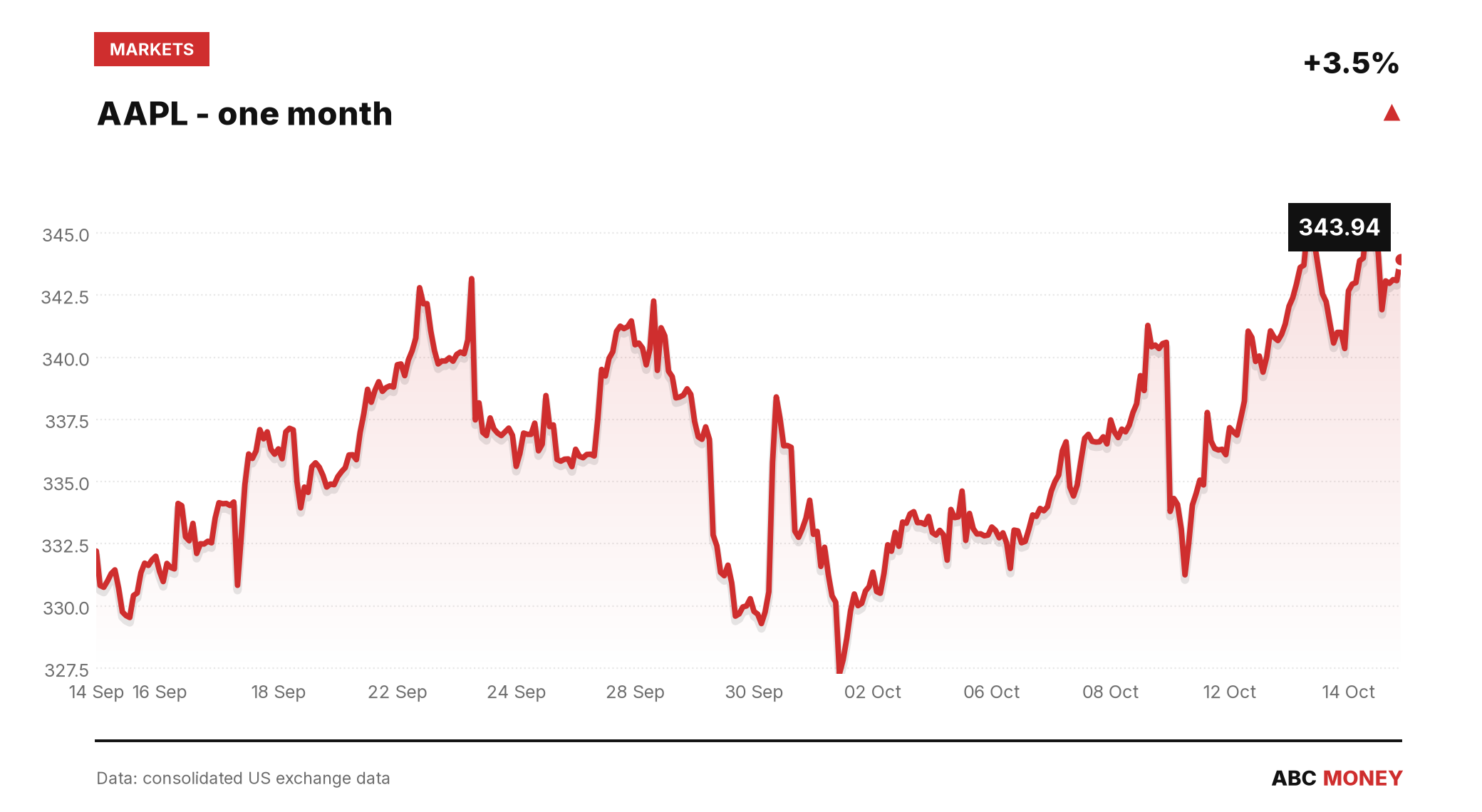
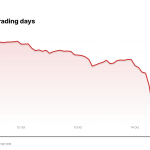
For a company Apple’s size, a trade-secrets skirmish involving a single employee is unlikely to move the needle financially, and the market treated it that way. Apple shares closed 0.47% lower at $343.24 on the day the filing was reported, a move well within normal daily noise. Daily short-sale volume on Apple – the share of trading that involved selling borrowed stock, a rough gauge of bearish positioning – stood at a ratio of 0.546 on 13 October, according to FINRA data, not noticeably elevated against the prior fortnight’s range of roughly 0.41 to 0.59.
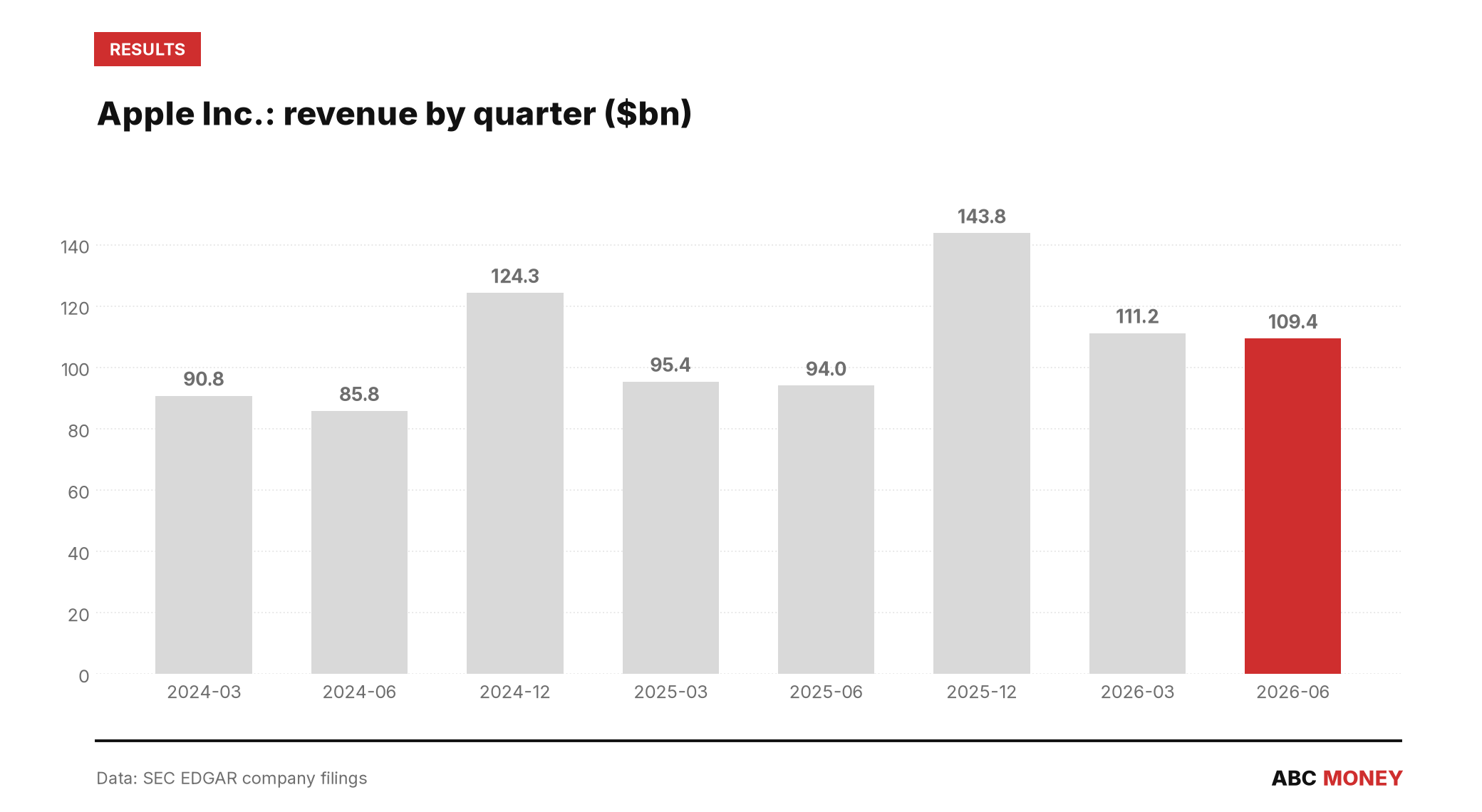
That muted reaction makes sense set against Apple’s scale. The company reported net income of $29.79bn for its fiscal third quarter of 2026, the period ended 27 June, in a 10-Q filed with the SEC. A dispute over one unreleased product’s confidential files, however pointed the allegations, is a legal headache rather than a balance-sheet event – at least for now.
The broader pattern is what gives the case its weight. Trade-secret litigation has become a recurring feature of the AI hardware race, with device startups and incumbents alike accusing departing staff of carrying ideas across company lines; a separate suit by hardware startup iyO against one of its own former employees, unrelated to Apple or OpenAI, points to the same dynamic playing out industry-wide.
What happens next
The case, filed as Apple Inc. v. Liu et al. under docket number 5:26-cv-07078, continues before Judge Davila, with the forensic discovery he ordered on 13 October likely to shape whether either side’s allegations can be substantiated with hard evidence rather than dueling filings. Until forensic images and device records are reviewed, the dispute remains a matter of competing claims – OpenAI alleging its confidential work travelled to Apple’s leadership, Apple insisting its own checks found nothing to support that. Investors in either company have little reason to reprice on the allegations alone; the market’s modest response on 14 October suggests most already agree.
This article is for information only and is not investment advice or a recommendation to buy or sell any asset. Markets move quickly; figures are correct as sourced at the time of writing. Always do your own research before making financial decisions.

 Bitcoin
  Ethereum
  Tether
  BNB
BNB  USDC
USDC  XRP
XRP  Solana
  TRON
TRON  Lido Staked Ether
  Cardano
  Gram (prev. Toncoin)
  Avalanche