Bitcoin
 Ethereum
 Tether
 BNB
 USDC
 XRP
 Solana
 TRON
 Lido Staked Ether
 Cardano
 Gram (prev. Toncoin)
 Avalanche
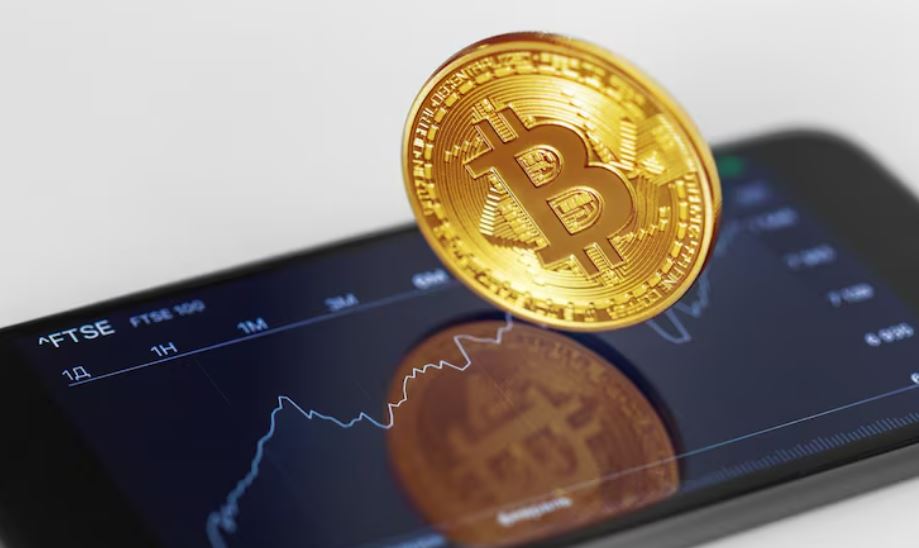
Bitcoin Outperforming Gold Market: JPMorgan Forecasts 10% Annual Return Over the Next Decade

Gold has been used as a store of value for thousands of years. Since 2009, Bitcoin has existed. The majority of institutional reports treated the two as though they were in the same category, completely excluding Bitcoin. This week, that was altered.
For the first time in its 31-year existence, JPMorgan Asset Management’s 2027 Long-Term Capital Market Assumptions, which was published on October 19, included Bitcoin in its long-term return projections. Over the next ten years, Bitcoin is expected to return 10% compound annually, compared to 5.5% for gold and 7.5% for US large-cap stocks. One of the biggest financial institutions in the world ranked Bitcoin at the top of the expected return table for all major asset classes in a single report. Despite the lengthy list of cautions, that is not a minor issue.
The list of cautions is lengthy. The estimated yearly volatility of Bitcoin is 55%, while that of US stocks is about 18% and that of gold is 17.2%. For investors who are actually experiencing the fluctuations rather than merely simulating returns on paper, that disparity is crucial. The simple year-by-year average of JPMorgan’s arithmetic average return for Bitcoin is 20.9%. However, volatility undermines compounding in ways that are not evident in a simple average, which is why the compound return ends up at 10% instead of being close to that amount.
The bank took care to clarify that this is not a target price. It is a planning tool that is based on three models: network adoption trends, the relationship between Bitcoin and gold as a complementary asset, and the growth of the world money supply in relation to its fixed supply cap. Based on JPMorgan’s confidence in each of these three models, their respective weights were 65%, 30%, and 5%.
The bear scenario results in an 11.2% yearly loss. The bull scenario yields 16.6% yearly gains. As of September 30, both scenarios begin with Bitcoin trading at about $83,000. That’s a broad range, and it represents a reality: Bitcoin is still genuinely difficult to value precisely, and the scenarios show disagreement over its true nature. JPMorgan continues to refer to it as a hedge against monetary easing and a speculative asset. Bitcoin was specifically excluded from the report’s main portfolio allocation models, and a smaller matrix was created specifically for it. Reading the report gives the impression that the bank is admitting something it wasn’t prepared to make public before, but it’s also taking care to avoid coming across as endorsing it.
It’s important to consider the historical background of this. Over the past few years, gold has outperformed the majority of asset classes, in part due to investors turning to it as a well-known hedge due to rising inflation and geopolitical unpredictability. More intricately, Bitcoin has moved in tandem with riskier assets at times, decoupling and operating on its own at other times. As bond yields rose in September 2026, Bitcoin was already outperforming gold during a time when gold usually falters due to higher real rates. Bitcoin moved differently because it was not as sensitive to rate changes. It’s really unclear if that divergence is true.
Observing institutional money gradually and cautiously warm up to this asset class gives the impression that we are somewhere in the middle of a longer story, neither the start nor the finish. The strategists at Fidelity have independently predicted that Bitcoin will surpass gold. On October 19, net inflows into U.S. spot Bitcoin ETFs exceeded $526 million in a single session, with BlackRock’s IBIT leading the way with $665 million. If big organizations just accept Bitcoin as a curiosity, that kind of flow won’t occur. Even though no one on the institutional side is quite prepared to state it clearly, something has changed. For the first time ever, JPMorgan included Bitcoin in its long-term projections, which is arguably the closest thing to plain language that a report of that type can achieve.