Bitcoin
 Ethereum
 Tether
 BNB
 USDC
 XRP
 Solana
 TRON
 Lido Staked Ether
 Cardano
 Gram (prev. Toncoin)
 Avalanche
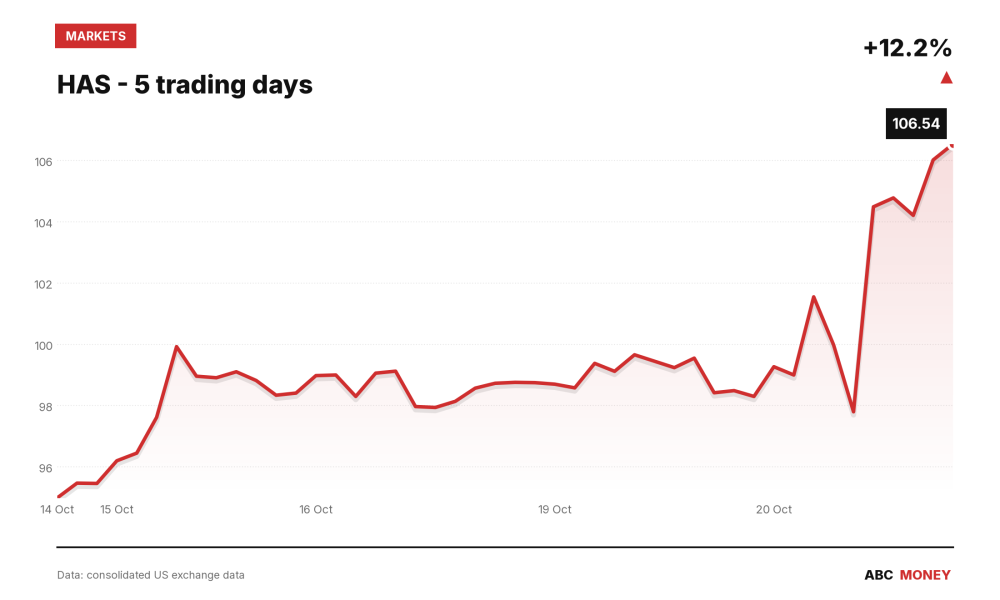
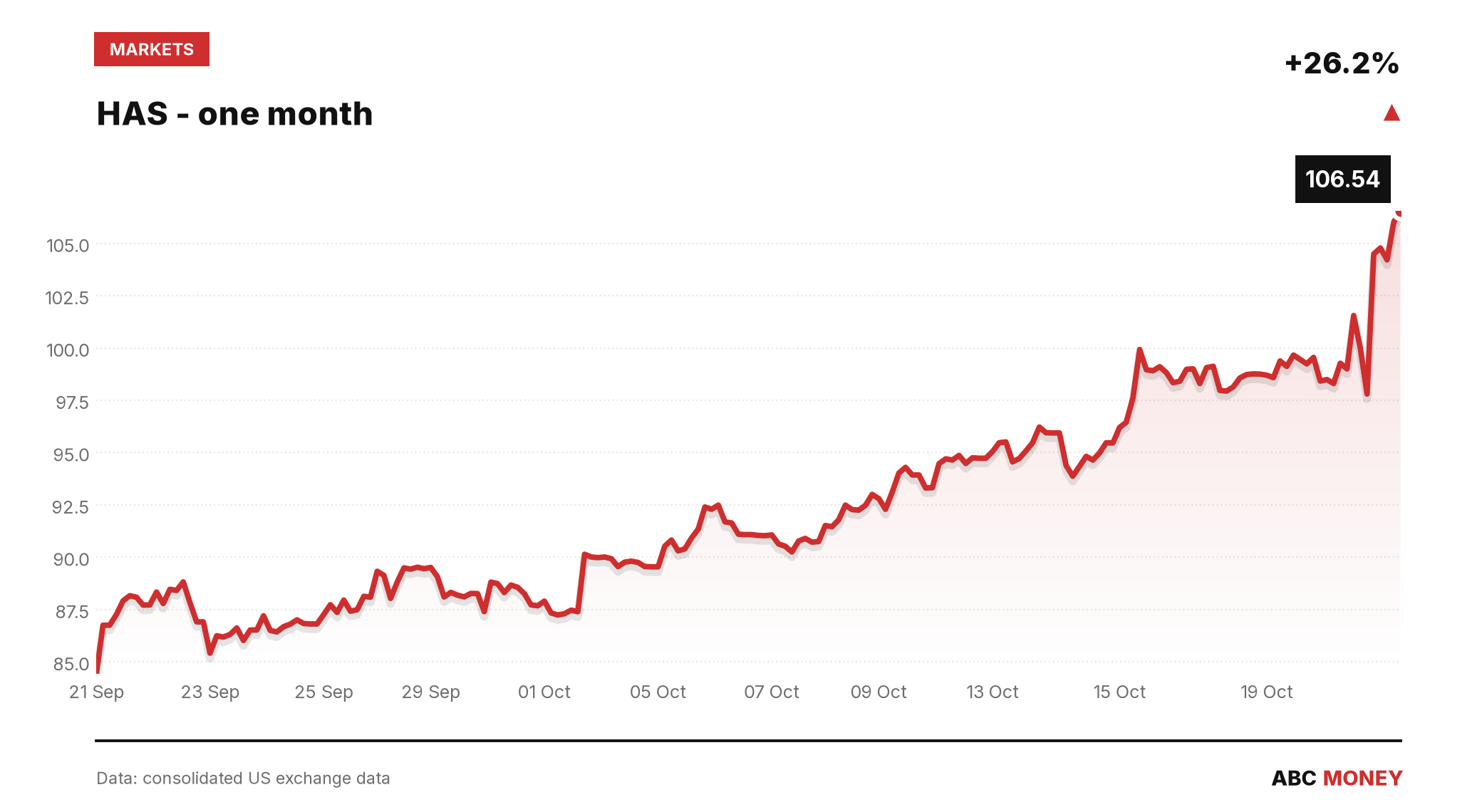
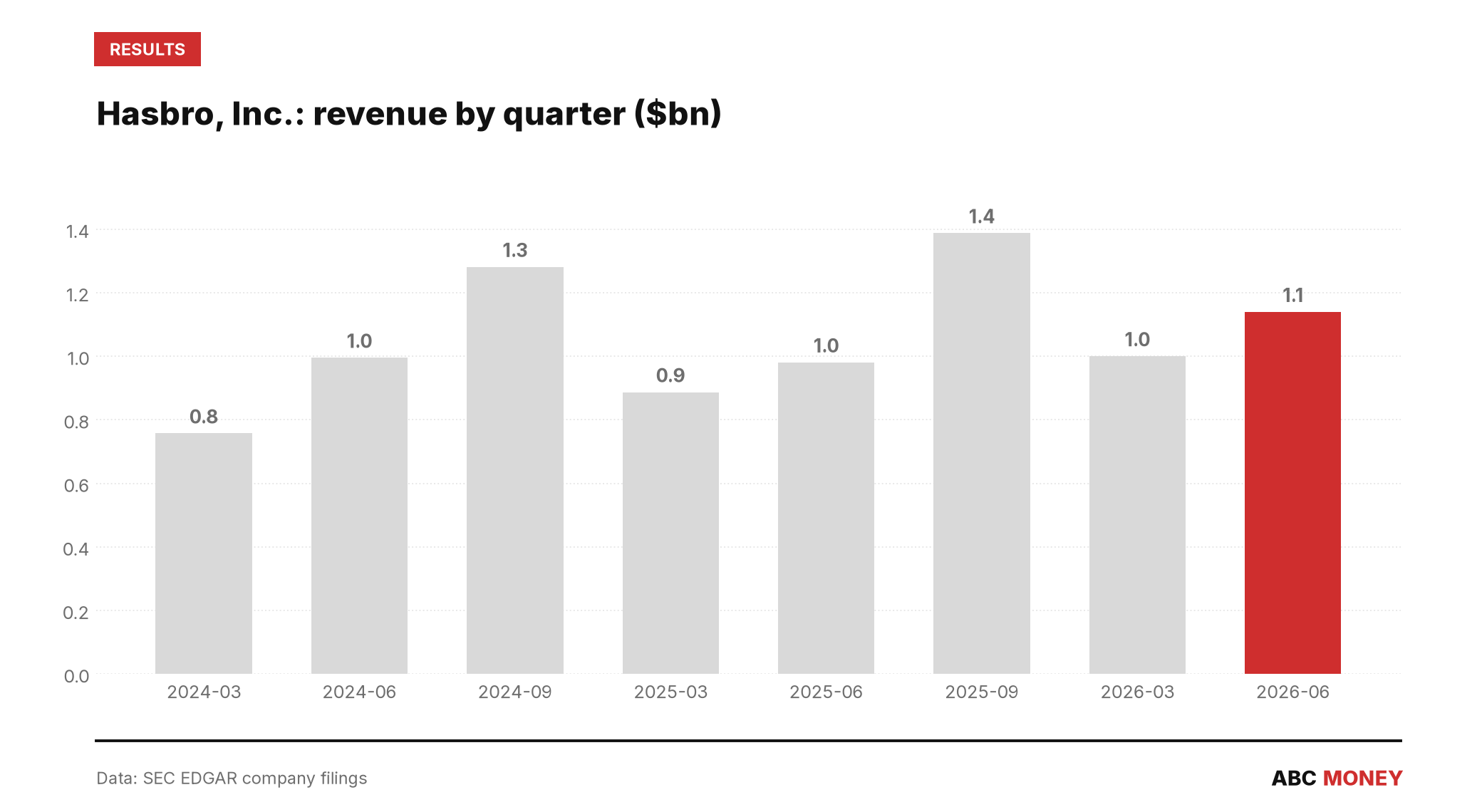
Hasbro’s Q3 2026 earnings landed well ahead of expectations on Tuesday, and the stock rewarded it: shares closed 7.42% higher at $106.35, having traded as low as $87.24 over the prior 20 days, on volume 2.59 times the recent average. Revenue rose 15% year-on-year with every segment contributing, and the toymaker raised its full-year guidance on the back of it.
The headline numbers are hard to argue with. Wizards of the Coast and Digital Gaming revenue climbed 31%, Consumer Products added 4% and Entertainment grew 9%, according to Hasbro’s own earnings exhibit filed with the SEC. Operating profit came in at $517m, with the adjusted figure – which strips out one-off items – at $541m, up 52% on the same quarter last year. Reported diluted earnings per share were $2.77, adjusted $2.90, and Hasbro returned $206m to shareholders through dividends and buybacks in the quarter.
A beat built on Magic, and a tariff tailwind
The standout line is Magic: The Gathering, which crossed $600m in quarterly revenue for the first time, up 34% year-on-year, driven by the new Hobbit and Reality Fracture card sets. Monopoly Go!, the mobile game Hasbro licenses out rather than builds itself, added a further $41m – a reminder that licensing increasingly does a lot of the heavy lifting here, which is presumably why Hasbro’s management flagged it as a strategic priority on the call.
Worth separating from that recurring strength is the scale of the profit jump itself. Roughly $55m of the adjusted operating profit improvement came from tariff refunds – a timing benefit rather than something built into the underlying run rate. Strip that out and the 52% increase looks considerably less dramatic, even if the segment growth behind it is genuine. Separate reporting on the same release put the margin improvement at roughly 830 basis points (a basis point is one-hundredth of a percentage point), a figure that bears watching for durability once the next quarterly filing breaks out the detail.
Context helps here. Hasbro’s quarterly earnings have been genuinely volatile of late: the company posted a $160.9m net profit on EPS of $1.12 in the second quarter of this year, a far cry from the $855.8m net loss it booked in the same quarter a year earlier, when one-off charges hit the books hard. Against that backdrop, a clean beat-and-raise quarter is exactly what investors wanted to see, even allowing for the tariff boost.
Guidance lifted, licensing pushed centre-stage
Hasbro now expects consolidated revenue growth of 7% to 9% for the full year, with adjusted EBITDA (earnings before interest, tax, depreciation and amortisation – a rough proxy for underlying cash profitability) of $1.575bn to $1.625bn, management said on the call. Independent wire coverage separately confirmed that Hasbro topped Q3 estimates and lifted its outlook, consistent with the scale of Tuesday’s share-price move.
Management’s emphasis on licensing as a forward strategic focus is notable given how much of this quarter’s strength already flowed through licensed properties – Magic’s card releases and the Monopoly Go! tie-up chief among them. It is a lower-capital way to grow than designing and manufacturing physical toys, and it is also where Hasbro has had its most reliable wins over the past year.
No stampede in the options before the print
For those watching positioning ahead of results, there was little sign of a crowded short trade heading into Tuesday. FINRA’s daily short-sale ratio for Hasbro – the share of trading volume attributable to short sales, where investors borrow and sell stock betting the price will fall – ran between roughly 0.47 and 0.67 across the ten trading sessions covering 6 to 19 October, according to FINRA’s short-sale volume data. That is unremarkable territory, suggesting Tuesday’s pop reflects a genuine re-rating of the earnings story rather than short-sellers being forced to cover.
The next test comes when the 10-Q detailing the full quarterly accounts is filed, which should clarify how much of the margin gain survives once the tariff refund washes out of the comparison, and whether Magic’s growth rate can hold up against increasingly tough year-on-year comparisons after a record quarter.
This article is for information only and is not investment advice or a recommendation to buy or sell any asset. Markets move quickly; figures are correct as sourced at the time of writing. Always do your own research before making financial decisions.