Baker Hughes Completes $1.45bn Waygate Technologies Sale
Baker Hughes has closed the $1.45bn Waygate Technologies sale to Hexagon, even as its own shares sit near 20-day lows.
In this article 3 sections
Baker Hughes (NASDAQ: BKR) has completed the Waygate Technologies sale to Hexagon AB, closing an all-cash transaction valued at approximately $1.45 billion before customary closing adjustments, the companies confirmed on 2 November 2026. Hexagon separately said it had “completed its previously announced acquisition of Waygate Technologies, a global leader in non-destructive testing (NDT), from Baker Hughes” – language that matches the seller’s figure to the dollar.
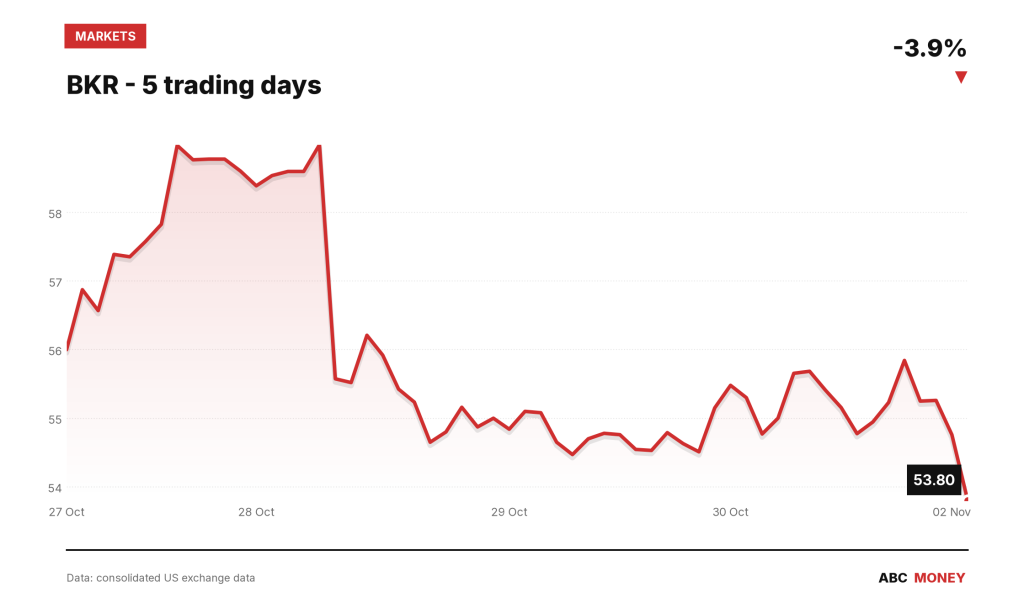
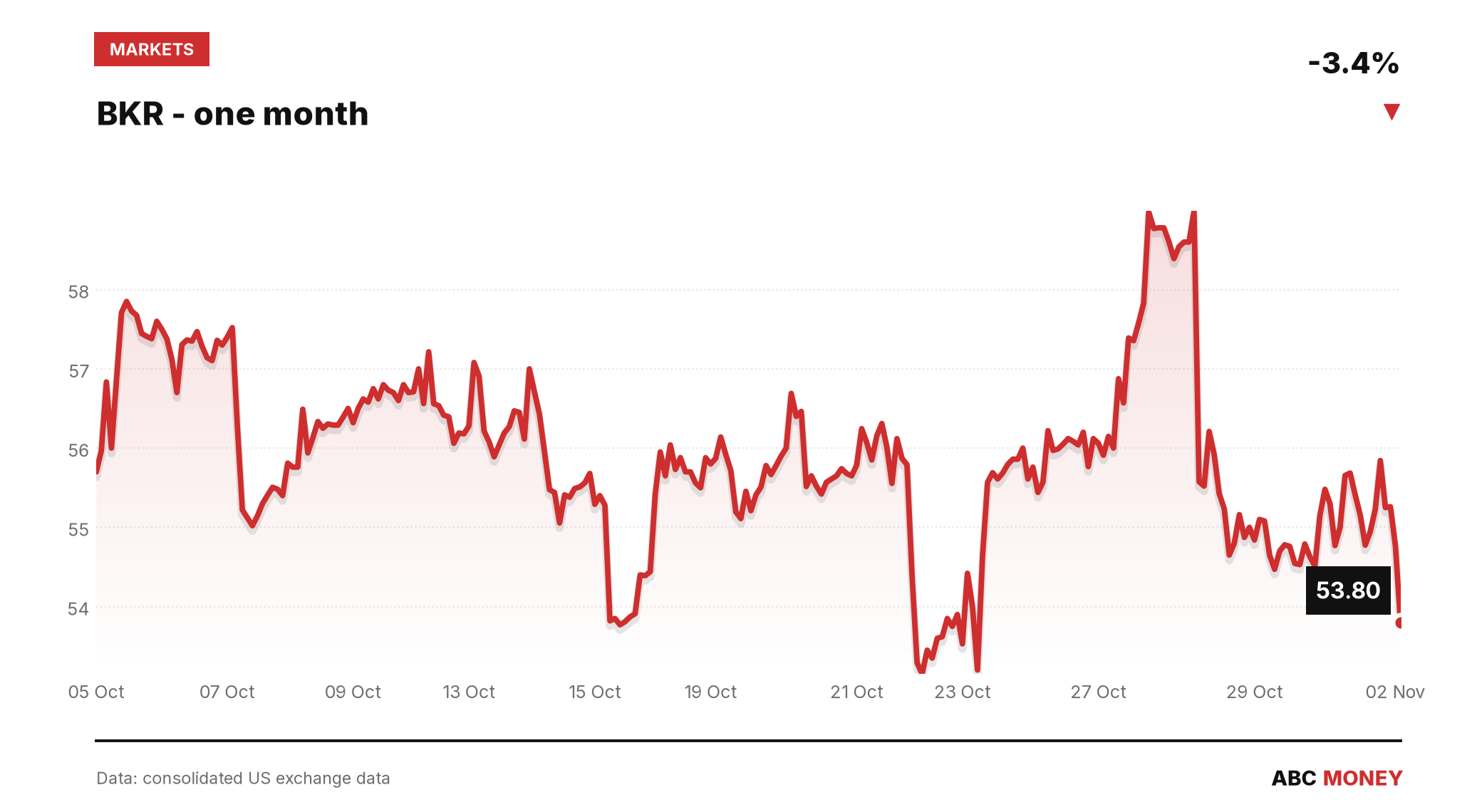
The deal is unremarkable in the sense that both sides have now said the same thing on the same day, and nobody disputes the price. What makes it worth a closer look is timing: Baker Hughes shares closed at $53.80 on the morning of the announcement, down 1.78% on the day and roughly 4.9% over the prior 20 trading sessions, sitting near the bottom of a $53.15-$58.99 range, according to Nasdaq. A completed divestiture that was flagged seven months ago did not move the stock. Trading volume ran about 16% above the 20-day average, suggesting the market had already priced the closing in rather than reacting to it fresh.
What Baker Hughes actually sold
Waygate makes non-destructive testing equipment – the ultrasound-and-X-ray-style kit used to inspect pipelines, turbines and aircraft parts for flaws without taking them apart. It is not a huge earner by Baker Hughes’ standards: Hexagon’s own disclosures put Waygate’s 2025 revenue at around $630 million with a roughly 10% operating margin, context published when the deal was first signed on 13 April 2026. Hexagon said it planned to fund the purchase with cash and existing debt capacity and expected to close in the second half of the year – a target it hit almost exactly, with the deal landing in the first days of November.
Baker Hughes had already flagged the sale as a strategic priority back when it was announced, listing it among its “portfolio management” highlights in its first-quarter 2026 earnings release. By the time its third-quarter 10-Q was filed on 28 October, days before completion, Waygate was already sitting in the accounts as a “held for sale” disposal group carrying $492 million of allocated goodwill, per the filing – standard accounting housekeeping that confirmed the deal was genuinely imminent rather than aspirational.
A pattern, not a one-off
Waygate is the second notable carve-out from Baker Hughes’ Industrial & Energy Technology segment this year. In the first quarter, the company also closed a joint venture with a Cactus Inc subsidiary, contributing its surface pressure control product line for $344.5 million before adjustments while retaining a 35% stake, according to the same earnings materials. Add Waygate, and the direction of travel is clear: Baker Hughes is trimming adjacent industrial businesses to sharpen its focus on its core oilfield services and gas technology operations.
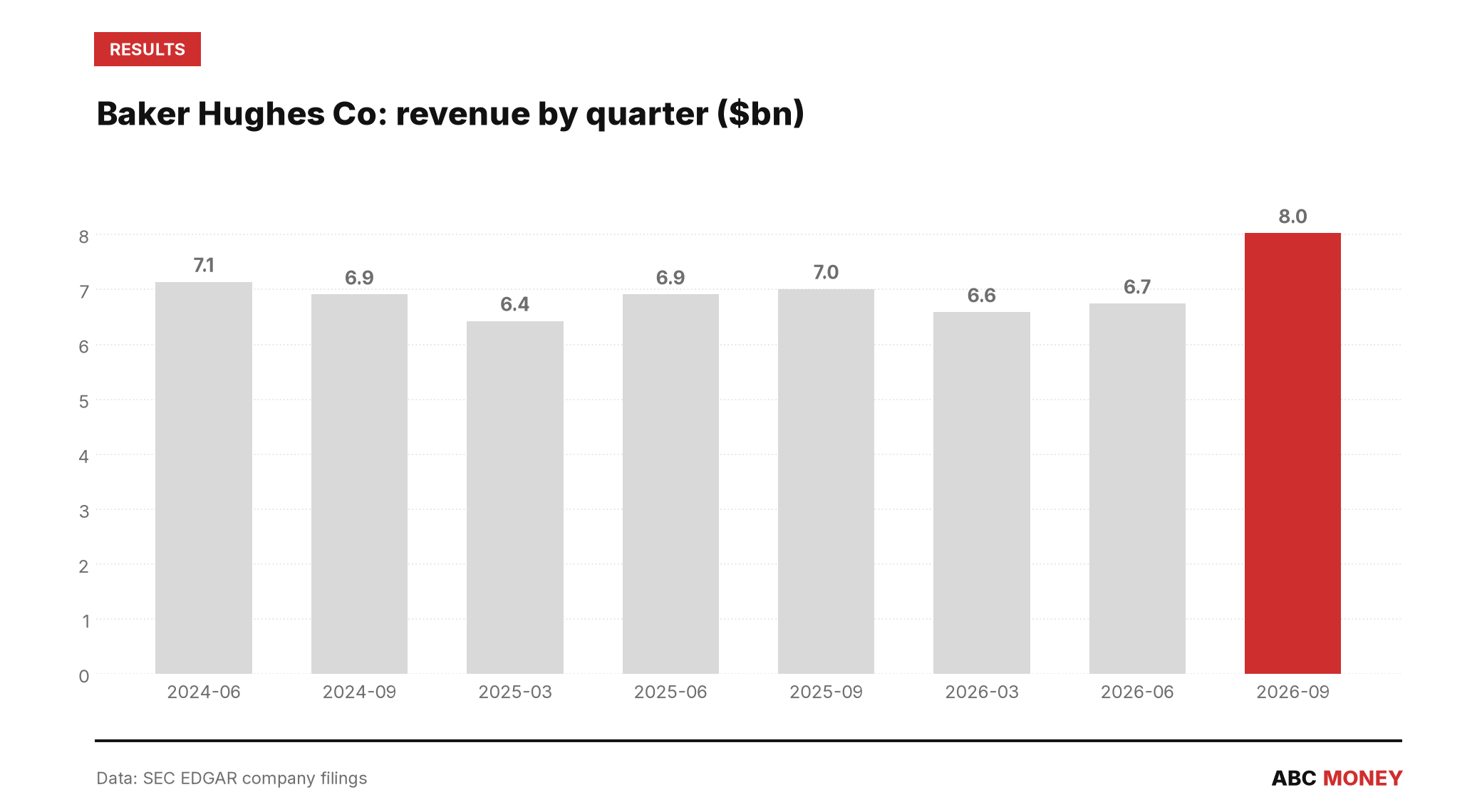
The trouble is that “simpler” has not obviously meant “more profitable” this year. Third-quarter revenue hit $8.025 billion – a record among the recent quarters on file – yet net income came in at $411 million, a thinner slice of that top line than in the prior two quarters, when the company earned $681 million on $6.742 billion of revenue and $930 million on $6.587 billion respectively. In other words, Baker Hughes grew the business and watched its earnings conversion soften at the same time, which may say more about near-term cost pressures or mix than about the Waygate sale itself, but it is the backdrop against which investors are judging every one of these portfolio moves.
The financing backdrop for Hexagon
For the buyer’s side of the ledger, the macro picture is worth a line. The 10-year US Treasury yield stood at 4.98% in late October, with the 2-year at 4.61%, according to data from the Federal Reserve Bank of St Louis – a modestly flat-to-inverted curve that keeps short-term borrowing costs close to long-term ones. Hexagon said in April it intended to fund the purchase with cash and existing debt capacity rather than fresh bond issuance, a choice that looks sensible in a rate environment offering little reward for locking in long-dated debt.
For Baker Hughes, the $1.45 billion in proceeds adds to a cash pile being built through a deliberate thinning of non-core assets, even as the stock has drifted to the low end of its recent trading band. Whether that cash gets deployed into buybacks, debt reduction or further bolt-on moves in its retained oilfield and LNG businesses is the question investors are now likely to carry into the company’s next quarterly update.
This article is for information only and is not investment advice or a recommendation to buy or sell any asset. Markets move quickly; figures are correct as sourced at the time of writing. Always do your own research before making financial decisions.