Bitcoin
  Ethereum
  Tether
  BNB
BNB  USDC
USDC  XRP
XRP  Solana
  TRON
TRON  Lido Staked Ether
  Cardano
  Gram (prev. Toncoin)
  Avalanche
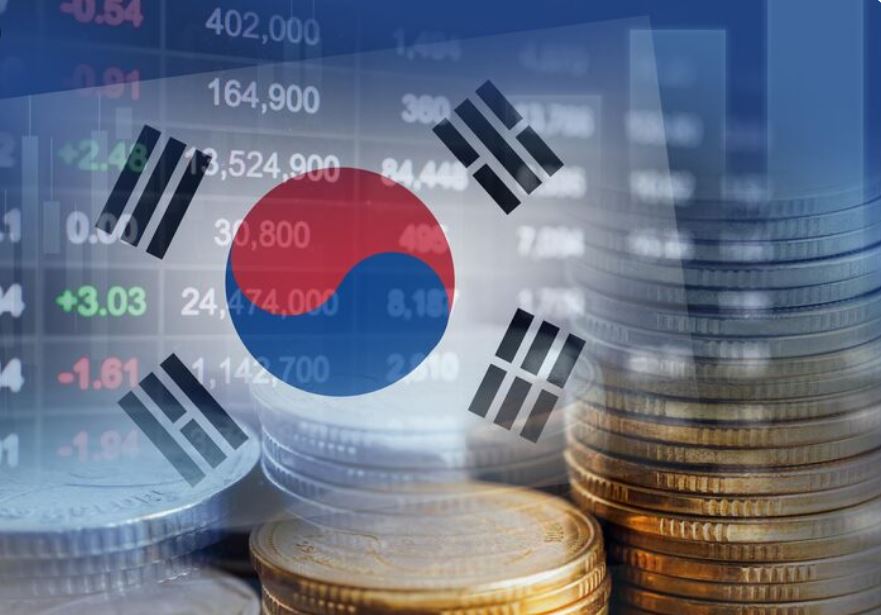
The currency traders were already keeping an eye on the quiet pre-dawn hours in Seoul’s Yeouido financial district. The numbers moved faster than any of the standard mechanisms could handle when the markets opened on the first day of trading following the start of the Iranian conflict. Experienced analysts were caught off guard by the KOSPI’s violent decline, which was 18% over the first two days and the biggest drop in the index’s 43-year history. Not the worst since a recent emergency. The worst. Never. Additionally, the won continued to decline toward levels not seen since the depths of the 2008 global financial crisis due to pressure from a dozen other concerns. The financial markets in South Korea had already declared how much it would hurt, regardless of what was going on in the Middle East.
Geographical location, industrial structure, and a number of supply chain dependencies that have been subtly building up for decades are the main causes. Fossil fuel reserves in South Korea are essentially nonexistent. Not one. Being the world’s fourth-largest oil importer, the nation imports a staggering amount of energy, nearly all of it. About 70% of that oil enters the country through the Strait of Hormuz, a narrow waterway that links the Persian Gulf to the larger ocean.
As the conflict intensified, the effective blockade of the Strait resulted in more than just higher oil prices for South Korea. It had to deal with the actual disruption of a supply line that was the foundation of its whole industrial economy. 26 South Korean ships, including tankers, bulk carriers, and gas carriers, were stuck in the Persian Gulf as of late March 2026. They were transporting raw materials and fuel that the nation’s factories needed.
| Category | Details |
|---|---|
| Country | Republic of Korea (South Korea) — highly industrialized, export-dependent economy with limited domestic energy resources |
| GDP Ranking | 13th largest economy globally; fourth-largest oil importer in the world |
| KOSPI Stock Market Drop | Worst single-session decline in the index’s 43-year history — fell 18% in first two days of Iran conflict; remains ~13% below pre-war levels |
| South Korean Won (KRW) | Hit a 17-year low against the USD; hovering around 1,500 won to the dollar during peak volatility |
| Crude Oil Dependence on Strait of Hormuz | Approximately 70% of South Korea’s crude oil imports transit through the Strait of Hormuz |
| LNG Dependence on Middle East | Approximately 20% of LNG imports sourced from the Middle East; 64.7% of helium (critical for semiconductors) imported from Qatar |
| Vessels Stranded in Persian Gulf | 26 South Korean-flagged or operated ships stranded as of late March 2026 — including 17 crude tankers, 5 bulk carriers, 2 gas carriers |
| Strategic Petroleum Reserve Reality | Official IEA figure: 208 days; actual government-only consumption-based figure: ~26 days after IEA release contribution |
| OECD Growth Forecast Cut | 0.4 percentage points — largest downgrade among all major economies |
| Inflation Projection (OECD) | Raised to 2.7%; officials warning of “triple shock” — high inflation, elevated interest rates, weakened won |
| Naphtha Supply Crisis | 35% of naphtha (core petrochemical feedstock) transits through Hormuz; LG Chem, Yeochun NCC, Lotte Chemical all declared or threatening force majeure |
| Government Emergency Response | Emergency fuel price caps (first since 1997), 22.5M barrel IEA reserve release, $17B supplementary budget, 24M barrels secured from UAE, nuclear reactor restarts accelerated |
| Key Analyst Assessment | CSIS: “No noncombatant country has been hit harder than South Korea” one month into the Iran conflict |
The numbers pertaining to strategic petroleum reserves should be closely examined because they present a more unsettling picture than the official figures indicate. South Korea has 208 days of reserves, according to the International Energy Agency. Net imports, a comforting figure that is mentioned in policy briefings, are the basis for that computation. However, the government-only reserve stands at about 34 days based on actual daily consumption and refining capacity.
That figure decreased to about 26 days after Seoul contributed 22.5 million barrels to a coordinated IEA release. The gap between the public-facing reserve figure and the operational reality is a source of “growing anxiety,” according to CSIS analysts who published a detailed assessment on April 2. This may be the most understated phrase in the entire body of analysis that has emerged from this crisis.
South Korea’s growth forecast was lowered by 0.4 percentage points by the OECD, the largest reduction of any major economy it monitors. A “triple shock” is being described by Seoul officials as a result of high inflation straining household budgets, high interest rates restricting credit, and a declining won raising the cost of all imported goods. The president ordered a $17 billion supplemental budget through a parliament already functioning under the shadow of local elections just two months away, and the government imposed fuel price caps for the first time since 1997. This is not how a government would handle a controllable issue. It is a government’s attempt to keep a moderate shock from turning into a structural crisis.
The breadth of the exposure is what makes South Korea’s situation better than that of Japan or Germany, both of which also rely significantly on Middle Eastern energy. It is more than just oil. Naphtha powers South Korea’s petrochemical industry, which generates about 7% of the country’s exports; 35% of this naphtha supply passes through the Strait of Hormuz. Major manufacturers like LG Chem and Yeochun NCC have declared force majeure on export contracts due to the disruption of that supply line. This cascade extends downward through shipbuilding materials, automotive parts, medical plastics, and, yes, plastic trash bags, which are now experiencing production delays. The supply chain’s integration with the blocked waterway is practically complete when the disruption is evident in something as commonplace as trash bags.
A layer that few Western observers expected is added by the semiconductor dimension. The chip industry in South Korea, which includes Samsung and SK Hynix, employs people from other countries. It is a cornerstone of the global hardware stack for AI. There, high-bandwidth memory chips are produced and transported to Taiwan, where TSMC incorporates them into Nvidia’s AI processors. 64.7% of South Korea’s helium, a gas with no true replacement in the production of semiconductors, comes from Qatar, whose LNG facilities were destroyed by Iranian strikes. Since the start of the conflict, the price of helium has increased by more than 40%, and Israel provides 97.5% of South Korea’s bromine, another semiconductor input. The nation that produces the memory chips that power the AI revolution is witnessing multiple supply chain disruptions at once.
Tracking all of this from the outside, there’s a sense that the Iran crisis has affected South Korea in a way that most geopolitical shocks don’t: it has affected the economy in enough different areas simultaneously that the standard coping mechanisms—diversifying one input, releasing reserves here, capping prices there—are straining against their own limits. How much of what is happening now becomes permanent will ultimately depend on whether the conflict ends fast enough to avoid stagflation or whether the damage to Qatar’s LNG facilities keeps 17% of global production offline for the three to five years that early assessments suggest. Seoul has no control over the answer to that query.