
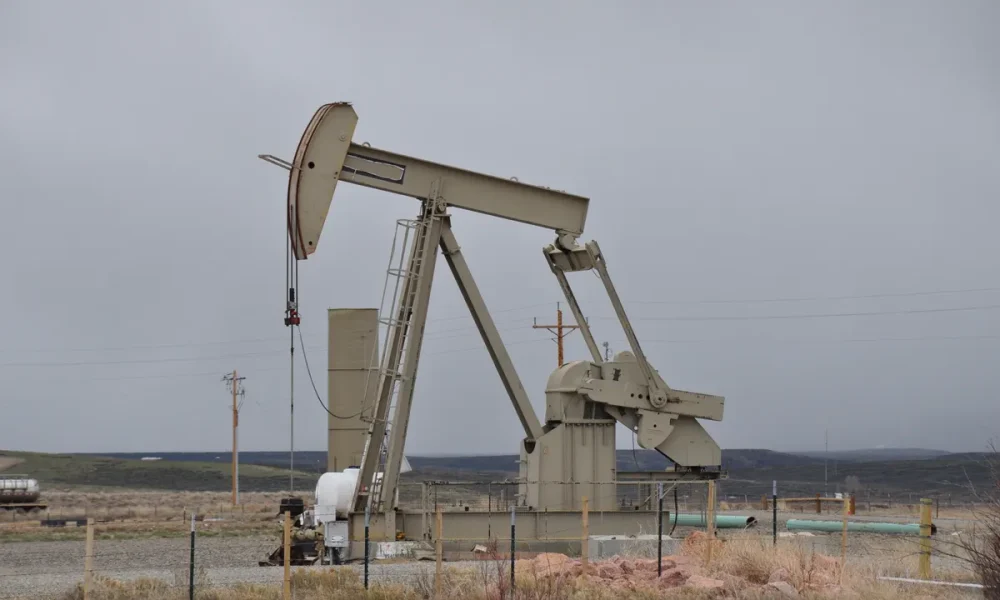
Shell and BP dividends are attracting fresh attention from income investors after shares in both oil majors have fallen roughly 20%, driven by easing geopolitical tensions and a softening in crude prices. At those depressed valuations, the yield arithmetic is straightforward enough. The question is whether the underlying businesses can sustain the payouts.
The Yield Case for Shell and BP Dividends
Consensus forecasts for 2026 put Shell’s dividend at $1.63 per share and BP’s at $0.338 per share. At current prices, those translate to yields of 4.2% and 5.5% respectively. For an ISA or SIPP portfolio built around passive income, both numbers are at least worth pausing over.
Shell’s most recent quarterly payout reinforces the picture. The company declared a Q1 2026 interim dividend of $0.3906 per share, equivalent to 29.18p per ordinary share, payable on 29 June 2026. Dividend coverage for both stocks remains high relative to forecast earnings, which limits the near-term risk of a cut.
There is also a structural argument for Shell’s capacity to pay. According to the Shell Annual Report and Accounts 2025, the company distributed 52% of cash flow from operations to shareholders via dividends and buybacks in 2025, while normalised free cash flow per share rose 4.5% year-on-year. That combination, meaningful returns alongside growing cash generation, is precisely what income investors are looking for.
Shell’s first-quarter 2026 results added further ballast. Earnings per share of $2.42 comfortably beat the consensus forecast of $2.02, and the full-year 2026 earnings estimate now stands at $3.71 per share, revised up from $2.39 over the prior 90 days.
Valuation and the Fossil Fuel Pivot
On headline multiples, Shell trades on a forward price-to-earnings ratio of 7.7 and BP on 7.1. For context, those are low even by the standards of the sector, though P/E is an imperfect lens for oil majors: the earnings line moves sharply with crude prices and hedging positions, so cheap can stay cheap if the commodity turns.
The strategic picture is evolving in ways that complicate the simple income thesis. Both Shell and BP maintain net-zero pledges for 2050, but neither is prioritising rapid renewables expansion. Shell’s 2025 annual report records that the company invested between $10 billion and $15 billion in low-carbon energy solutions across 2023 to 2025 and spent almost $500 million on decarbonisation-related research and development in 2025, representing about 41% of its total R&D expenditure. At the same time, in September 2025 Shell decided not to restart construction of its planned biofuels plant in Rotterdam, a retreat that illustrates where operational priorities sit.
Where Shell is still pressing forward is in liquefied natural gas. June 2025 saw the first cargo from the new LNG Canada facility, which was designed to be among the lowest carbon-intensity LNG facilities in the world. LNG capacity remains central to Shell’s long-term earnings profile, and planned capital expenditure of $20 billion to $22 billion per year across 2025 to 2028 signals continued investment in that direction.
BP, meanwhile, is actively streamlining. The company has been selling its stake in Bay du Nord as part of a broader rationalisation in a volatile market environment. BP’s next scheduled earnings date is 4 August 2026, which will be the next concrete read on how the strategy is bedding in, particularly given the move in crude since the start of the year.
Where the Thesis Could Break Down
The downside case is not subtle. Both companies’ revenues and profits are directly tied to oil prices, and if crude continues to soften, share prices are likely to follow. Any capital gains erosion would work against the income received, particularly over a short holding period.
Beyond the commodity cycle, the secular shift away from fossil fuels remains a structural headwind. Neither company has found a clean answer to how it replaces oil revenues over the next two decades, and the de-emphasis on renewables investment narrows their options. That is a long-dated risk, not a 2026 concern, but it belongs in any honest assessment of a five-to-ten year holding.
On the defensive angle, both stocks have historically provided a partial hedge against geopolitical stress and oil-price spikes. When energy markets tighten, Shell and BP tend to move against the broader equity trend, which has portfolio value. That characteristic has not changed.
For income investors, the setup is cleaner at current prices than it was six months ago. The test arrives with BP’s August results and the trajectory of Brent through the summer. If crude stabilises around current levels, the dividend thesis holds; if it breaks lower, the earnings cover that underpins both payouts will face a more direct test.



 Bitcoin
  Ethereum
  Tether
  BNB
BNB  USDC
USDC  XRP
XRP  Solana
  TRON
TRON  Lido Staked Ether
  Cardano
  Gram (prev. Toncoin)
  Avalanche