
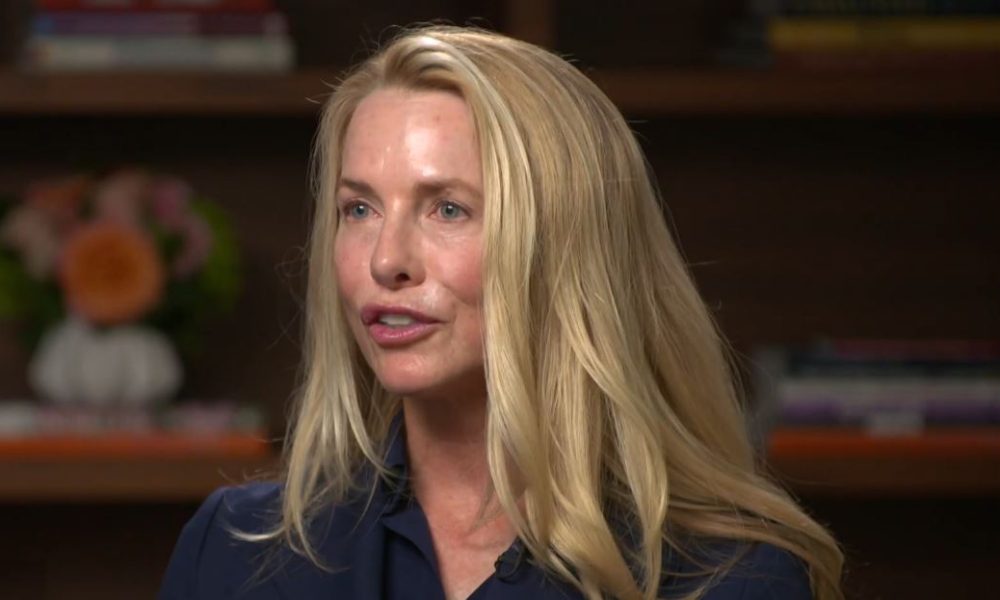
Laurene Powell Jobs Wealth Background: How a Stanford MBA Student Became One of the World’s Richest Women

One type of wealth is one that doesn’t show itself. It doesn’t chase headlines, tweet, or give quotes to random journalists. For the majority of the years since her husband’s death in 2011, Laurene Powell Jobs has operated in that quieter register, which makes the scope of what she controls all the more startling when you take a closer look.
Steve Jobs left behind a sizable but uncomplicated fortune when he passed away at the age of 56 due to complications from pancreatic cancer. shares. Many of them. Laurene inherited a 7.3 percent controlling interest in The Walt Disney Company and about 5.5 million Apple shares, which at the time were worth about $14.1 billion. That’s the kind of number that, by most accounts, makes practically any subsequent decision virtually meaningless. Powell Jobs, however, did not handle it in that manner.
But before all of that, she was completely different. She was raised in West Milford, New Jersey, attended the University of Pennsylvania, where she graduated with degrees in economics and political science from Wharton, and worked as a fixed-income trading strategist at Goldman Sachs before moving on to Merrill Lynch. These are not the usual biographical details of a person who was later defined solely by marriage. They recommend someone who was already familiar with the workings of money before she ever met the man who would earn so much of it.
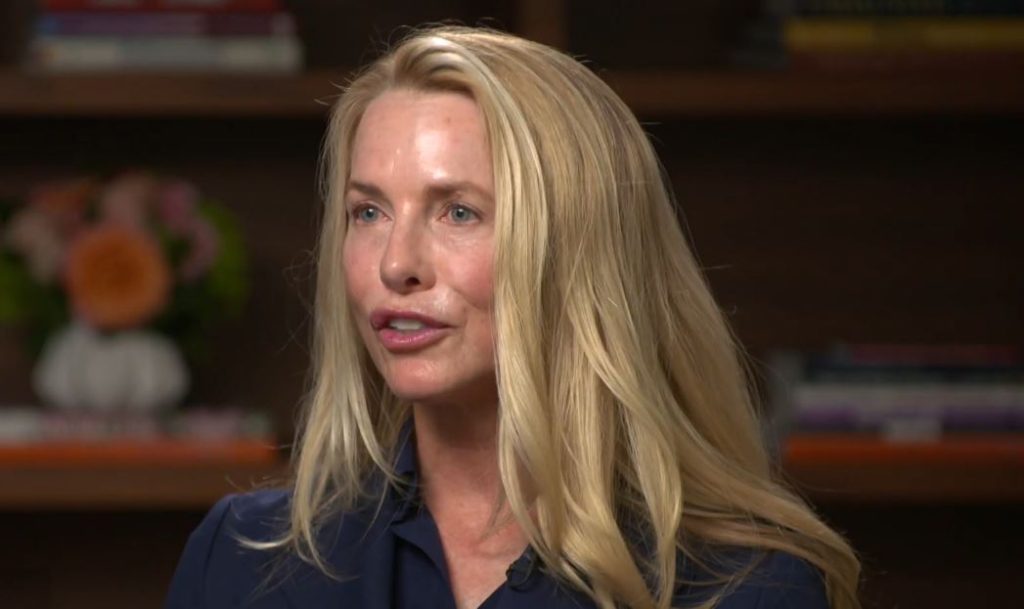
In October 1989, she got to know Steve Jobs. He was lecturing at the business school at Stanford. She had just started her MBA program. She joked that she had won a raffle with dinner with him as the prize, according to the now-famous tale. They went to dinner that evening after he canceled his plans. In 1991, they tied the knot at Yosemite in a Buddhist ceremony. Reading that makes it difficult to ignore how much of what transpired in her life had the same characteristics: it was subtle, focused, and uninterested in the obvious move.
She co-founded Terravera, a natural foods company that sells to Northern California retailers, after graduating from Stanford. A moonshot was not what it was. At a time when “natural foods” was not yet the vast category it would become, it was a real company doing real things. The fact that she created it at all is significant when attempting to comprehend her way of thinking, even though she later abandoned it to concentrate on her work in education.
That way of thinking is fully evident in the Emerson Collective, which she founded in 2011, the year Steve passed away. Because it is organized as an LLC rather than a conventional nonprofit, it has received criticism for its lack of transparency but also enjoys a unique degree of flexibility. It funds startups, buys media companies, supports climate organizations, advocates for immigration reform, and operates XQ, an education initiative that has committed more than $100 million to redesigning the American high school. The opacity might be deliberate rather than coincidental. In one of her infrequent public appearances, Powell Jobs stated that operating anonymously prioritizes the organizations she supports over herself as a donor. Your opinion of billionaire philanthropy in general will probably determine whether you find that convincing.
In 2017, the Atlantic became hers. Through Emerson, she acquired a majority stake, and since then, she has led the publication through a time of genuine media uncertainty. Additionally, she made investments in Mother Jones, ProPublica, and the Marshall Project, a pattern that points to a conscious interest in journalism that is difficult to maintain financially. The Washington Wizards and Capitals are owned by Monumental Sports and Entertainment, which she purchased a 20 percent share in that same year. In late 2025, she sold that stake.
Depending on the day and index you use, her current estimated net worth ranges from $10 to $15 billion; in August 2026, Bloomberg put it at about $10.5 billion, while Forbes put it slightly higher. Her substantial exposure to Disney and Apple stock, both of which have fluctuated significantly over time, is reflected in the fluctuation. Depending on who you ask, her $3.5 billion donation to the Waverley Street Foundation for climate work in 2021 is either an extraordinary act of philanthropy or an extraordinary act of influence-building. Most likely, a combination of the two.
From a distance, it is evident that the story of Laurene Powell Jobs does not neatly fall into any well-known category. She is not the widow who withdrew in grief. She’s not the famous philanthropist who merely signs buildings with her name. She received a sizable inheritance and has spent more than ten years using it in ways that, at the very least, reflect a coherent set of beliefs about areas where leverage is helpful, such as immigration, education, journalism, and the climate. It is still genuinely unclear whether those bets will pay off in the long run. However, it’s hard to claim she hasn’t been listening intently.


 Bitcoin
  Ethereum
  Tether
  BNB
BNB  USDC
USDC  XRP
XRP  Solana
  TRON
TRON  Lido Staked Ether
  Cardano
  Gram (prev. Toncoin)
  Avalanche