
Charles Schwab (SCHW) is widening its Schwab crypto platform beyond bitcoin and ether, telling clients it plans to add Avalanche (AVAX), Chainlink (LINK) and Solana (SOL) “in the coming months,” according to matching reports from Benzinga, The Block and Yahoo Finance.
It is a fast follow-through for a brokerage that only began letting retail clients trade crypto directly in May 2026. Schwab Crypto currently covers just bitcoin and ether, charging 75 basis points (0.75%, or 75/100ths of a percentage point) on the dollar value of each trade — among the cheaper rates in the industry, by the firm’s own reckoning.
From two coins to five, inside 15 weeks
Schwab has framed the expansion as demand-led rather than opportunistic, saying it intends to “thoughtfully expand its digital asset offering with established cryptocurrencies that align with client demand,” as reported by Benzinga. Clients will eventually be able to view and trade the new tokens alongside stocks and funds on Schwab.com, the Schwab Mobile app and the thinkorswim trading platform, with the firm indicating more tokens could follow “over time.”
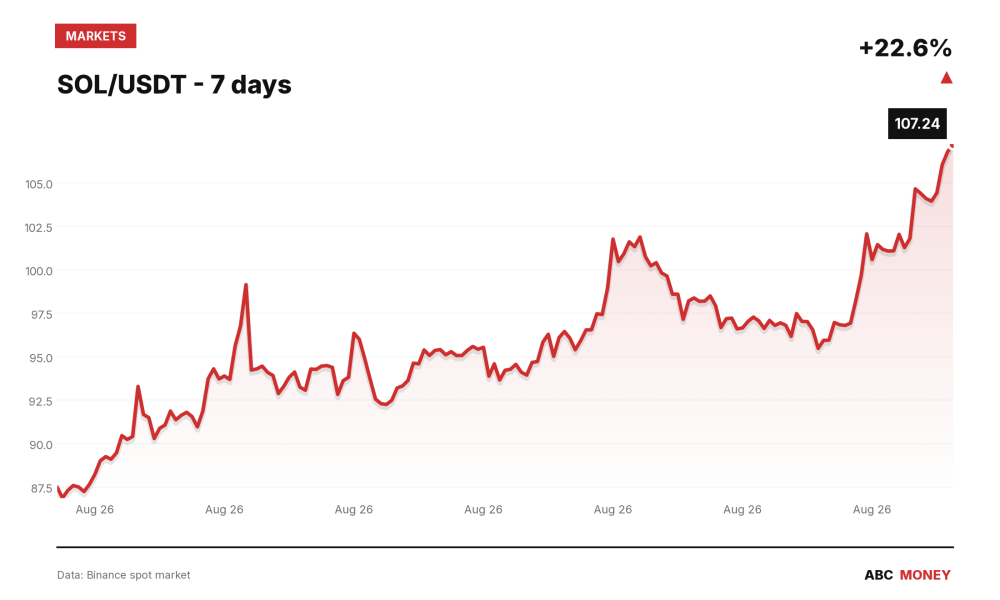
The pace matters more than the token list. Schwab first confirmed plans for spot bitcoin and ether trading only in April 2026, launched that service in mid-May, and is now — barely three months later — adding three more assets to a brokerage that oversees roughly $12 trillion in client assets. That is a brisk cadence for an incumbent regulated firm, and it lands as Solana itself is mid-rally: SOL traded at $107.14 on Binance as of 27 August, up 11.66% over 24 hours and 31.33% over the prior week, with buy-side orders outweighing sell-side ones in the immediate run-up to the news.
Catching Robinhood, not just clients
Schwab has been explicit that its crypto build-out is competitive as much as client-led: in April, the firm said the push was designed to go head-to-head with Robinhood on direct bitcoin and ether trading, and the broader shift among established brokerages — Fidelity and JPMorgan among them — toward crypto access reflects a friendlier regulatory backdrop than existed even a year ago. Widening the menu to include Solana, a chain popular with active traders, alongside the more infrastructure-flavoured Chainlink and Avalanche tokens, reads as an attempt to hold onto exactly the clientele most tempted to open an account elsewhere.
The numbers behind the move
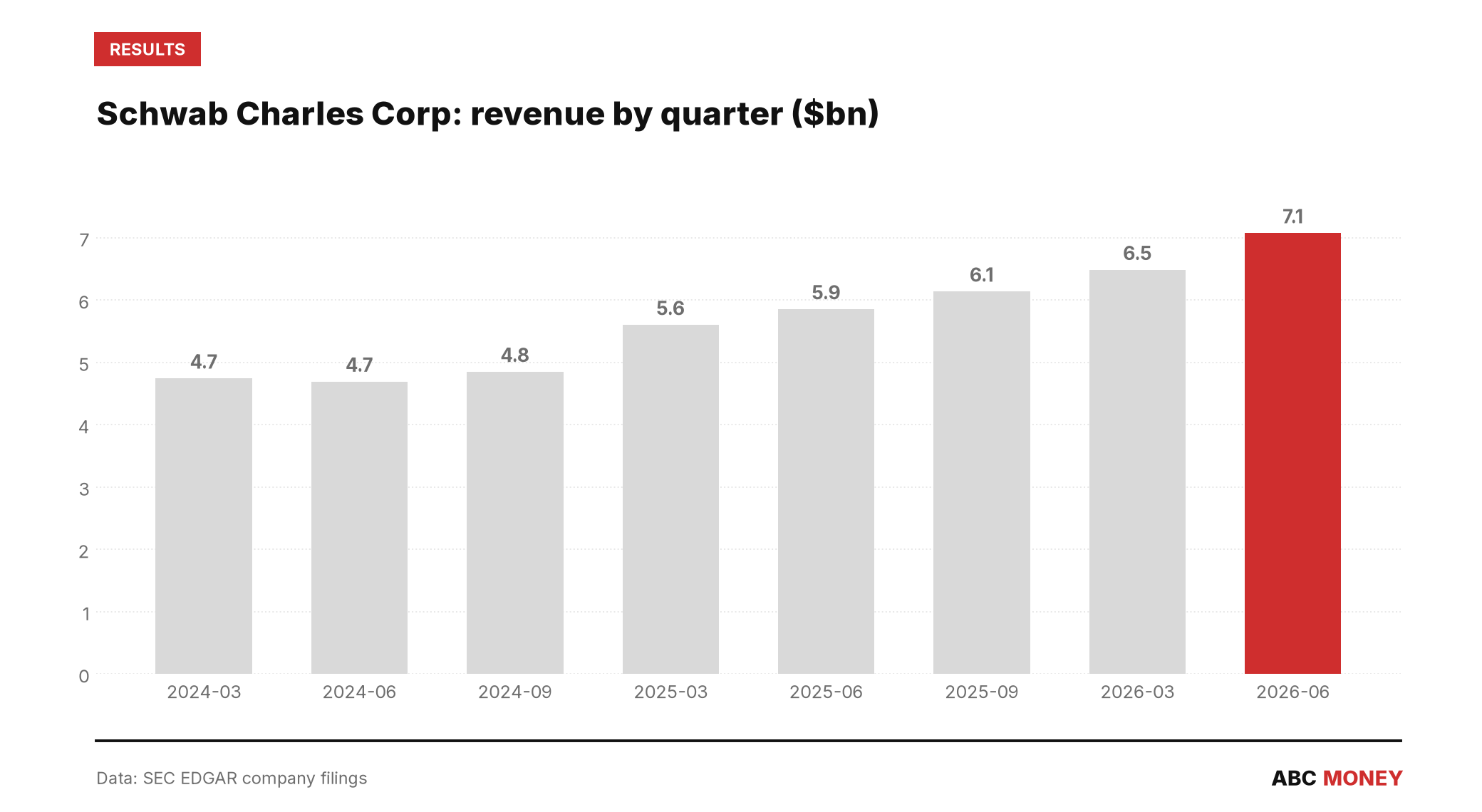
The announcement arrived on a soft day for the stock: SCHW closed at $108.02, down 1.35%, having traded in a $106.78–$114.00 range over the prior 20 sessions and on volume running below its recent average. That sits against a business that is growing briskly by its own historical standards — quarterly revenue rose from $6.48bn in the first quarter of 2026 to $7.07bn in the second, per Schwab’s 10-Q filing with the SEC, while net income climbed to $2.8bn over the same quarter, up from $2.48bn three months earlier. Diluted earnings per share reached $1.54 in the second quarter, more than double the $0.66 reported in the same period two years prior.
Positioning data offers a modest tailwind of its own: FINRA’s daily short-sale figures show the share of SCHW volume tied to short selling — bets that the stock falls — falling from 0.575 on 14 August to 0.229 on 26 August, the day before the crypto announcement broke, according to FINRA data. That decline suggests short-side conviction had already been easing into the news rather than building against it, though a single day’s dip in the stock is a thin basis for reading too much into the shift.
Two routine insider filings from Schwab’s own leadership landed within a day of the announcement — Form 4s from founder Charles R. Schwab and executive chairman Walter W. Bettinger, filed with the SEC on 26 and 27 August — though neither filing references the crypto rollout, and insider filings of this kind are a standard feature of any large-cap disclosure calendar rather than a signal tied to a specific product launch.
Schwab has not set a firm date for when Avalanche, Chainlink and Solana will go live, only that clients should expect access “in the coming months.” Whether that timeline holds — and whether the firm keeps adding tokens as it has signalled it will — is likely to be the next marker for anyone tracking how far a $12 trillion incumbent is willing to go to keep pace with crypto-native rivals.
This article is for information only and is not investment advice or a recommendation to buy or sell any asset. Markets move quickly; figures are correct as sourced at the time of writing. Always do your own research before making financial decisions.

 Bitcoin
  Ethereum
  Tether
  BNB
BNB  USDC
USDC  XRP
XRP  Solana
  TRON
TRON  Lido Staked Ether
  Cardano
  Gram (prev. Toncoin)
  Avalanche