Bitcoin
  Ethereum
  Tether
  BNB
BNB  USDC
USDC  XRP
XRP  Solana
  TRON
TRON  Lido Staked Ether
  Cardano
  Gram (prev. Toncoin)
  Avalanche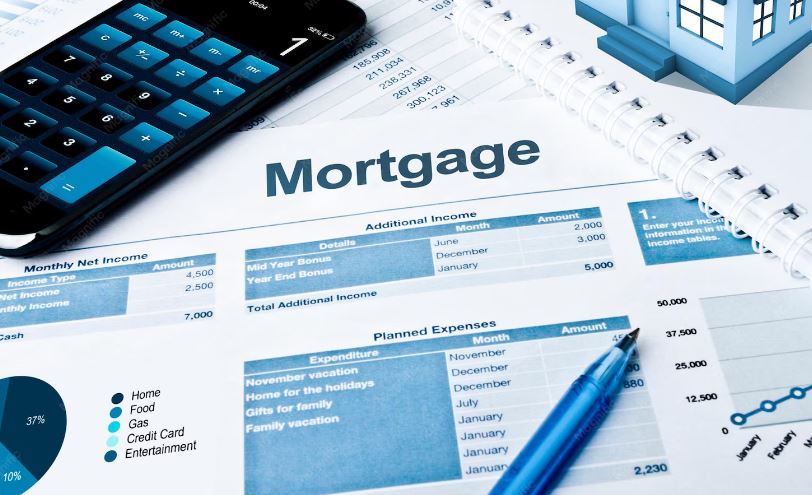
Many American families are currently keeping a close eye on this statistic: 6.71%. According to Freddie Mac’s weekly survey, as of early September 2026, the average rate on a 30-year fixed mortgage was 6.66%. This is the highest rate the benchmark rate has risen since July 2025. The move doesn’t sound dramatic. One week, a few basis points. However, every tenth of a percent counts to the family trying to decide whether to make an offer or wait another year in a housing market already overburdened by affordability pressures.
The figure did not come in a vacuum. The yield on the 10-year U.S. Treasury note, which has been agitated for weeks, is closely correlated with mortgage rates. The 10-year briefly reached 4.818% on a single Wednesday in late August, its highest level since November 2023.
A number of factors are driving it there at the same time, including concerns about the rate at which the government is borrowing money, strong capital demands from businesses investing in AI infrastructure, and fresh concerns about energy costs in light of the escalating tensions in the Middle East. The final factor is especially important. Inflation is exactly what the bond market has been unable to shake for years, and an increase in energy costs directly contributes to inflation readings. For about five and a half years, inflation has exceeded the 2% target by the Federal Reserve’s preferred metric, the personal consumption expenditures price index.
Federal Reserve Governor Christopher Waller’s remarks at a Reuters event in Washington on Thursday, September 3rd, are noteworthy. Markets appeared to be genuinely relieved when Waller stated that he believed there might not be a need to raise rates at the Fed’s mid-September meeting given two months in a row of improving inflation data.
That day, the 10-year Treasury yield experienced a slight decline to 4.744%. In contrast to some Fed officials, Waller was straightforward. “Mortgage rates are not low, auto loans are not — rates are not low,” he stated. “And if I see housing’s in the tank, new cars have gotten almost to be a luxury instead of a normal thing that a middle class family can do — that’s not loose financial conditions.” In that framing, it’s difficult to ignore some sincere concern.
However, rates have not significantly decreased. Purchase demand has remained comparatively stable, according to Sam Khater, chief economist at Freddie Mac. This is accurate, but “stable” in this context refers to buyers’ adaptation rather than easy circumstances. In order to find inexpensive inventory, many of them are stretching their budgets, making longer commutes, or changing their expectations in ways that weren’t possible two years ago. For buyers who can afford higher monthly payments, the 15-year fixed rate, which hit 6.04% that same week, offers a slightly lower rate, but that group is getting smaller.
All of this is exacerbated by the larger dynamics of the housing market. In 2020 and 2021, millions of current homeowners locked in rates below 4%, and they have little financial incentive to sell in a 6.71% environment. Buyers must deal with both high rates and high prices at the same time because of this reluctance, which keeps inventory tight and prices stubbornly high. For the better part of three years, this combination has defined American housing, and there is no clear indication that it will end soon.
According to forecasts, the 30-year rate may slightly decline; some models indicate that it will remain in the high-6% range for the remainder of 2026. However, these predictions come with the usual disclaimers. The needle could move in either direction due to changes in federal borrowing, inflation surprises, and geopolitical developments. The current state of the market is not disastrous, but it is extremely challenging for first-time purchasers and anyone whose financial plans rely on rates returning to a level that feels normal.