
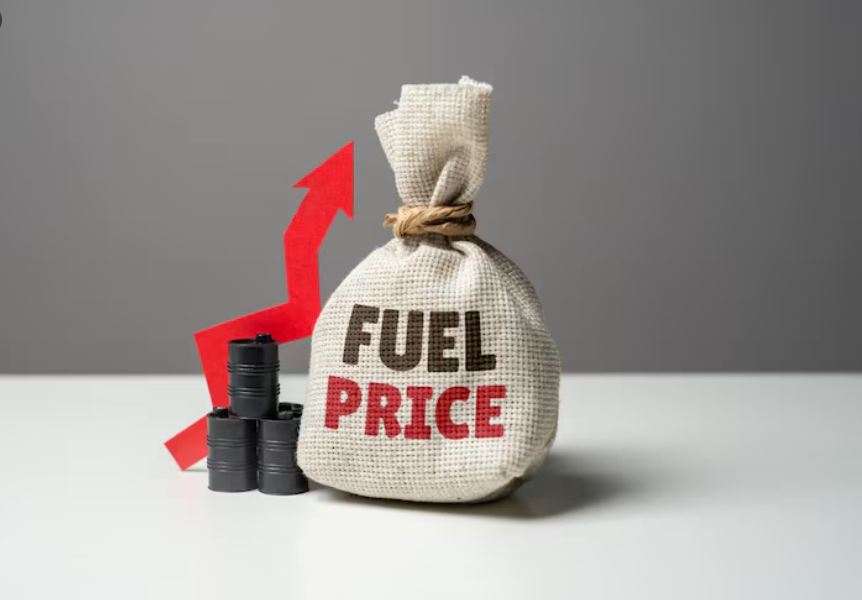
Houston’s gas station near Interstate 45 starts to fill with commuters shortly after dawn. Drivers of pickup trucks pause next to the pumps, taking a quick look at the digital price board before swiping their cards. The numbers appeared doable a few weeks ago. They are now climbing once more.
Thousands of miles away, the explanation begins.
After briefly rising as high as $102 during recent trading, the price of oil has now surpassed $100 per barrel, with West Texas Intermediate hovering around that level. On a commodities chart, that price increase might appear to be an abstract number, but seeing drivers hesitate at the pump makes the effects seem real.
| Category | Details |
|---|---|
| Commodity | Crude Oil |
| Key Benchmarks | Brent Crude and West Texas Intermediate |
| Current WTI Price | Around $100 per barrel |
| Recent Range | Roughly $96 – $102 per barrel |
| Major Trading Exchange | New York Mercantile Exchange |
| Global Organization Influencing Supply | OPEC |
| Key Market Drivers | Supply disruptions, geopolitical tensions, demand growth |
| Reference Website | https://oilprice.com |
Oil has always had a peculiar ability to make connections between far-off events and daily life.
Rising geopolitical tension in the Middle East is largely responsible for the recent surge. Concerns about supply disruptions have been raised by military activity near important export routes, especially in the vicinity of the Strait of Hormuz, a narrow waterway that normally carries about one-fifth of the world’s oil.
The market’s response might be partially psychological.
Because of their long memories, energy traders are aware of how rapidly supply disruptions can worsen. As buyers rush to secure shipments before prices rise, even rumors about tanker traffic slowing down can cause futures markets to soar.
This week, oil futures screens have been unusually active inside trading desks in New York and London.
Brent Crude, the global benchmark, recently surpassed $106 per barrel, its highest level in a number of years. Investors appear to think that if geopolitical tensions persist, the market may stay tight.
However, oil markets hardly ever follow a straight line.
Sometimes supply proves more resilient than anticipated, causing prices to settle after spiking due to fear alone. Sometimes, on the other hand, traders underestimate a disruption, and as reality catches up with speculation, prices soar days later.
The oil market has an unsettling rhythm because of this uncertainty.
A complex web of producers, traders, shipping lanes, and political connections shapes the contemporary oil market. Global energy flows are much more complicated than they were decades ago, but organizations like OPEC still have an impact on supply decisions.
The interactions between American shale production, Middle Eastern exports, Russian supply chains, and Asian demand can be unpredictable.
It is easier to understand the scope of the industry when one is standing close to the enormous storage tanks along the Gulf Coast, where crude shipments come and go every day. The horizon is covered in steel pipelines. Offshore, tankers wait with their engines humming softly.
A number flashing on a commodity screen can be explained somewhere in those fuel flows.
However, supply is not the end of the oil story.
Demand still has a part to play. Global oil consumption is still very high, despite the growing popularity of electric vehicles and renewable energy sources. Petroleum is still a major component of transportation networks, factories, airlines, and shipping fleets.
The story of a rapid energy transition occasionally conflicts with that reality.
It appears that investors are aware of the paradox. During times of high oil prices, governments push for greener alternatives while energy companies like ExxonMobil and Chevron continue to make significant profits.
It appears that while the world is still largely reliant on the outdated energy systems, efforts are being made to alter them.
This tension is reflected in the price of oil today.
Fears of inflation frequently follow sharp increases in crude prices. The cost of transportation is rising. The cost of tickets is increased by airlines. Shipping firms transfer costs to retailers. Grocery stores, building projects, and household budgets may eventually be affected.
It’s similar to seeing a slow chain reaction throughout the world economy as you watch those ripples spread.
Oil prices also have a psychological component. Fuel prices are more noticeable to consumers than many other economic indicators. On paper, a few extra dollars at the pump might not seem like much, but they have an impact on how people view the economy as a whole.
Politicians are well aware of this.
Elections, diplomatic tactics, and economic policy have all been impacted by oil spikes throughout modern history. In order to relieve market pressure during significant disruptions, governments occasionally release emergency supplies from strategic reserves.
However, those actions are usually short-lived.
In the end, supply and demand determine how energy markets react. Despite political attempts to intervene, prices frequently stay high if disruptions continue or demand keeps rising.
For the time being, traders seem cautiously optimistic about the stabilization of supply routes.
The market is still perceived as fragile. Tanker routes continue to be tense. Headlines continue to be generated by military activity close to important shipping lanes. Additionally, the oil chart, which is closely monitored by traders worldwide, continues to rise.
The figures on the price board are still the same when I return to that Houston gas station later in the day. However, drivers have a sneaking suspicion that they will shortly.
Because the world market is keeping an eye on every barrel while oil tankers are moving—or occasionally hesitating—across the ocean.



 Bitcoin
  Ethereum
  Tether
  BNB
BNB  USDC
USDC  XRP
XRP  Solana
  TRON
TRON  Lido Staked Ether
  Cardano
  Gram (prev. Toncoin)
  Avalanche