
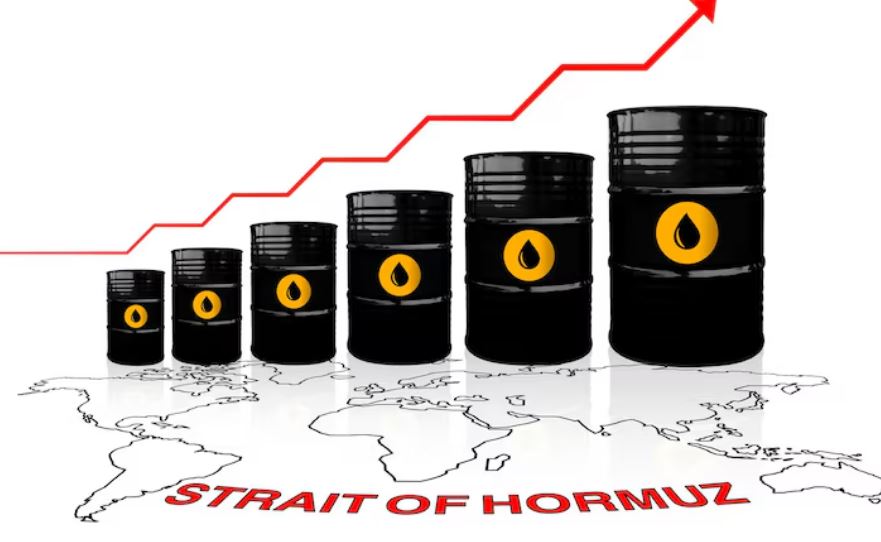
Brent Crude Oil Price Is Being Pulled in Two Directions Right Now — and Markets Are Getting It Wrong

Chevron CEO Mike Wirth made a statement in front of an industry audience at the CERAWeek energy conference in Houston in late March. The event was held in the kind of large ballroom that smells like carpet cleaner and expensive coffee, but it didn’t receive nearly enough attention. He claimed that the futures price did not accurately reflect the real situation. It was based on “scant information” and “perception.” According to him, the actual, tangible effects of the Strait of Hormuz closure were “working their way around the world and through the system,” and the futures curve was not accounting for them. Based on the evidence at hand, he was right.
According to tracking data from S&P Global, the spot price for physical Brent crude cargo, or oil that will actually be delivered within the next ten to thirty days, reached $141.36 per barrel on April 2. Since the financial crisis of 2008, that is the highest level. On the same day, the June delivery futures contract closed at $109.03. It is not a rounding error that there is a $32 difference between what physical buyers are currently paying and what paper traders anticipate the price of oil to be in six weeks. It’s a signal. The founder of Energy Aspects, Amrita Sen, told CNBC that the financial market is “almost masking the true tightness that everywhere else is showing up.” At that time, the price of diesel in Europe was close to $200 per barrel equivalent. The futures chart appeared serene. The real market didn’t.
| Benchmark | Brent Crude (BFOET blend — Brent, Forties, Oseberg, Ekofisk, Troll + WTI Midland since 2023) |
|---|---|
| Origin | Originally from Brent oilfield, North Sea; first extracted 1976; production ended 2021 |
| Market Role | Reference benchmark for ~80% of global petroleum trade, especially Atlantic-basin grades |
| Current Futures Price | ~$108–$110/barrel (April 6, 2026) |
| Physical (Spot) Cargo Price | $141.36/barrel (April 2, 2026) — highest since 2008 financial crisis (source: S&P Global) |
| Price Change (1 Month) | +10.24% (futures); physical spot up ~70% since start of 2026 |
| YTD Price History | Jan 2026: ~$66.60; Feb 2026: ~$70.89; Mar 2026: ~$102.01; Apr 2026: ~$108–$141 range |
| Crisis Trigger | US strikes on Iran (February 28, 2026); Iran closes Strait of Hormuz (March 2, 2026); simultaneous Houthi threats to Suez/Bab el-Mandeb corridor |
| Key Near-Term Driver | Possible 45-day US-Iran ceasefire negotiations (April 2026) — trimmed futures; physical tightness remains |
| OPEC+ Response | Output quota increase approved; warned of lasting supply damage from infrastructure strikes |
| Diesel Price (Europe) | ~$200/barrel equivalent (as of early April 2026, per Energy Aspects) |
| Historical High | $147.50/barrel (July 2008) |
| Historical Low | $2.23/barrel (1998) |
| Official Reference | eia.gov — Europe Brent Spot Price FOB |
The history of Brent crude is important because it clarifies the significance of this specific benchmark. The North Sea’s Brent oilfield, which began production in 1976, is the source of the name. The current Brent benchmark now represents a combination of crude streams, including Forties, Oseberg, Ekofisk, Troll, and since 2023, WTI Midland from West Texas, collectively referred to as BFOET. Production there actually ceased in 2021. All of this is important because about 80% of the world’s petroleum trade is priced in Brent. Almost everything that depends on oil, including jet fuel, diesel, fertilizer, shipping, plastics, and heating, moves with Brent. The figure is more than just a concept in finance. It is a price signal ingrained in the modern civilization’s supply chain.
To put it simply, the price trajectory in 2026 has been extraordinary. Brent futures were trading at about $66 per barrel at the beginning of January, which was already high by historical standards but still reasonable. They had pushed up to $70 by the end of February. Then, on February 28, US strikes on Iran started, and on March 2, Iran closed the Strait of Hormuz. The average monthly amount for March was roughly $102. Early in April, Brent surpassed $109, and as previously noted, physical spot prices were tracking well above that due to short-term supply constraints. As of early April 2026, Brent’s one-year percentage gain was between 68 and 70 percent. When such a move occurs in a single asset class that supports global logistics, it typically occurs four to six weeks ahead of obvious economic hardship.
Reports of a potential 45-day truce between the US, Iran, and a group of regional mediators sent Brent back toward $108. The ceasefire signal that emerged over the weekend of April 6 temporarily reduced futures. It’s instructive, that price response. The markets want to think that the disruption will only last temporarily. If the 45-day truce comes to pass, it will give some traders enough time to book profits and allow the story about $150 or $200 oil to cool. However, the announcement of a diplomatic framework does not normalize physical supply. After weeks of being anchored in open water, tankers do not move right away. Major marine underwriters’ withdrawn insurance coverage does not immediately reappear. Once it opens at $32 per barrel, the difference between the futures price and the physical price doesn’t close in a day because a truce timeline was proposed.
OPEC+ has approved an increase in the output quota, which may be a relief, but it comes with a significant warning, as stated in their own post-meeting statement: infrastructure damage from the conflict may have long-term effects on supply even after hostilities subside. In diplomatic terms, that is the production team admitting that some of this harm might not be repaired right away. According to reports, Iraq was notably exempted from Iranian Strait restrictions, indicating that some passage is still being selectively permitted. This complicates the physical supply picture in ways that are difficult for models to accurately depict.
It’s still unclear if the ceasefire talks will result in anything long-lasting or if they will only buy a few weeks of respite before the next cycle of escalation. It is evident that Brent crude experienced one of the fastest price increases during peacetime in the benchmark’s history, rising from $62 to $141 in about three months. The current physical spot price trajectory puts the 2008 peak of $147.50, which many analysts at the time believed might never be revisited, just a few weeks away. Every energy trader, airline treasurer, and central bank economist is attempting to determine whether futures catch up to that reality or if a diplomatic solution drives physical prices back down toward futures. The truth is that no one knows, and the most significant figure in the world’s commodity markets at the moment is the difference between what the paper market claims and what actual buyers are paying.


 Bitcoin
  Ethereum
  Tether
  BNB
BNB  USDC
USDC  XRP
XRP  Solana
  TRON
TRON  Lido Staked Ether
  Cardano
  Gram (prev. Toncoin)
  Avalanche