
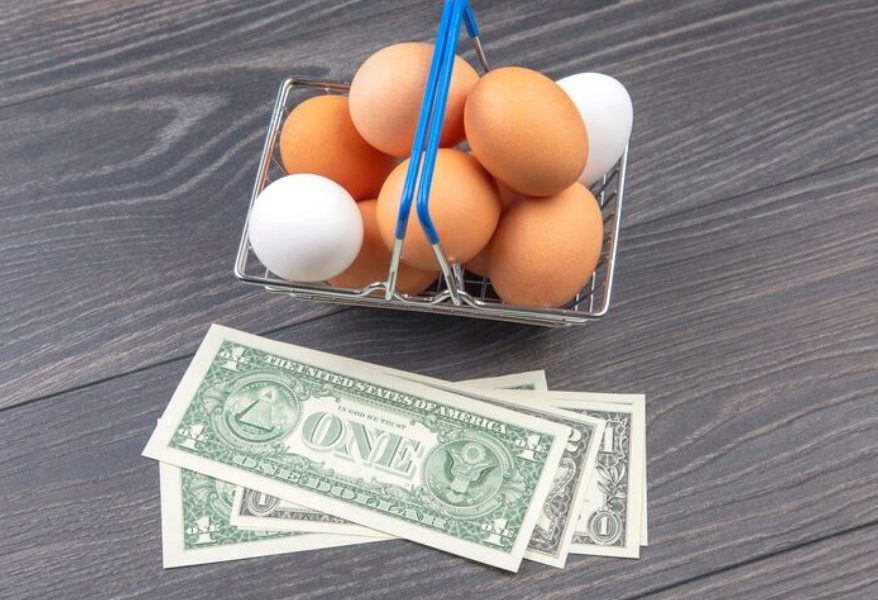
Rosa Cano filled up her Jeep this month on a Saturday afternoon in Los Angeles for $140, which she used to think of as a grocery run rather than a tank of gas. In order to purchase a dress for her daughter’s baptism, she had to drive an hour through traffic from the Inland Empire. During that time, she kept doing the same mental math that many Americans do these days: gas, eggs, rent, loan payment, gas again. She said something somewhere between the parking lot and the freeway that has begun to appear in discussions all over the nation. She questioned, “Why are we in this war?” “It is unnecessary.”
The receipt on her passenger seat and that question essentially sum up America’s situation in April 2026. March saw the largest monthly increase in inflation since 2022, reaching 3.3%, with gas prices accounting for about three-quarters of the damage. Beginning on February 28, the Iran war stopped the flow of crude through the Strait of Hormuz long enough for the price to rise above $100 per barrel. The consequences spread more quickly than Washington wanted to acknowledge. Between February and March, gas prices increased by 21.2%, the largest monthly increase the government has ever documented. The price of fuel oil increased by over 30%. The re-acceleration hit hard for a nation that had spent two years persuading itself that inflation was finally under control.
| Field | Details |
|---|---|
| Topic | U.S. Consumer Prices & Economic Mood in 2026 |
| Headline Inflation (March 2026) | 3.3% Y/Y |
| Previous Month (February 2026) | 2.4% Y/Y |
| Biggest Monthly Inflation Jump Since | 2022 (energy-shock era) |
| Wholesale Egg Price (early 2026) | 6.55 USD per dozen |
| National Average Gas Price | 4.16 USD per gallon |
| California Average Gas Price | 5.93 USD per gallon |
| States at $4+ Gas | More than half of U.S. states |
| March Gas Price Increase | +21.2% month-over-month (largest since 1967) |
| Fuel Oil Price Jump | +30% (largest since February 2000) |
| Extra Annual Gas Cost (Stanford est.) | 857 USD per household |
| Retail Sales Growth (March 2026) | +1.7% M/M (gas-driven) |
| Gas Station Sales Growth | +15.5% M/M |
| Oil Price Increase Since Iran War Began | ~30% |
| Iran War Start Date | February 28, 2026 |
| Consumer Sentiment (U-Michigan, March) | 53.3 (lowest since December 2025) |
| Sentiment Decline (Y/Y) | −6.5% |
| Rents | Declined for 5 straight months |
| Median New Home Price | 410,800 USD |
| Federal Reserve Response | Rates held unchanged |
| Fed Chair | Jerome H. Powell |
| Key Choke Point | Strait of Hormuz |
| Other Affected Commodities | Urea, ammonia, aluminum, helium |
| Gulf Share of Seaborne Urea | ~50% |
| Gulf Share of Global Ammonia Demand | 30% |
| Notable Voices | Robert Kiyosaki, Jerome Powell, Arielle Ingrassia |
Nevertheless, the headline American economy is holding up, as Jerome Powell repeatedly reminded reporters this spring. The unemployment rate is relatively low. GDP continues to rise. To be fair, the majority of the 1.7% increase in retail sales in March came from consumers spending more at the pump rather than purchasing more groceries. Wall Street has essentially shrugged. The Fed left rates unchanged, nudged its forecasts by tenths of a percentage point, and moved on. There’s a sense, watching all this from a distance, that the economy Powell sees in his data isn’t the one Rosa Cano sees through her windshield.
The gap between those two Americas is the real story of 2026. Rents, according to the White House’s own messaging, have declined five months in a row — which is true, and also somehow cold comfort when the wholesale price of a dozen eggs has hovered near $6.55 and the median new single-family home still costs about $410,800. Trump’s February State of the Union claim that eggs were down 60% was fact-checked almost immediately; wholesale prices had eased from avian-flu peaks, but the shelf price most shoppers actually saw was nowhere near that. The administration’s messaging and the supermarket aisle have never felt further apart.
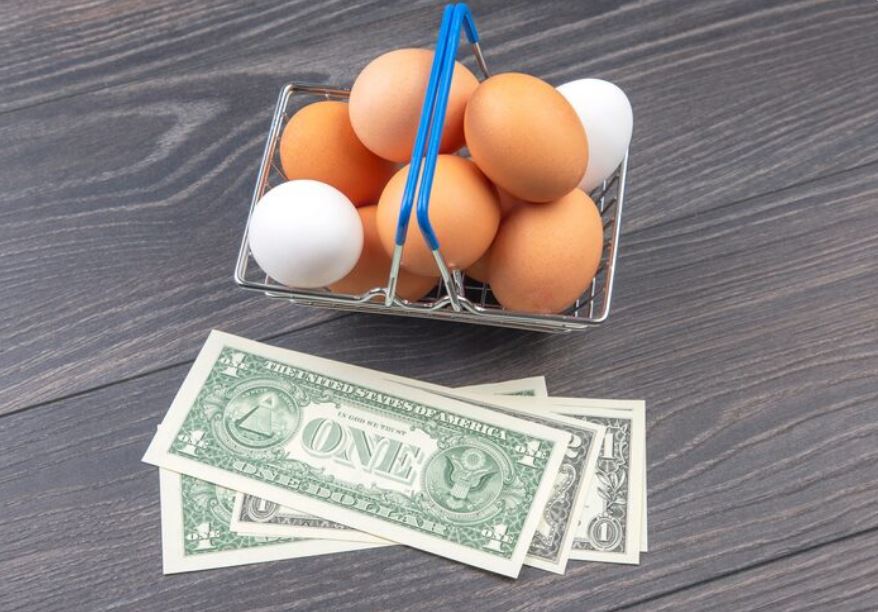
California is, as usual, the most extreme version of the country. Gas there averages $5.93 a gallon, and in some pockets of the Bay Area it brushes $7. Annel Villegas, a 23-year-old truck driver, told a reporter this month that she’s cut her driving as much as she can, but still finds herself handing over $70 or $80 at a half-tank. Stanford economists estimate the war has added roughly $857 to the average household’s annual gasoline bill — not catastrophic in isolation, but stacked on top of groceries, insurance, and a mortgage market where sub-4% rates feel like a museum exhibit, the arithmetic stops working for a lot of families.
It’s possible this is temporary. Arielle Ingrassia at Evelyn Partners sees the March numbers as an energy-led spike with “contained spillovers,” not a fully new inflation regime. Fertilizer, aluminum and helium are the wildcards — the Gulf region supplies nearly half the world’s seaborne urea and about 30% of global ammonia demand, and those costs tend to resurface months later in food prices. Robert Kiyosaki, predictably, has been shouting about hyperinflation since last year. He is almost certainly too dramatic. Additionally, he is not totally incorrect when he says that Americans are worn out.
It’s difficult to ignore the similarities between this moment and the 1970s. A shock of oil. An international conflict. A president defending economic choices that go against popular opinion. The University of Michigan’s consumer sentiment score has plummeted to 53.3, the lowest since late 2024, and the drop is evident across all age groups and political parties. The sense that the American economy on paper and the American wallet at the register are now telling two different stories about the same nation is quiet, dejected, and becoming more audible. Which one ends up being believed will probably decide a lot more than just the midterms.


 Bitcoin
  Ethereum
  Tether
  BNB
BNB  USDC
USDC  XRP
XRP  Solana
  TRON
TRON  Lido Staked Ether
  Cardano
  Gram (prev. Toncoin)
  Avalanche