
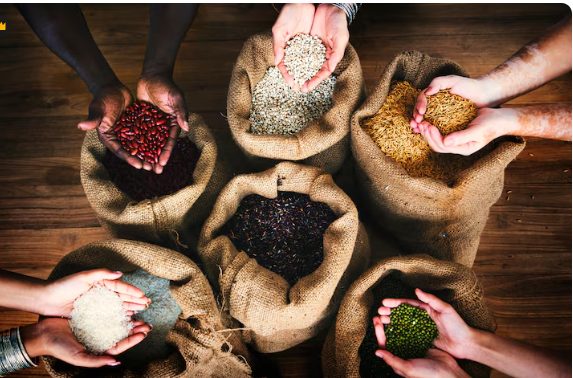
The Food Protectionism Era , Why Nations Are Hoarding Grain and Triggering Global Price Shocks

In 2026, an unmistakable sound may be heard at the loading ports of Alexandria, Egypt’s primary grain port. The plodding conveyor belt clack, the diesel grunt of cranes lowering bulk wheat into trucks, and the odd new addition of radios chatting about reservation numbers and quotas. Following the price shocks of 2022 and 2023, Egypt quietly ceased trusting itself to survive without the 4.5 million tonnes of wheat it currently holds in strategic reserve.
With its long-term grain stockpiles, Qatar is using a similar approach. China’s export limits on urea have been extended. Export permits for ammonium nitrate have been suspended by Russia. Due to more recent supply disruptions, Iran and Kuwait have completely banned agrifood exports. In commerce ministry documents, the term “domestic priority” frequently appears, but in somewhat varied versions. The situation is essentially defined by that sentence.
Although the period of food protectionism is not particularly new, the one that has taken hold by 2026 differs from the anxious one that followed the outbreak of the conflict in Ukraine. The previous episode was intense and disorganized. In just a few months, almost thirty nations imposed export prohibitions. Despite not being a significant wheat exporter, India stopped selling wheat in May 2022. The statement alone caused global wheat prices to rise from $1,184 per bushel to $1,247 after just two trading days.
Exports of wheat flour are prohibited in Kazakhstan. About 75% of the world’s palm oil comes from Indonesia, which completely stopped exporting. Although the contemporary era’s structure appears calmer, it is actually more resilient. Governments are no longer in a panic. They’re organizing. They are subtly changing the presumptions about what constitutes a national food policy.
| Category | Details |
|---|---|
| Topic | Food protectionism, grain hoarding, global price shocks |
| Tracking Body | UN Food and Agriculture Organization |
| FAO Food Price Index | Monthly tracker covering cereals, dairy, oils, meat, sugar |
| March 2026 FAO Price Index | Third consecutive monthly rise |
| Acute Food Insecurity (2025) | 266+ million people |
| 2026/27 Top Wheat Exporter | Russian Federation (~47 million tonnes) |
| Largest Wheat Importers (2026/27) | Egypt and Indonesia, tied at 12.5 million tonnes each |
| Top Rice Exporter | India (≈40% of global exports) |
| Recent Total Agri-Export Bans | Iran and Kuwait (2026) |
| Notable Suspensions in 2026 | Russia ammonium nitrate licenses (until late April), China urea export restrictions extended, Jordan tomato exports |
| Egypt’s Wheat Reserve Strategy | Maintaining 4.5 million tonnes of strategic stocks |
| Qatar Strategy | Reinforced long-term grain stockpiling |
| Urea Price Move (Early 2026) | Up nearly 46% month-on-month |
| Strait of Hormuz | Critical maritime chokepoint affected by 2026 Middle East conflict |
| Heavily Affected Importers | Bangladesh, Pakistan, Brazil, Egypt, Algeria, Morocco |
| WTO Identified Export Restrictions | Dozens currently in force globally |
| India Wheat Ban (Lifted) | May 2023 ban removed; India now forecast as small net exporter |
| Indonesia Palm Oil Action | Remains world’s top palm oil producer (~75% of global) |
| Russia–Ukraine Combined Wheat Share | Still ~30% of global wheat trade |
| Notable Earlier Episode | 30+ countries imposed restrictions in 2022 (Ukraine war) |
| Source for Policy Tracking | FAO Food Price Monitoring & Analysis (FPMA) |
Although painful, the arithmetic underlying the shift is simple. Through early 2026, the FAO Food Price Index has increased for three straight months. According to the World Food Programme, over 266 million people experienced acute food insecurity in 2025. Early in 2026, urea prices increased by roughly 46% month over month, which almost automatically results in greater fertilizer costs, decreased application rates, and lower yields six to nine months later.
With an estimated 47 million tonnes for the 2026–2027 marketing year, Russia continues to be the biggest wheat exporter. With 12.5 million tonnes apiece, Egypt and Indonesia are tied as the biggest importers. After eliminating the 2023 prohibition, India is now expected to become a minor net wheat exporter once more. However, its rice exports are still restricted due to a series of administrative barriers that keep around 40% of the world’s rice trade going via a single sovereign decision-making system. When a single government has the ability to influence international prices, it usually does so frequently.
A fundamental layer of tension brought about by the Middle East crisis sets 2026 apart from previous cycles of protectionism. The 2026 dispute has caused significant disruptions to the Strait of Hormuz, which handles a disproportionate percentage of fertilizer commerce for Asia and Latin America, forcing nations from Bangladesh to Brazil to engage in emergency purchase. The immediate effects on Bangladesh, Pakistan, Brazil, and numerous African economies that rely on Hormuz-routed nitrogen-based fertilizers were highlighted in the FAO’s agrifood policy briefing in April 2026.
In March, emergency energy measures were implemented in the Philippines. France and Italy increased their assistance with transportation, farming, and fishing. Emergency subsidies were implemented in Ethiopia. On its own, each of these actions appears logical. When stacked together, they depict a global system gradually moving away from the presumption that fertilizer and food will move freely across national boundaries.
Economists continue to argue—often with obvious annoyance—that food protectionism fails to solve the issue it was intended to. Domestic prices continued to rise when India prohibited wheat exports in 2022. The same pattern emerged when Kazakhstan outlawed the export of flour. Without significantly lowering prices for the exporting nation’s own customers, export limitations typically decrease the worldwide supply accessible to importers.
In reality, the mechanism does not hold pain; rather, it transfers it. Headey and Anderson’s 2007/2008 food crisis analysis, which was published years later, revealed that major rice and wheat exporters’ export limits caused global rice prices to rise by over 45% and wheat prices to rise by around 30%. It appears that the lesson is obvious. The implementation is consistently the same.
The most difficult aspect to overlook is the disparity in who suffers the most. Rich nations stockpile. middle-income nations that restrict or prohibit exports. Low-income net importers ultimately pay higher costs for less dependable supplies, especially in sub-Saharan Africa and portions of South Asia. According to FAO projections, the world’s food import bill will increase in 2026, with developing nations bearing the brunt of this burden because they cannot afford to establish the kind of strategic reserves that Egypt and Qatar already maintain.
Walking through markets in Cairo, Karachi, or Nairobi gives the impression that regular households have mastered the art of reading the world news in the same manner that they once did the weather. A policy paper from New Delhi, a battle in the Gulf, or an Argentine drought all now affect the cost of a loaf of bread in ways that most consumers would never have considered.
There are indications that things might not get as bad as they were in 2022. The world’s wheat supplies are gradually improving. Brazil is expected to produce a record 139 million tons of grain in 2026–2027. The prohibition on wheat exports from India has been lifted. China is expected to produce a record 604 million tons of grain, including 307 million tons of corn. In absolute terms, the structural supply is not disastrous.
The issue is that the safeguard of free trade, which was once utilized to transfer surpluses globally, has significantly diminished. Egypt’s 4.5 million tonnes of strategic wheat serve as more than just a safety net. Additionally, two decades earlier, wheat would have flowed more freely through international markets, reducing price surges in other places. The silent change in ownership is what’s causing the price movements to become more regular and dramatic because the reserves are now national rather than effectively global.


 Bitcoin
  Ethereum
  Tether
  BNB
BNB  USDC
USDC  XRP
XRP  Solana
  TRON
TRON  Lido Staked Ether
  Cardano
  Gram (prev. Toncoin)
  Avalanche