Bitcoin
  Ethereum
  Tether
  BNB
BNB  USDC
USDC  XRP
XRP  Solana
  TRON
TRON  Lido Staked Ether
  Cardano
  Gram (prev. Toncoin)
  Avalanche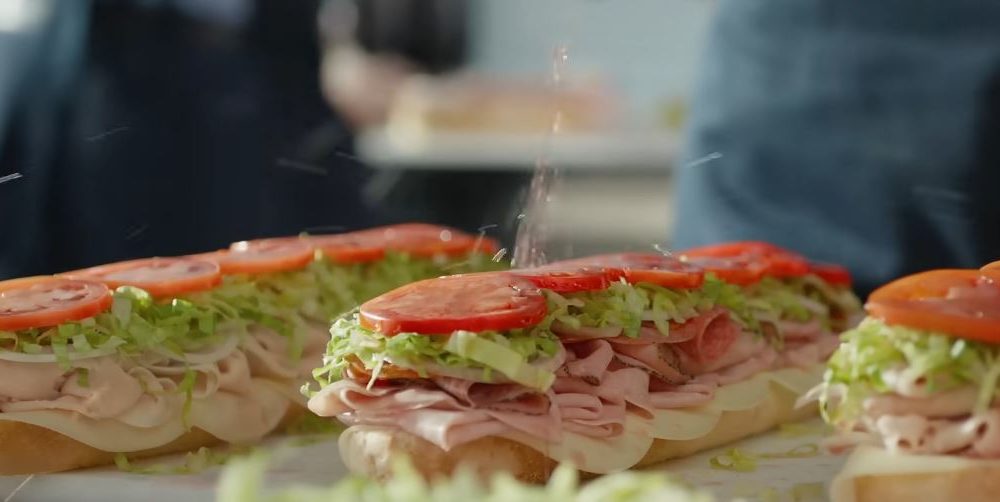
Jersey Mike’s IPO Filing Reveals $50 Million Payday for Founder’s Stepson — and a $41 Million Jet

When Jersey Mike’s filed its S-1 prospectus last week, the majority of the initial coverage concentrated on the headline figure: a $12 billion valuation, a listing on the New York Stock Exchange under the ticker “JMKE,” and a fast-growing restaurant chain that is now second only to Subway in the US sandwich market. However, there is a much more fascinating tale about how money passed through this company before it was taken over by someone else hidden inside the regulatory document.
In April 2025, Peter Cancro, who founded the chain in 1975 at the age of eighteen after purchasing a small Jersey Shore sub shop, resigned as CEO. Charlie Morrison, who oversaw Wingstop for about ten years, has taken his place. Cancro is still on the board. The master franchise rights for up to 300 locations throughout the UK and Ireland are still under his personal control through a different company. From a distance, the transition appears seamless. Details are filled in by the S-1.
Between 2023 and 2025, Cancro’s stepson, Phillip Sivolobov, was paid $50.5 million. John Cancro, his brother, earned about $21 million during that time. Daniel Powers, his brother-in-law, received over $31 million during the fiscal years 2024 and 2025. The filing merely states that these relatives “were employed by the Company in various roles.” The fact that none of them were paid during the thirteen weeks that ended on March 29, 2026, the company’s first quarter, indicates that the agreements came to an end as the IPO process started to take shape.
Every dollar might have been earned in a respectable operational capacity. Managing a rapidly expanding franchise chain with 3,300 locations is an extremely difficult task, and privately held businesses frequently pay important operators handsomely without any public scrutiny.
However, this scale is peculiar. Public market investors typically pay close attention to disclosures of over $100 million going to immediate family over a two-year period with little role description. Particularly considering that a $181 million decrease in what the filing refers to as founder-related discretionary expenses, such as bonuses given to specific people and charitable contributions, was one of the major factors in last year’s profit increase.
The jet comes next. A $41 million aircraft was given to a Cancro-controlled organization in connection with Blackstone’s 2024 acquisition of the majority stake, which was then valued at $8 billion. In addition, the company paid him $166,666 a month until 2025 to cover business expenses associated with air travel, for a total of about $2 million. Walter Tombs, a former CFO, became the highest-paid executive in 2025 by total payout after receiving a $40 million cash bonus linked to the Blackstone deal.

This is not necessarily inappropriate. When the lights come on, private businesses that are close to the top of their growth arc frequently resemble this. Cancro began working at the sub shop that would eventually become his own at the age of fourteen, and he spent fifty years creating something genuine. The company is actually doing well: same-store sales increased by 50% since 2020, and net income increased from $5 million to $55 million last year. There is no doubt about the fundamentals.
The timing is more difficult to ignore. In the same quarter that the IPO process seems to have taken off, the family compensation stopped. Prior to the listing, the debt load was $2.1 billion. Additionally, once the chain reaches 4,000 locations—a milestone the company appears confident it will reach—prior owners will receive an additional $250 million under the earnout structure. For a founder who has already extracted substantial value and now wants the public markets to support the next chapter, there is a feeling that the IPO is partially a liquidity event.
When the share price range lands, it will be evident whether investors view it that way. For the time being, the filing is doing what S-1 documents do best—telling the whole story without editorializing and letting the reader draw their own conclusions.