
How Meta’s Louisiana Data Center Went from $10 Billion to $50 Billion in Less Than Two Years

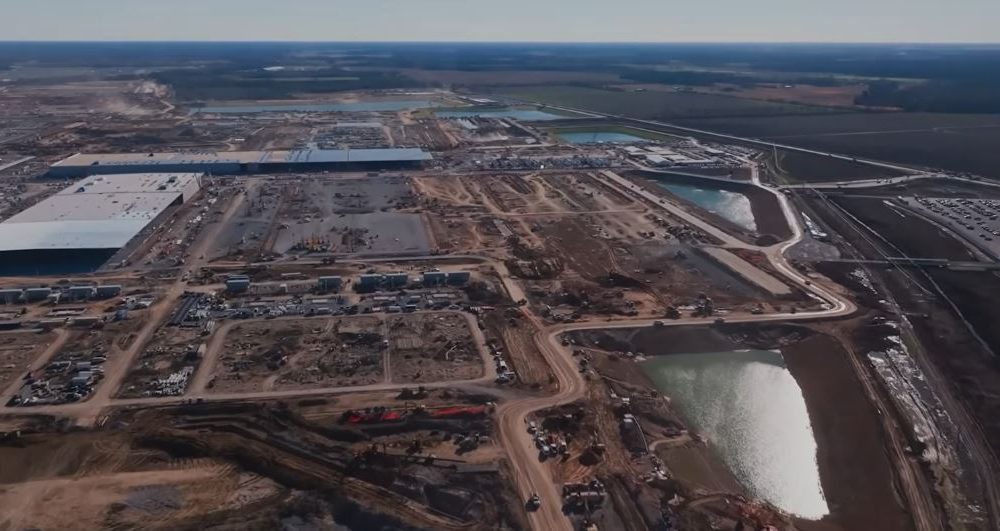
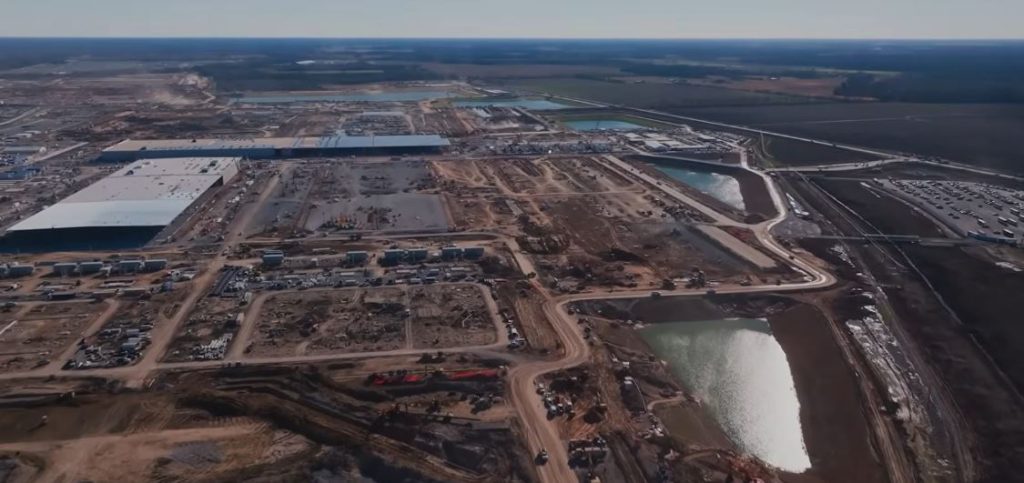
The amount was $10 billion when Meta first declared that it would build a data center in Richland Parish, Louisiana. At the time, it seemed noteworthy that a business was investing actual funds in a remote area of the Deep South, far from the data center corridors of Northern Virginia or the Pacific Northwest. After two years, that figure has risen to $50 billion. When you consider the computing hardware that must occupy a nearly 4,000-acre campus, the project—now known as Hyperion—may end up costing more than $250 billion. It is expanding to 5 gigawatts of compute capacity. Nobody, not even Meta’s own planning teams, could have predicted how quickly this would get out of control.
Without a reference point, it is challenging to visualize the scale. At one point, President Trump displayed a graphic that contrasted the footprint of Hyperion with that of Manhattan. In rural Louisiana, that image most likely had a different impact than it did in a press briefing room in Washington.
December 2024 saw the start of construction. Since then, Meta has awarded contracts worth over $1.6 billion to local Louisiana businesses. Richland Parish teachers received yearly bonuses of up to $50,000, which was a 400% increase over the previous year. The project’s new tax revenues were primarily used to fund these bonuses. These are not minor adjustments. The arrival of a business spending this much quickly rewires things in a community where economic opportunities have historically been limited. Roads are being upgraded. Infrastructure related to water and wastewater is being redesigned. As part of the expansion, Meta claims to have committed more than $1 billion to local infrastructure upgrades.
However, not everyone involved in the project is completely comfortable with the current situation. Although Fortune’s description of the project as having “split the town in two” may be exaggerated, there is a genuine aspect to it. Winners and those who believe they were not consulted are common outcomes of large-scale industrial development. The environmental law firm Earthjustice had pushed to look into how the project’s funding might eventually pass costs on to utility ratepayers in the event that Meta leaves before Entergy Louisiana recoups its investment in the ten new gas-fired power plants being constructed to supply the campus. The request was turned down. But the worry didn’t go away.
On its own, the energy picture is important. Although the entire campus’s electrical demand is even greater, Hyperion will require more than 5 gigawatts of processing power. In order to comply, Entergy Louisiana is expanding the infrastructure of its gas plants.
There is a genuine conflict between the state’s desire to draw investment in AI infrastructure and the longer-term concerns about what that high power demand actually means. The environmental math on that is unsettling. In an effort to entice Meta, Republican Governor Jeff Landry of Louisiana signed a 20-year sales tax exemption for data centers constructed prior to 2029. In business parlance, he said, “The entire package is in the black.” For the time being at least, it is difficult to argue that the state’s economics don’t work.
Mark Zuckerberg, the CEO of Meta, has made it apparent to the public why the company is working so hard. The research division now headed by Alexandr Wang, Meta Superintelligence Labs, is pursuing AI capabilities that call for computation at a scale that most businesses didn’t have until very recently. At Hyperion’s anticipated scale, Zuckerberg’s assertion that Meta’s researchers would have “industry-leading levels of compute” is somewhat supported. The full 5-gigawatt buildout is anticipated to be finished by 2032, with the site expected to reach 2 gigawatts by 2030.
As this develops, it seems like Meta is taking a similar infrastructure risk as its competitors, albeit in a more subdued manner. Microsoft, Amazon, and Alphabet are all pursuing comparable agreements with states that offer energy and tax breaks. It just so happened that Louisiana had something so alluring that it became the location of the biggest wager. It’s still genuinely unclear if Hyperion will eventually produce the AI returns Meta is hoping for. However, Richland Parish’s transformation is already well under way, the construction is real, and the funds are committed.
 Bitcoin
  Ethereum
  Tether
  BNB
BNB  USDC
USDC  XRP
XRP  Solana
  TRON
TRON  Lido Staked Ether
  Cardano
  Gram (prev. Toncoin)
  Avalanche