
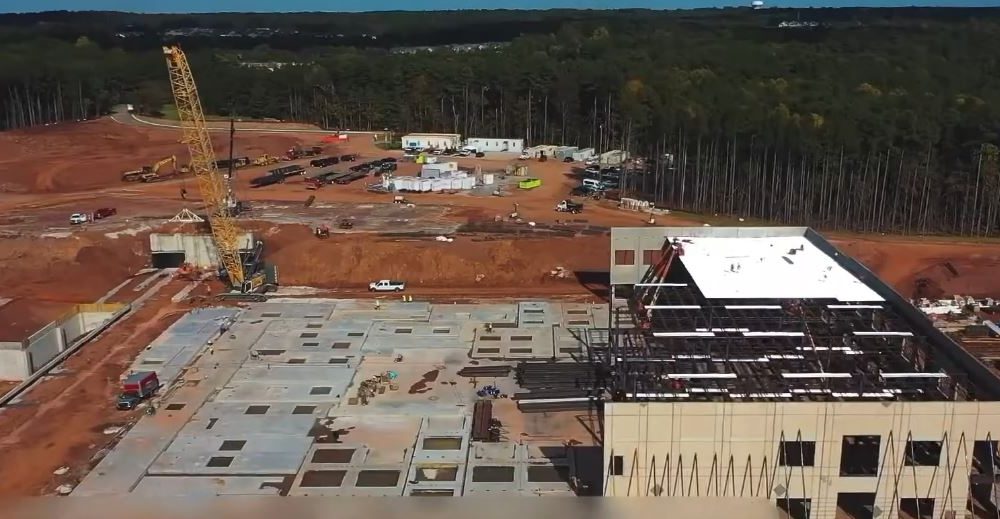
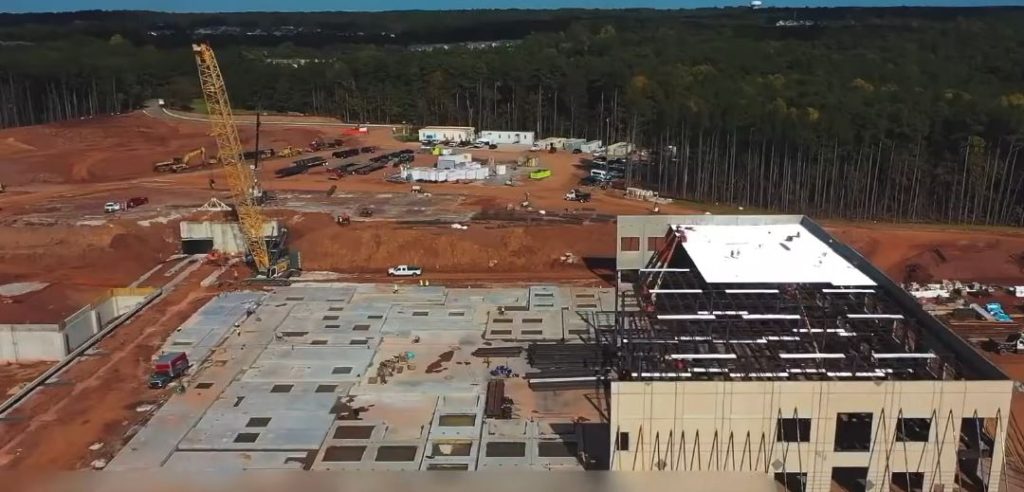
Something big is being constructed somewhere in the area of Houston that most people drive by without giving it much thought, between Sheldon Road and the Beltway. Not merely a structure. a campus. If all goes as planned, the $6.5 billion pharmaceutical manufacturing campus will be fully operational by 2030. One of the biggest pharmaceutical companies in the world, Eli Lilly and Company, is the company behind it. The setting is Generation Park, a master-planned community in northeast Houston that has been subtly presenting itself for years as something more ambitious than an office park.
After submitting a number of project filings to the Texas Department of Licensing and Regulation in mid-July, construction on a number of the site’s components is either already under way or scheduled to start in August. The shell buildings that will eventually house the actual manufacturing operations are described in the filings, which cover five different projects totaling about $378 million. These are large buildings: one is about 342,000 square feet and is expected to cost $193 million, while the other is about 233,000 square feet and will cost $131 million. The bones of a building that will eventually produce medicine are elevators and stairwells. The footprint is beginning to take shape, but it’s still early.
Orforglipron, an oral, once-daily GLP-1 drug presently undergoing clinical trials to treat Type 2 diabetes and obesity, is what Lilly intends to produce here. That is more important than it may seem. One of the most commercially significant advancements in contemporary medicine is the GLP-1 class of medications, which includes Ozempic, Wegovy, and their cousins. Increasing domestic production capacity for these medications is more than just a commercial choice. Houston is now a part of this strategic move.
The figures were difficult to overlook when Lilly revealed the project in September 2025. There are 615 permanent positions, including lab technicians, scientists, and engineers. Four thousand jobs in the construction industry. Additionally, Lilly calculates an economic multiplier of about $4 in local activity for each dollar spent on-site. A number of additional jobs in supply chain, retail, and logistics are anticipated for each manufacturing job created. The scale lends some weight to this well-known economic development argument.
As this develops, it seems like Generation Park is attempting to become something Houston hasn’t had before: a true center for life sciences with the kind of institutional gravity that draws in more funding over time. In 2023, the park’s owner and operator, McCord Development, revealed plans for BioHub Two, a 60-acre biomanufacturing campus. Lilly’s presence turns that vision into proof rather than just a dream. According to a March 2025 Cushman & Wakefield study, Houston was ranked fourteenth in the country for employment in the life sciences, which is respectable but has potential for improvement. Over the next ten years, the sector’s employment was expected to grow by 76.5%, according to the same report. Compared to a year ago, that figure now seems more plausible.
Despite the recent construction activity, it is important to remember that the project is still years away from completion. One milestone is the completion of Shell buildings by the end of 2027; another is full operations by 2030. In late July, a Lilly representative affirmed that the Houston project “remains on track and is progressing as planned.” That’s comforting, but it’s also the kind of cautious business language that allows for flexibility. Large construction projects tend to take longer than expected.
The bulldozers are still in motion. The documents have been submitted. Additionally, Eli Lilly is investing real money in real buildings in a part of northeast Houston that most people couldn’t locate on a map six months ago. It remains to be seen if Generation Park will develop into the life sciences destination McCord envisions, but it is now a more intriguing question.


 Bitcoin
  Ethereum
  Tether
  BNB
BNB  USDC
USDC  XRP
XRP  Solana
  TRON
TRON  Lido Staked Ether
  Cardano
  Gram (prev. Toncoin)
  Avalanche