
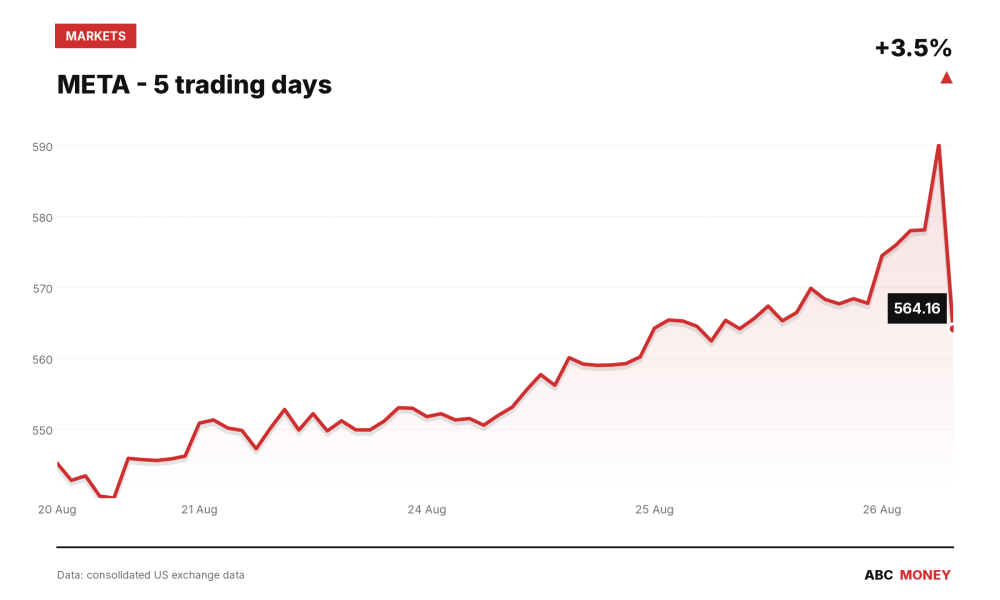
The gap between “discussed” and “done” turned out to be about eleven hours. A Bloomberg report on 26 August said Meta Platforms (NASDAQ: META) and a coalition of US state attorneys general had discussed settling a trial over alleged harms to teenagers from its apps. By the time most readers had finished the story, it was already out of date: a court filing confirmed Meta had actually signed a Meta teen social media settlement worth up to roughly $16.7bn, ending a case that was only in its second week of trial.
The sequence matters because it shows how thin the original scoop was. Bloomberg’s sources were anonymous, and both Meta and the state attorneys general offices declined to comment at the time. Within the same news cycle, Reuters reported the actual signed terms: a cap of $16.68bn, with Meta denying wrongdoing even as it agreed to pay. The discussion the market first heard about was already a done deal.
What the Meta teen social media settlement actually covers
The case was part of a federal multidistrict litigation before Judge Yvonne Gonzalez Rogers in Oakland, brought by a 29-state coalition, with California, Colorado, Kentucky and New Jersey leading the consumer-protection claims that went to trial. Under the deal, Meta will pay penalties to the states over ten years and make specific changes to Facebook and Instagram for under-18 users, including a default two-hour daily time limit and a midnight-to-6am usage block unless a parent overrides it, according to court papers cited by Reuters.
California’s share alone could run to $1.5bn-$2.1bn if the court approves the settlement, CNBC reported, citing the state’s attorney general. Rob Bonta, California’s Attorney General, put it plainly: “Today, we have secured a settlement with Meta that will make social media less dangerous for our kids.”
The dollar figures move around slightly depending on the source and the framing – Bloomberg’s $16.7bn, Reuters’ $16.68bn, and a $17bn-over-ten-years figure used by California’s own Department of Justice – but the order of magnitude is consistent: this is one of the largest state-led consumer settlements a tech platform has agreed to over product design.
Why Meta chose to settle mid-trial
Meta had already lost ground in related litigation this year. New Mexico secured a $375m jury verdict against the company in March 2026, followed by a further $567m in remedies in a second phase – roughly $942m combined, well before this federal case even reached its verdict. Meta’s own second-quarter 10-Q filing had already flagged that plaintiffs across the related cases were seeking damages that could run into the trillions of dollars, giving the company every incentive to cap its exposure rather than let a jury decide it.
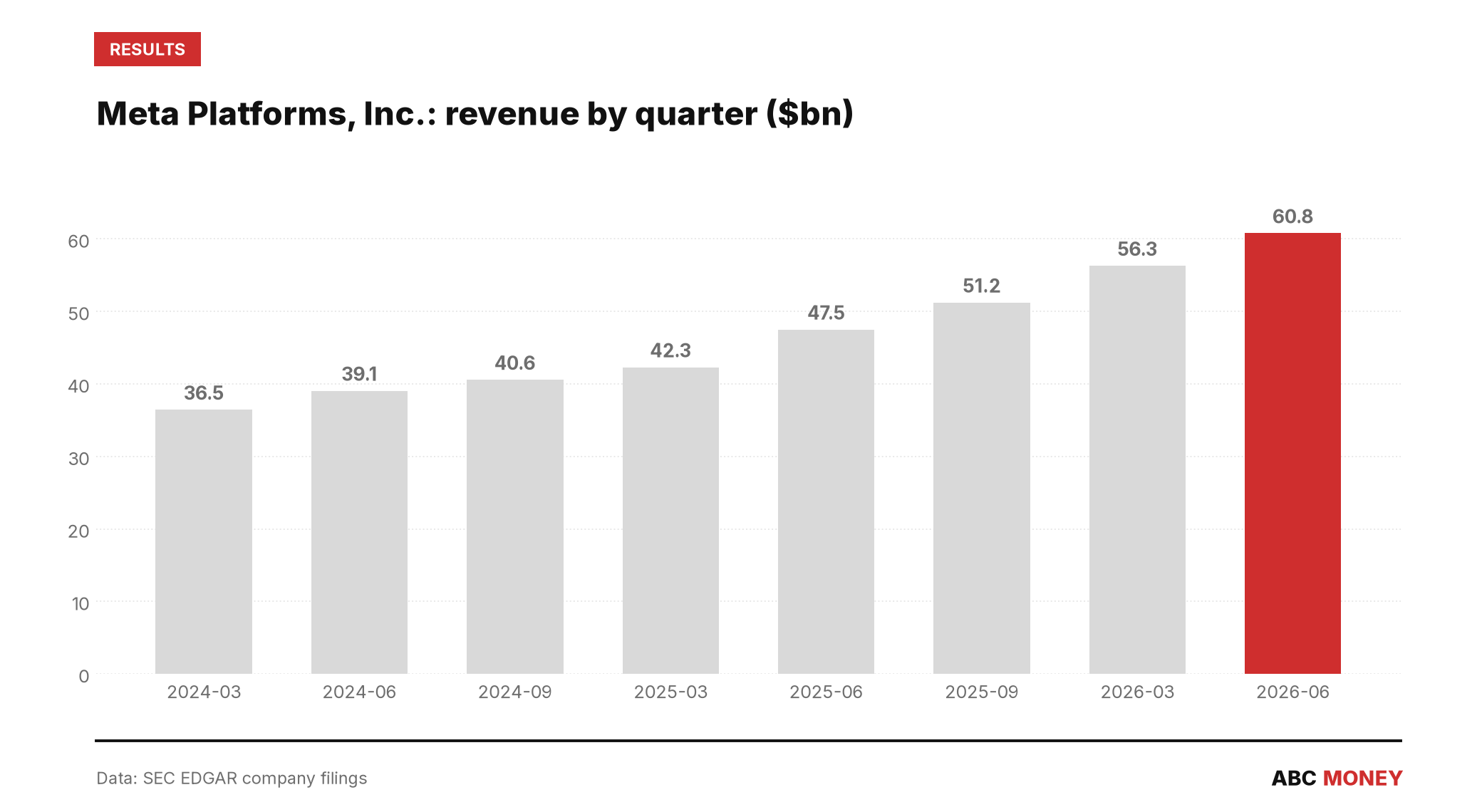
Set against Meta’s finances, the settlement cap is real money but manageable. The company reported net income of $15.85bn for the second quarter of 2026 alone, on revenue of $60.8bn, continuing a run of quarterly profit growth that has taken net income from $12.4bn in the first quarter of 2024 to $26.8bn in the first quarter of this year before easing back. A one-off charge in the tens of billions, spread over a decade of payments, is unlikely to dent that trajectory much, though the precise accounting treatment will show up in a future filing.
Positioning ahead of the news
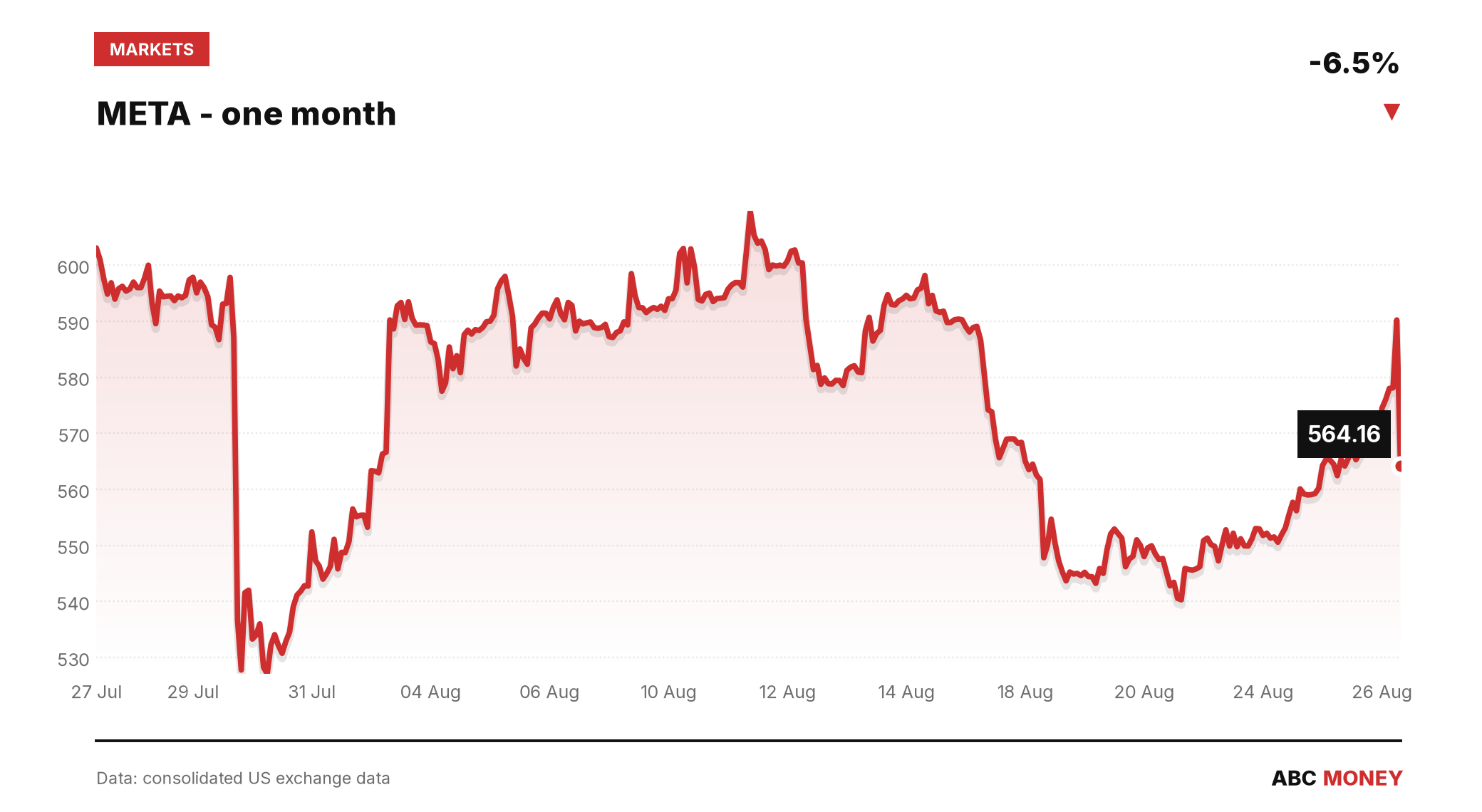
FINRA’s short-sale data shows the share of Meta’s daily trading volume attributable to short sales – bets that the stock would fall – had already eased from 0.41 on 21 August to 0.276 by 25 August, the session before the settlement news broke. That is a modest shift, but it is consistent with traders trimming bearish bets into a trial outcome that markets may have expected to resolve one way or another that week. Meta shares had drifted lower over the preceding month, trading in a 20-day range between $540.29 and $609.64, having pulled back roughly 3.7% over that stretch before the settlement news landed.
What doesn’t go away
Settling with 29 states does not end Meta’s regulatory exposure, and it does not touch the wider industry problem. Snap, Google’s YouTube and ByteDance’s TikTok all still face their own addiction-design lawsuits in state and federal courts, per Reuters, meaning the same core allegation – that recommendation algorithms and engagement features were built in ways that harmed young users – remains untested against those platforms. The settlement is also subject to court approval before its terms, including the age-based usage limits, take effect. For Meta, the immediate legal cloud over this specific trial has lifted; the industry-wide argument about how social media treats teenagers has not been settled at all.
This article is for information only and is not investment advice or a recommendation to buy or sell any asset. Markets move quickly; figures are correct as sourced at the time of writing. Always do your own research before making financial decisions.


 Bitcoin
  Ethereum
  Tether
  BNB
BNB  USDC
USDC  XRP
XRP  Solana
  TRON
TRON  Lido Staked Ether
  Cardano
  Gram (prev. Toncoin)
  Avalanche