Bitcoin
  Ethereum
  Tether
  BNB
BNB  USDC
USDC  XRP
XRP  Solana
  TRON
TRON  Lido Staked Ether
  Cardano
  Gram (prev. Toncoin)
  Avalanche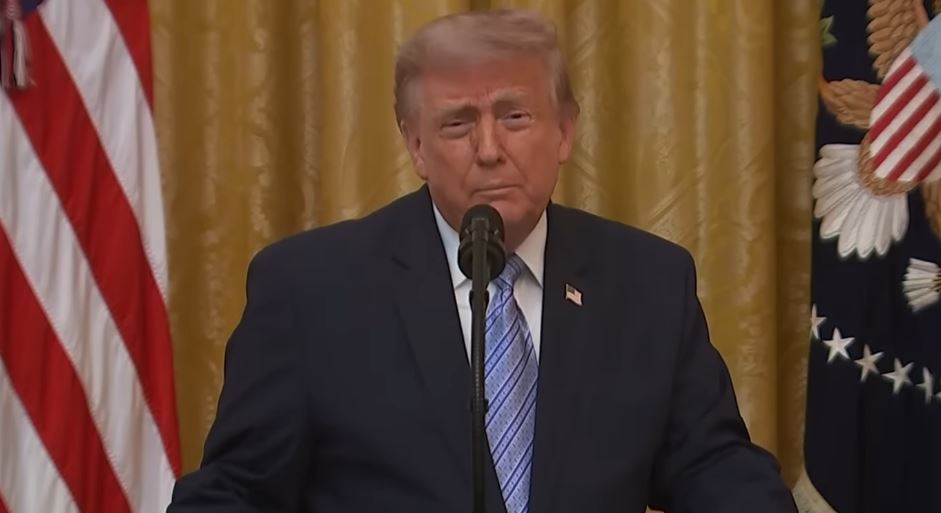
This year’s July 1st brought a brief silence to trade desks throughout North America. It wasn’t because the sky fell—it didn’t—but rather because the event that had been on everyone’s calendars for months finally went unresolved. The United States rejected a 16-year extension of the Canada-U.S.-Mexico Agreement. Not much fanfare. No official collapse. Just a change to something more unsettling: yearly reviews that will last until 2036, with an expiration date looming over the entire agreement if nothing is resolved.
Sitting with that for a moment is worthwhile. The foundation of about $1.3 trillion in cross-border trade between the United States and Canada is CUSMA, also referred to as USMCA south of the border. It protects almost 90% of Canadian exports from tariffs imposed by the United States. Ironically, Trump himself negotiated and signed the agreement during his first term; however, he seemed to conveniently ignore this fact when he started publicly criticizing it in recent months.
The problem is that it seems premature to declare this a failure. In theory, the agreement is still in effect. Tariff carve-outs for CUSMA-compliant goods are still in effect. However, “stable” and “alive” are two different terms, and the business community appears to be more aware of this distinction than the political class at the moment. Decisions about investments are made without waiting for clarity. Ambiguity causes them to be canceled, rerouted, or postponed. And the current state of North American trade is one of ambiguity.
Observing all of this gives the impression that Trump’s strategy isn’t really based on trade logic. His main demands, such as increased access to Canada’s heavily protected dairy market and more American-made auto parts, are reasonable points of contention.
However, the broader stance—threatening to pull out, placing tariffs on Canadian steel, aluminum, and automobiles, and asserting that the United States doesn’t require anything from Canada—doesn’t hold up well to the actual state of the economy. Border state governors are aware of this. The Detroit Regional Chamber of Commerce is aware of this. Whether any of that matters to an administration that relies more on political intuition than supply chain spreadsheets is the question.
Mark Carney, the prime minister of Canada, hasn’t wavered. His government responded with targeted counter-tariffs on American steel, appliances, and automobiles after rejecting negotiations held under economic pressure. It’s a measured reaction, neither a retreat nor an escalation. It’s more difficult to predict whether that stability will endure what appears to be a protracted, difficult negotiation. Posture alone rarely wins trade deals.
Mexico, meanwhile, seems more open to relocation. Claudia Sheinbaum’s administration has made trade relations with the United States its top priority, with bilateral negotiations between Washington and Mexico City already in progress and a third round of talks planned. The entire framework that made NAFTA and then CUSMA work in the first place could be broken up by the United States’ preference for discrete, one-on-one agreements rather than a single trilateral agreement. That’s a big deal.
Long-term uncertainty’s impact on investment throughout the region is a more serious issue that isn’t receiving enough attention. When he stated that an ongoing review process stifles investment, Mexico’s economic minister put it bluntly. A time horizon longer than twelve months is necessary for businesses planning factories, supply chains, or long-term procurement strategies. That’s not what annual reviews offer. They offer something more akin to a recurrent cycle of anxiety.
Whether CUSMA remains intact until 2036 is still up in the air. On both sides of the border, there are sufficient financial incentives to prevent the agreement from completely failing. A sudden breakup is less likely than the headlines sometimes suggest because outright termination would require six months’ written notice and probably congressional approval. However, there is a significant distinction between a deal that works and one that survives. North America currently has the former. Negotiations that have not yet begun will determine whether it ever returns to the latter.