
Amazon (NASDAQ: AMZN) is in talks to move roughly $8bn of advanced Nvidia (NASDAQ: NVDA) chips into a new financing vehicle and sell stakes to outside investors, according to a Financial Times report that has since been picked up by Reuters and other wires. The word doing the heavy lifting in every headline – including this one – is “offload”. Amazon isn’t getting rid of the chips. It would keep using them.
What the FT actually described, and what subsequent reporting has filled in, is a sale-leaseback: Amazon would transfer thousands of Nvidia’s Grace Blackwell processors – its current top-tier AI silicon – into a special-purpose vehicle, or SPV (a standalone legal entity created to hold specific assets and raise money against them, kept separate from the parent company’s own balance sheet). Amazon would then lease the chips back for its own use, while the SPV raises cash from outside investors through debt issuance and, according to Dealroom, an equity stake of up to 10%. Investors in the debt piece are reportedly expecting an investment-grade rating that rides on Amazon’s own AA credit standing rather than the hardware itself. The chips in question sit across more than a dozen US data centres in five states, including Nevada and Virginia, per the same reporting.
Why the Amazon Nvidia chips deal isn’t a distress signal
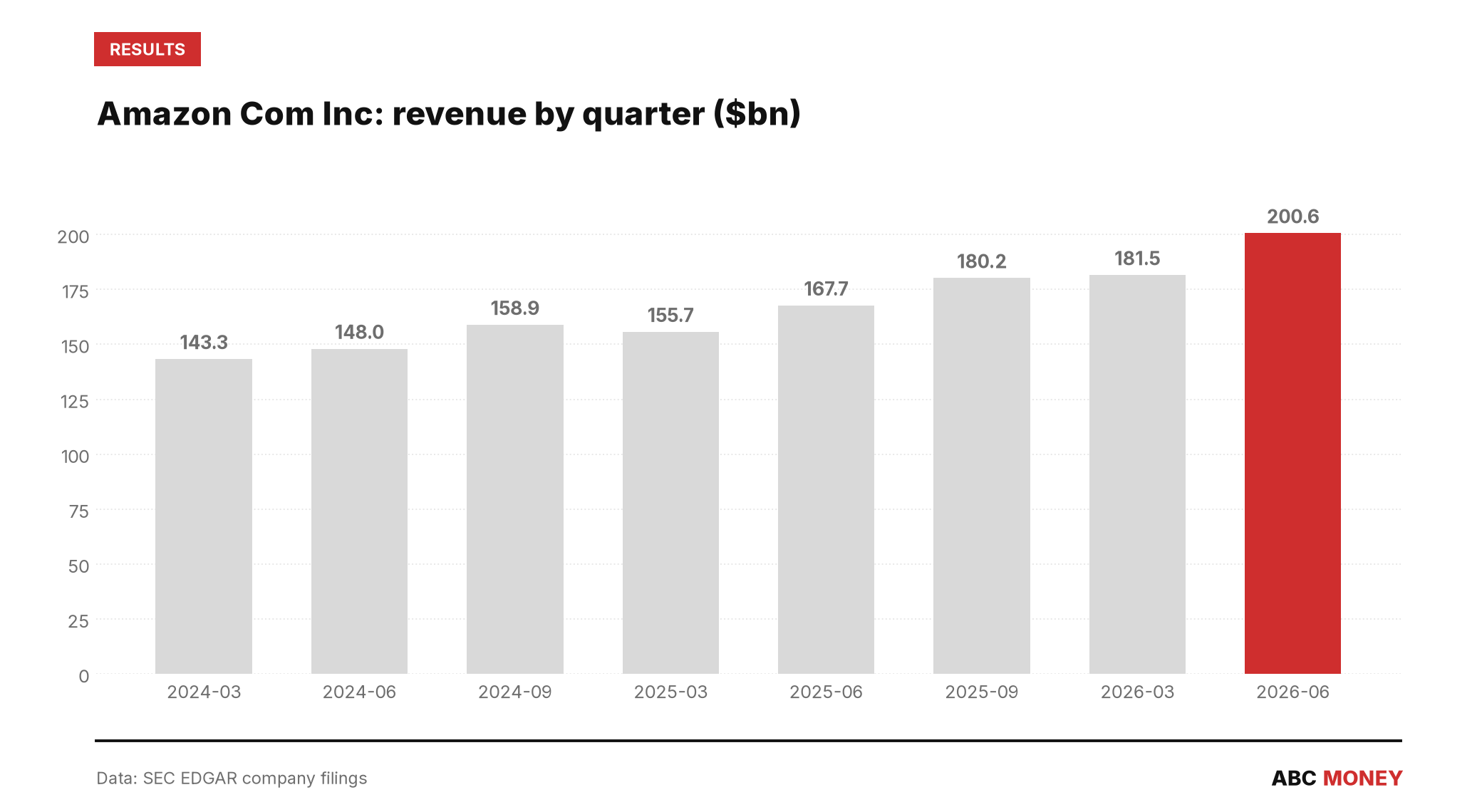
None of this appears in any Amazon filing yet – Amazon has declined to comment on the report, and the talks are described as ongoing and subject to change. That matters, because the framing of “offloading” chips invites a reading of a company under strain, scrambling to raise cash. The numbers don’t support that. Amazon’s net income climbed to $62.6bn in the second quarter of 2026, more than double the $30.3bn booked in the first quarter, on revenue of $200.6bn for the quarter. This is not a company short of cash.
What it is short of is balance-sheet room, relatively speaking, given the scale of its AI build-out. Amazon has signalled roughly $200bn in 2026 capital spending on data centres, networking kit and custom AI chips, a figure that dwarfs what most industrial companies spend in a decade. Leasing chips from an SPV rather than owning them outright keeps that hardware – and the debt used to buy it – off Amazon’s own books, even as the company carries on using every GPU inside it. The FT situates the talks within a broader pattern: similar GPU-backed financing structures, including residual-value guarantees, have surfaced around CoreWeave and Nvidia’s own financing backstops to customers, suggesting this is becoming a standard tool for funding AI infrastructure rather than a one-off fix.
The market’s verdict so far
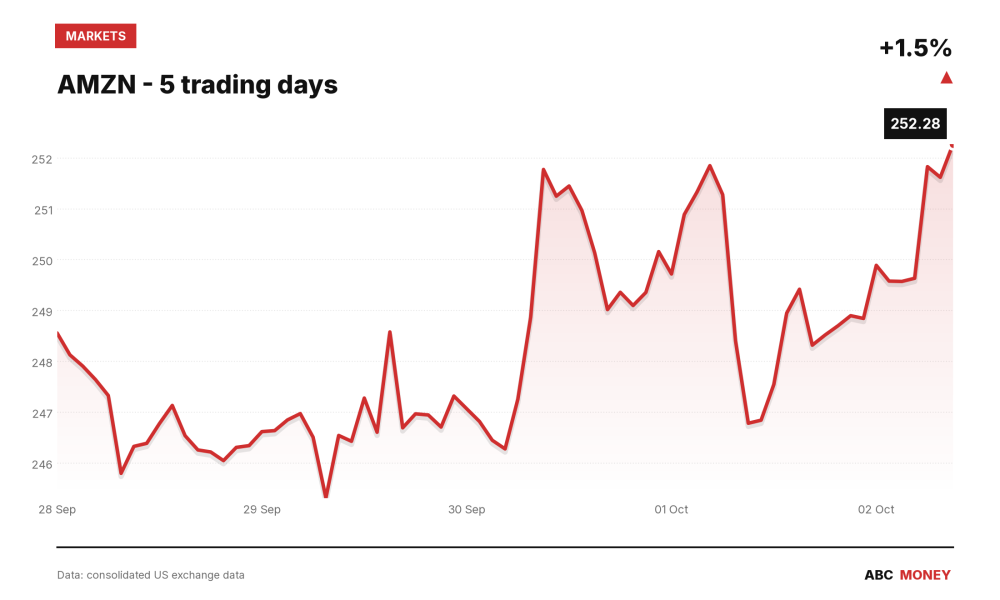
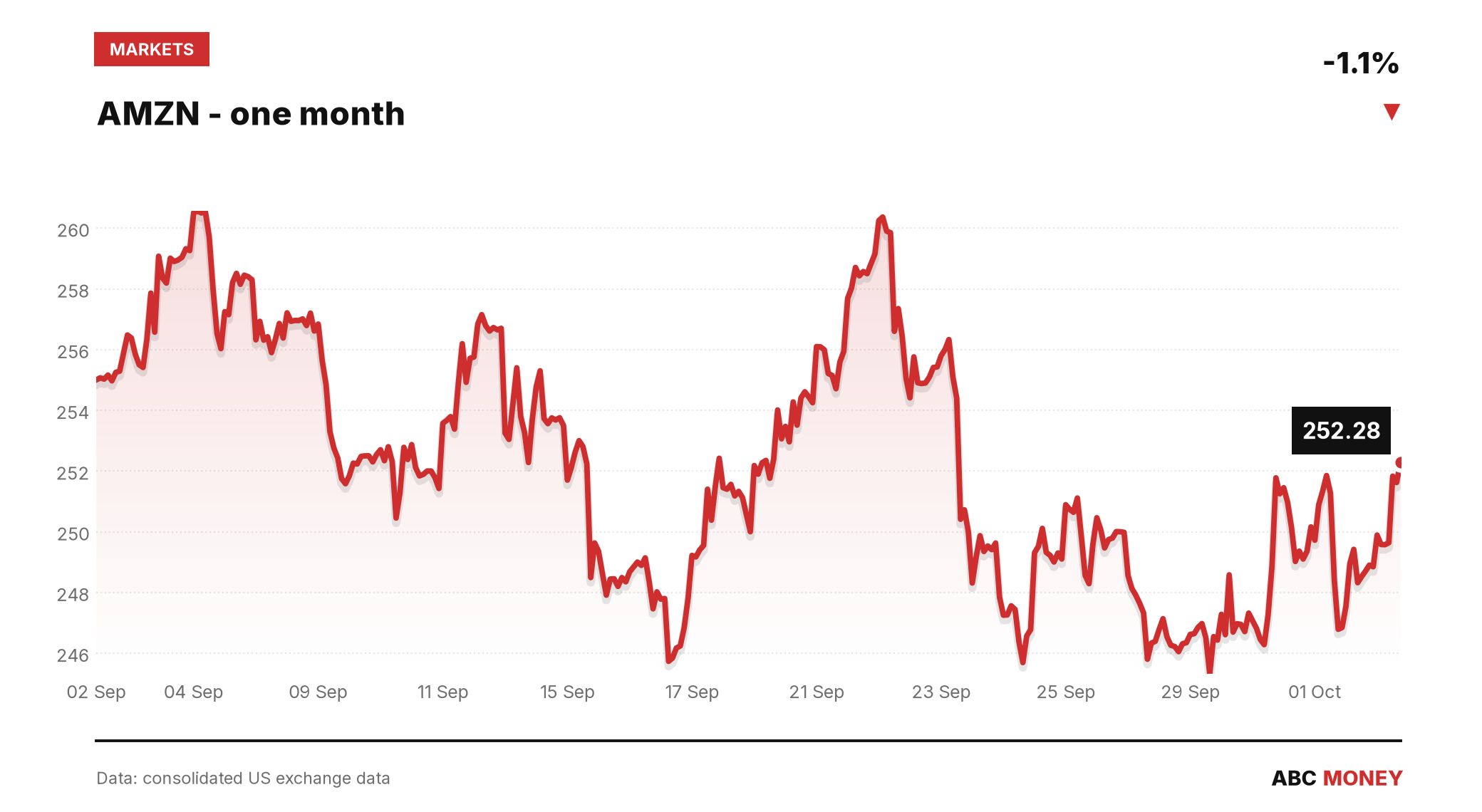
Investors, for what it’s worth, read this as engineering rather than emergency. Amazon shares traded up 1.34% to $252.18 as the report circulated, within a 20-day range of $245.32 to $260.37, and trading volume ran below the recent average rather than spiking. Bearish positioning gives the same signal: FINRA’s daily short-sale ratio for Amazon – the share of trading volume attributable to short sales, where a rising ratio can indicate growing scepticism – held in a narrow 0.237 to 0.414 band through the fortnight around the story, with no jump on the day the FT published. If the market thought this was a company straining under its own AI spending, that positioning data would likely look different.
What the structure would actually do
The mechanics matter for anyone trying to work out who bears the risk. Grace Blackwell chips depreciate quickly as Nvidia iterates its product line – last year’s flagship becomes a discounted workhorse within a couple of product cycles. An SPV investor is effectively betting that leased-out AI silicon retains enough resale or re-lease value to service the debt raised against it, a wager that has drawn scrutiny industry-wide as these structures proliferate. Pricing that debt also depends on the broader rate backdrop: the 10-year US Treasury yield stood at 5.29% as of 30 September, up slightly from 5.26% the prior session, and any SPV-issued paper would likely be priced off that benchmark plus a spread reflecting the residual-value risk investors are taking on.
For Amazon, the appeal is straightforward even if unconfirmed in any filing: shift the capital intensity of AI infrastructure to outside balance sheets while keeping the compute. For the investors on the other side, the bet is that Nvidia’s chips – and Amazon’s AA-rated promise to keep leasing them – hold their value for long enough to make the arithmetic work. Talks remain live, and nothing is final; the next marker will be whether Amazon confirms a structure in a filing or earnings call, or whether, as with many such reported negotiations, it quietly fades from view.
This article is for information only and is not investment advice or a recommendation to buy or sell any asset. Markets move quickly; figures are correct as sourced at the time of writing. Always do your own research before making financial decisions.



 Bitcoin
  Ethereum
  Tether
  BNB
BNB  USDC
USDC  XRP
XRP  Solana
  TRON
TRON  Lido Staked Ether
  Cardano
  Gram (prev. Toncoin)
  Avalanche