UK Businesses Must Take Note of Dubai’s AI Push
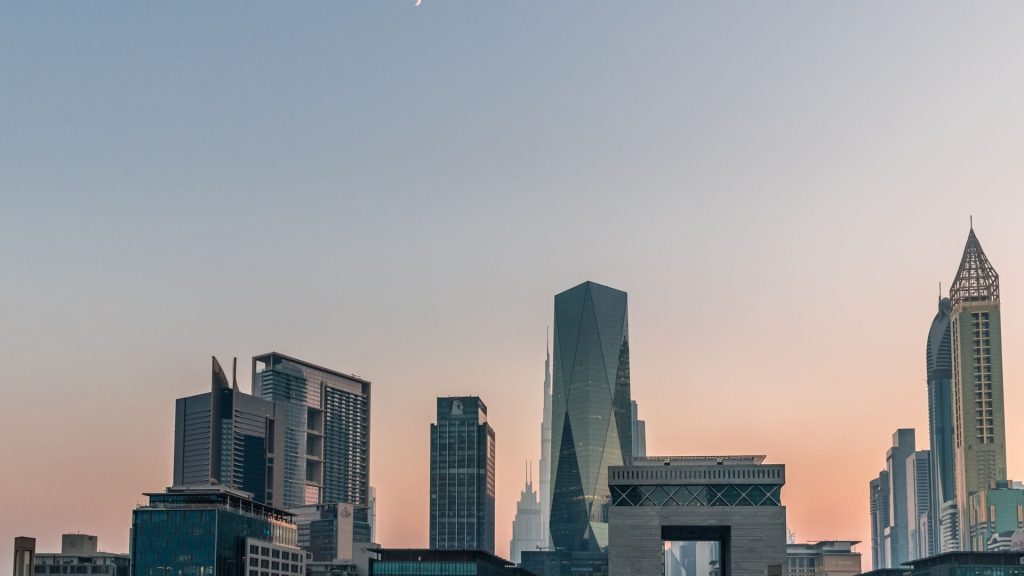
Dubai’s annual AI Festival saw a renewed push by the emirate to establish itself further as a key global base for artificial intelligence and the capital behind it.
The third edition ran at Dubai World Trade Centre under the theme ‘Where Intelligence Meets Opportunity’. Attendees came from more than 100 countries, alongside 150-plus speakers, 500 investors and 200 exhibitors, with participants including Amazon Web Services and Alibaba Cloud among others.
A Financial Centre With a Clear Plan
The festival is run by Dubai AI Campus at the Dubai International Financial Centre (DIFC). As part of its wider AI ambitions, the DIFC said in April it would become the world’s first ‘AI-native’ financial centre, a programme it says will generate US$3.5bn in economic benefits and 25,000 jobs. Its plan brings together AI tools, regulation, training and computing power for financial firms in a single integrated ecosystem.
For UK financial and AI companies, that offer builds on Dubai’s existing attractions, including fast company set-up, a common-law framework and English-language courts.
British firms already have a substantial presence in the emirate: in September 2026, free-zone operator DMCC said it was home to more than 2,258 British companies.
That presence reflects a broader shift in the commercial relationship between London and Dubai. The UAE has become one of the UK’s fastest-growing trading partners outside Europe, while British technology, financial-services and professional-services firms increasingly look to Dubai as a base for expansion across the Middle East, Africa and South Asia.
An Entrenched Appeal
Events like the Dubai AI Festival are one visible sign of a wider shift in where companies and people want to be. Many British entrepreneurs have come out in support of Dubai during a turbulent period for the region, emphasising its deep-rooted appeal, which has been built up over decades. Harry Amos, CEO of Dubai-based advisory firm Kestrel Global and a former British Army officer is one such example.
‘Dubai’s economy is not a mirage,’ Amos says. ‘It was built first on trade through Jebel Ali Port and DP World’. His account highlights the key infrastructure underpinning the city’s resilience. The emirate has spent decades diversifying away from oil, which once accounted for around half of its GDP but now represents less than 1%. Investment in ports, aviation, finance, tourism and free zones has turned it into a global services and trading hub.
That diversification is central to its appeal to mobile capital and talent. Nearly a quarter of a million British citizens now live in the UAE, many moving there with families in recent years. Henley & Partners has estimated that Britain lost about 16,500 millionaires in 2025 alone, the largest outflow recorded by any country, with Dubai among the most popular destinations.
Amos links that appeal to a deliberate economic strategy: ‘Dubai has spent decades building a marketplace designed to attract global talent, capital, and operators, supported by clear, pro-business regulation and long-term planning.’
Like many other entrepreneurs, he remains strongly optimistic about Dubai’s economic growth, praising its handling of the current regional situation. That approach, Amos notes, reinforces the confidence international entrepreneurs look for when deciding where to launch their next venture.
Dubai boasts a bold ambition to bring talent, capital and the infrastructure for growth together in one place. Its AI strategy is the latest example of a growth programme built around trade, diversification and long-term planning.
For British firms, that presents an opportunity to expand; for Britain, it raises a broader question about how to remain a place where those businesses choose to build.
Contributed content: this article was written by a third-party contributor and does not necessarily reflect the views of ABC Money. Editorial and Advertising Policy