
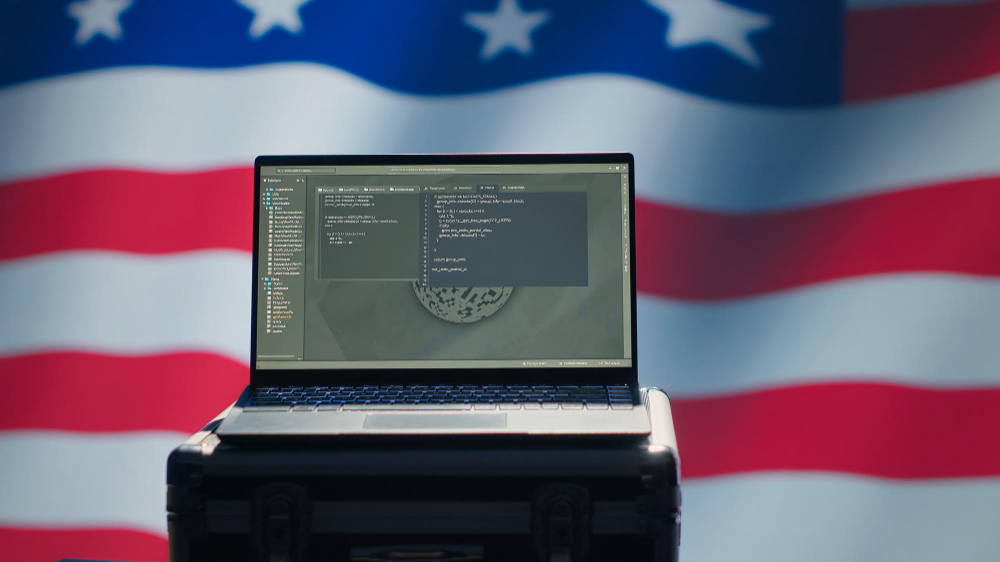
OpenAI’s Toxic Prompt Database Just Leaked—And It Includes U.S. Military Inputs, Raising Urgent Questions

In recent days, screenshots of what users called internal prompt logs—which showed how people interact with artificial intelligence systems—went viral on online forums, causing a wave of concern that felt remarkably similar to previous times when new technology revealed unexpected vulnerabilities.
With emotional weight that went beyond its technical meaning, the term “toxic prompt database” gained rapid traction, implying not only a security issue but also a greater understanding of how much sensitive thinking is now shared with intelligent systems.
| Key Context | Details |
|---|---|
| Organization | OpenAI |
| Alleged Leak | Online claims suggested a “toxic prompt database” containing sensitive prompts surfaced publicly |
| Confirmed Incident | A 2025 vendor analytics breach exposed limited profile data but not user prompts or classified content |
| Security Reality | Researchers have shown AI systems can be manipulated through prompt injection, exposing connected information |
| Military Relevance | Defense institutions actively test AI tools, but no verified military prompt leak has been confirmed |
| Why It Matters | Highlights the need for stronger AI governance, transparency, and trust as institutions adopt intelligent systems |
| Reference | openai.com/index/mixpanel-incident |
After closely reviewing the allegations, OpenAI officials explained that a previously reported vendor analytics incident only involved a small amount of profile data, guaranteeing the security and protection of chat prompts, operational requests, and sensitive data.
This distinction was crucial because prompts are more than just technical instructions; they serve as digital fingerprints that provide information about strategy, intent, and occasionally even uncertainty. These fingerprints can be especially useful for enhancing system performance.
Artificial intelligence has grown remarkably flexible over the last ten years, helping everything from hospitals to logistics teams, optimizing processes and freeing up human specialists to work on more difficult decision-making jobs that call for creativity and judgment.
These tools have proven especially helpful for defense organizations, such as the US Department of Defense, in summarizing data, increasing operational effectiveness, and analyzing information more quickly than was previously possible with manual methods.
This change has been extremely successful, allowing analysts to process massive volumes of data in minutes as opposed to days, enhancing institutional capabilities and significantly increasing accuracy and responsiveness.
Alongside these developments, however, cybersecurity scholars have brought attention to the ways in which prompt injection techniques can be used to control AI assistants by introducing hidden instructions that affect behavior in ways that system designers had not intended.
Attackers may be able to direct AI systems to divulge sensitive information by creating instructions that seem innocuous at first glance. This emphasizes the significance of creating safeguards that are both incredibly transparent and incredibly dependable.
A few years ago, I was silently impressed by how naturally a government technology advisor started asking questions that sounded more like conversation than commands as he leaned toward a demonstration screen.
Particularly inventive has been the move toward conversational computing, which lowers barriers and increases access to potent analytical tools that were previously only available to experts by enabling intuitive human-machine interaction.
Even as artificial intelligence becomes more pervasive in day-to-day operations, conversational access necessitates careful protections to preserve sensitive institutional knowledge.
The most important realization for cybersecurity experts is that prompts by themselves are not harmful; rather, risk is determined by the connections and permissions surrounding them, highlighting the significance of controlled access and careful system design.
Organizations have greatly decreased exposure risks by putting in place layered security protocols, which guarantee that AI tools function within well-defined parameters that safeguard users and institutional integrity.
Advances in AI governance over the last few years have significantly increased transparency, allowing researchers and policymakers to collaborate more closely and create systems that are both potent and responsibly run.
These initiatives are very effective at striking a balance between creativity and responsibility, guaranteeing that artificial intelligence will always be a reliable ally rather than an unpredictably dangerous threat.
AI systems are similar to a swarm of bees in many respects; each agent contributes to a larger structure while carrying out a small task on its own, producing outcomes that are far superior to what any one element could accomplish on its own.
Working continuously and cooperatively, this distributed intelligence has proven especially useful for spotting trends, evaluating patterns, and assisting with decisions that have an impact on millions of people.
Stronger security measures have made prompt handling systems much more secure, with monitoring tools that identify anomalous activity and stop unwanted access before damage is done.
These safeguards, which have developed gradually in tandem with technology, represent a wider recognition that trust must be gained via transparent design and constant dependability.
When artificial intelligence is used effectively, it supports human expertise and facilitates quicker, better-informed decisions that increase institutional efficacy and efficiency.
It is anticipated that security procedures will become even more remarkably resilient in the upcoming years, guaranteeing that intelligent systems will continue to provide advantages and uphold the trust of those who depend on them.
Technology leaders should take heart from this incident, which shows how quickly systems can adapt, get better, and become safer when problems are recognized and handled appropriately.
Organizations are laying the groundwork for decades of safe and effective artificial intelligence operations by investing in careful governance, cooperative oversight, and especially creative security measures.
These systems are developing into incredibly dependable partners through thoughtful design and responsible use, assisting institutions in working more productively, comprehending information more clearly, and proceeding with more assurance.
As artificial intelligence develops from experimental curiosity into a mature and reliable part of contemporary infrastructure, it is gradually bringing clarity to what once seemed uncertain and bolstering the systems that people rely on on a daily basis.



 Bitcoin
  Ethereum
  Tether
  XRP
XRP  BNB
BNB  USDC
USDC  Solana
  TRON
TRON  Lido Staked Ether
  Cardano
  Avalanche
  Toncoin