
The way investors respond when oil prices surpass $100 per barrel during a conflict is almost ritualistic. The phones are ringing more frequently. Later on, the trading floors remain illuminated. Old playbooks are taken out of drawers; some are genuinely helpful, while others are more akin to superstition. This scene has been replicated in the Iran war that started in late February 2026, and it’s worth pausing to consider what worked, what didn’t, and what history has always insisted on reminding us of.
Start with gold. It is an automatic reflex. The bedtime narrative that most investors learned in the 1970s and never fully let go of was “war breaks out, oil spikes, gold rallies.” However, the story misbehaved this time. After testing its February peak, gold fell nearly nineteen percent in the ensuing weeks. The causes are not enigmatic. A strong dollar is gold’s silent enemy, and real yields increased as the dollar moved closer to 100 on the DXY. The same pattern can be seen when considering the 1980 conflict in Afghanistan or even the initial stages of Russia’s invasion of Ukraine in 2022. When the dust settles, gold usually resumes its longer climb after spiking quickly and then sagging.
| Key Information | Details |
|---|---|
| Geopolitical Trigger | U.S.–Israel coordinated strikes on Iran, February 28, 2026 |
| Brent Crude Intraday High | $118.35 per barrel |
| WTI Intraday High | $112.95 per barrel |
| Daily Supply Disruption | 13.7 million barrels/day, roughly 15% of global demand |
| Strategic Reserve Release | Coordinated by the International Energy Agency — 400 million barrels from 32 member nations |
| Gold Performance | Crashed nearly 19% from its February 2026 high during the conflict |
| Bitcoin Performance | Reportedly outperformed gold by ~13% in the early war window |
| Equity Market | S&P 500 bled steadily, down roughly 4% since hostilities began |
| U.S. Dollar Index (DXY) | Climbed toward 100 during the shock |
| Strait of Hormuz Share | Roughly 20% of daily global oil flows |
| Major Research Voices | JPMorgan (Natasha Kaneva), Goldman Sachs Global Investment Research, CryptoQuant analytics |
| Historical Echo | 1973 oil crisis, 1980 Iran-Iraq war, 2022 Ukraine invasion |
In this cycle, bonds tell an unfamiliar tale. When missiles are in flight, Treasuries typically perform their bid-for-safety dance. Really, they didn’t. As oil prices increased along with inflation expectations, yields also increased. Bond traders believe that the lesson learned after 2022 has finally dawned on them: bonds are not the hedge when energy is the cause of the shock. Something is “off” in the math of this oil market, as noted by Natasha Kaneva of JPMorgan, and you can sense the same word applied to the behavior of the bond market. The previous correlations no longer hold true. Anyone with a 60/40 portfolio ought to look up from their screen after seeing that.
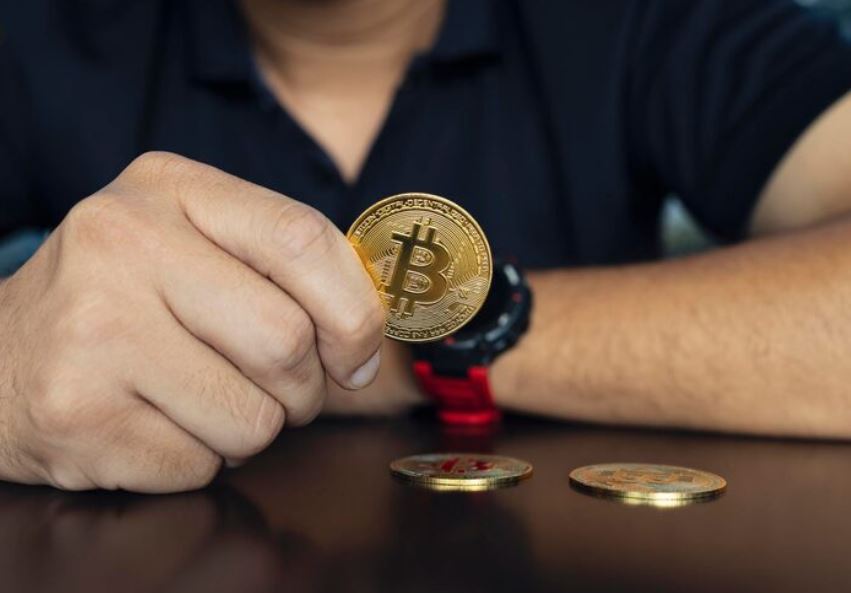
It gets interesting when it comes to Bitcoin, and I’ll be honest: I’m skeptical. For weeks, the story has been writing itself: Bitcoin held steady while stocks plummeted, even surpassing gold by about thirteen percent during the early window. Analysts at CryptoQuant have been bringing up historical charts that show oil price peaks and cryptocurrency market bottoms, such as those from October 2018, June 2022, and now this. The pattern is neat. Perhaps too neat. In its lifetime, Bitcoin has experienced precisely one and a half actual geopolitical shocks, which is a small sample size for designating it as a wartime asset. Nevertheless, it was impressive to see it weather the initial blow without panic-selling. The market took notice.
Every time I read what JPMorgan and Goldman are sending to clients, the deeper reality that emerges is that no single asset is effective in every conflict. Crater of stocks. In the same way that Brent and WTI are still about twenty dollars below their 2008 records despite supply losses close to fifteen percent of global demand, oil rallies and then frequently gives it back. The Strait of Hormuz may remain blocked for months or reopen tomorrow. Even Goldman believes that global stocks could reach all-time lows despite the extraordinary rates at which strategic reserves are being depleted—more than seven million barrels per day in April alone.
When you remove the catchphrases, what history truly says is more modest. Diversification is effective. Concentration is fatal. The investor who bet on a single thesis lost out to the one who held some gold, a small amount of Bitcoin, some energy exposure, and dry powder. As this conflict plays out, it seems as though the safe-haven hierarchy is being subtly altered. It will take years to determine which trade was the best. Seldom do we.



 Bitcoin
  Ethereum
  Tether
  BNB
BNB  USDC
USDC  XRP
XRP  Solana
  TRON
TRON  Lido Staked Ether
  Cardano
  Gram (prev. Toncoin)
  Avalanche