Bitcoin
  Ethereum
  Tether
  BNB
BNB  USDC
USDC  XRP
XRP  Solana
  TRON
TRON  Lido Staked Ether
  Cardano
  Gram (prev. Toncoin)
  Avalanche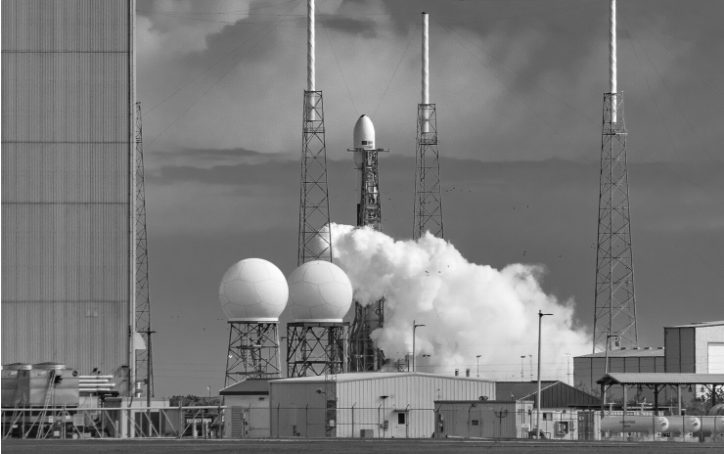
Between the news of the SEC filing and the leaked valuation figures, there’s a moment when you start to question whether SpaceX is genuinely going public or if it’s just acting like it’s going public, building tension, generating demand, and allowing the number to increase in the public’s mind before a single share is traded. The company filed its IPO documents in secret at the beginning of April, which is permissible but conveniently keeps the real financials from being examined.
According to Reuters, SpaceX made $8 billion last year on about $16 billion in sales. According to The Information, it reported a $5 billion loss on $18 billion. They can’t both be correct. That disparity, which is massive by any measure, remains unresolved.
| SpaceX — Company Profile & Key Information | |
|---|---|
| Full Name | Space Exploration Technologies Corp. |
| Founded | 2002 |
| Founder | Elon Musk |
| Headquarters | Hawthorne, California, USA |
| President | Gwynne Shotwell |
| CFO | Bret Johnsen |
| 2025 Revenue (reported) | $16–$18 billion (figures vary by source) |
| Starlink Revenue (2025) | $10.6 billion |
| Starlink Subscribers | 9.2 million across 150+ countries |
| Falcon 9 Missions (2025) | 165 (≈52% of all global orbital launches) |
| xAI Merger Valuation | $1.25 trillion (February 2025) |
| IPO Target Valuation | $1.75–$2 trillion |
| IPO Fundraising Target | Up to $75 billion |
| Google (Alphabet) Stake | 6.11% as of end-2025 |
| IPO Filing Status | Confidential filing submitted to SEC (April 2025) |
| Expected IPO Timeline | Summer 2025 |
| Primary Revenue Drivers | Starlink, Falcon 9 launches, Starship (upcoming), Direct-to-Cell |
According to reports, the roadshow will take place in early June. To pitch institutional investors and sovereign wealth funds on what they are calling the largest initial public offering (IPO) in history, executives will travel, sometimes literally by chartered plane, to facilities in California, Texas, and Mississippi. a valuation of $1.75 trillion. $2 trillion, perhaps.
According to several accounts, Chief Financial Officer Bret Johnsen is already annoyed that information is continuously leaking. He has been reminding the participating banks that this procedure was meant to remain confidential. Clearly, it hasn’t.
Starlink is what really makes SpaceX hard to ignore. With an estimated $10.6 billion in revenue and a 54% EBITDA margin in 2025, the satellite internet industry produced figures that most telecom companies would find embarrassing to compare. For the second year in a row, the subscriber base doubled to 9.2 million users in over 150 countries.
According to some analysts, Starlink will generate $120 billion in revenue with a 70% profit margin by 2040. It’s unclear if those predictions will come to pass, but the direction of travel appears plausible. In areas where fiber internet was never going to be available, such as remote Alaska or rural Pakistan, you can already find Starlink dishes on rooftops. It’s difficult to match that level of physical reach.
The story of the launch company is equally compelling. In 2025, SpaceX completed 165 Falcon 9 missions, making up about 52% of all orbital launches worldwide. When compared to conventional methods, the booster reuse rate reached 84%, resulting in a 65% reduction in launch costs.
The bored indifference of the SpaceX broadcast team as a rocket lands on a drone ship somewhere in the Atlantic is an almost banal aspect of the way Falcon 9 landings are now covered. That was science fiction a few years ago. It’s Tuesday now.
Although Starship’s commercial viability has not yet been established, PitchBook analyst Franco Granda contends that the valuation “becomes progressively easier to justify over a 5-7 year horizon as Starship commercializes.” In 2026, the first commercial payload delivery is anticipated.
If all goes according to plan, the economics of large-payload orbital delivery may change in ways that are currently very difficult to model. Within ten years, launch, which currently has a lower revenue segment, might take the lead. There’s also a chance that Starship will experience delays that cause everything to be delayed by years. These things usually do.
Alphabet’s interest in all of this is remarkably direct. Google LLC held 6.11% of SpaceX at the end of 2025, according to a filing in Alaska, where the state mandates disclosure of any stake greater than 5%. That’s about $122 billion at a $2 trillion valuation, though the xAI merger earlier this year might have somewhat diluted that amount. In any case, Google has quietly owned a significant stake in SpaceX for many years. When you’re debating whether to purchase shares at an IPO, it’s easy to forget that.
This leads to the uncomfortable part. Large IPOs have not fared well in history. The average three-month return following listing was negative 13% for the top ten U.S. public debuts by initial market value, including Alibaba, Meta, Uber, Rivian, DiDi, and others. Negative 12% is the average one-year return. Since its 2021 launch, Rivian has experienced an 84% decline. DiDi, 73%.
Since going public in 2014, Alibaba has fallen 200 percentage points behind the S&P 500, despite being a truly massive company. The outlier that succeeded, Arm Holdings, saw an 189% increase in its first year, but it is the exception that is mentioned because it is uncommon.
As this develops, there’s a sense that SpaceX could generate a lot of excitement on the first day. When it comes to going public, the brand is unique. For better or worse, Elon Musk’s name continues to influence markets. The tale of Starlink is true.
The ambition of Starship is compelling. However, the breathless roadshow, the oversubscribed book, the first-day success, and then the slow, grinding underperformance as reality reasserts itself against the pitch deck are all familiar patterns to institutional investors who have been around long enough.
Whether the $1.75 trillion target is a floor or an aspirational positioning is still up for debate. The complete financials have only been seen by a select few due to the confidential filing. Leaks have angered the CFO. The banks never stop working. Investors appear to think that this will occur soon, but in markets, the difference between belief and certainty can be costly.