
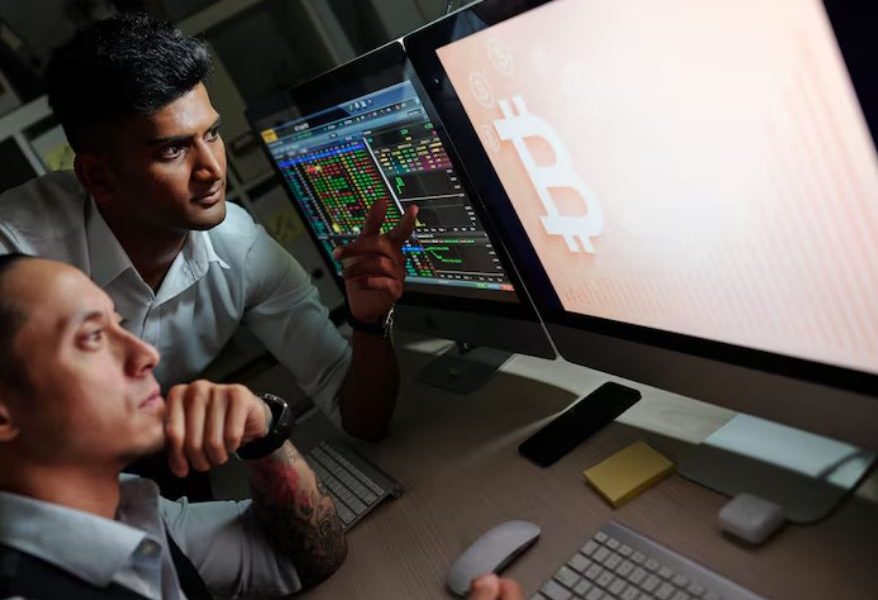
In Johar Town, Lahore, or Gulshan, Karachi, there is a specific type of apartment where the lights remain on long after midnight. The desk is small. The monitor is too big. The chair has a T-shirt draped over the backrest and a broken lumbar support. If you look over the engineer’s shoulder, you can see that the tabs are predictable: Binance, KuCoin, a Python IDE, a terminal window that streams logs, and an unclosing CoinGecko API documentation page in the corner.
According to government officials cited over the past year, there are between 15 and 20 million cryptocurrency users in Pakistan. For a nation where cryptocurrency is still technically unregulated and banking access to exchanges has been limited for years, that is an astounding number. The majority of the users engage in peer-to-peer trading on KuCoin, Binance’s P2P platform, and a changing array of smaller venues. However, the developers are a much smaller and more subdued group that operates behind those millions of retail traders. When two exchanges have different prices, engineers see a system to automate rather than a chance to press buttons.
| Detail | Information |
|---|---|
| Core Strategy | Exploiting price differences across crypto exchanges |
| Typical Arbitrage Types | Cross-exchange, triangular, funding rate, DEX/CEX spread |
| Primary Tools | Python, Node.js, REST/WebSocket APIs |
| Common Data Sources | CoinGecko API, Binance, Kraken, KuCoin |
| Programming Language Most Used | Python |
| Exchange Integration Method | API keys, REST endpoints, WebSocket feeds |
| Typical Starting Capital | $100 – $10,000 |
| Common Failure Points | Latency, rate limits, stale data, withdrawal delays |
| Pakistan Crypto Users (2025) | 15–20 million |
| Pakistan P2P Volume Platforms | Binance P2P, KuCoin P2P |
| Regulatory Body | State Bank of Pakistan |
| Typical Freelance Rate for Bot Development | $25–$75/hour (Pakistan) |
| Realistic Arbitrage Profit Margin | 0.1% – 1.5% per trade |
| Key Risk | Wallet-draining malicious code, scam “tutorials” |
| Security Warning Source | r/ethdev moderation team |
| Common Scam Narrative | “Free” arbitrage code promising daily income |
| Realistic Development Timeline | 3–6 months before live capital |
| Infrastructure Requirements | Low-latency server (AWS Singapore/Tokyo common for Pakistan developers) |
| Backtesting Tools | Backtrader, Freqtrade, QuantConnect |
In terms of money, the concept itself is very old. Arbitrage. Purchase low in one market, sell high in another, and keep the difference for yourself. The unique aspect of cryptocurrency is that hundreds of exchanges operate around the clock, seven days a week, without a single price feed. For a ninety-second window, a Bitcoin that trades for $72,000 on Binance might be worth $72,140 on a thinner exchange. Theoretically, you can create a machine that prints modest, reliable returns by multiplying that spread over thousands of trades and implementing a clean API integration.
The reality is less glamorous and more difficult than what the YouTube tutorials portray. The majority of Pakistani developers who try this don’t succeed financially. Reflecting on his own bot failure earlier this year, August Osei, a Medium writer, wrote bluntly that Twitter had taken his work and “immediately misrepresented it as a ready-made trading bot that earns $300 to $1,500 a day.” That assertion is untrue. Although Osei is not Pakistani, the pattern he outlines is universal. Delayed data is returned by free sentiment APIs. Withdrawals from exchanges take longer than promised. At the worst times, rate limits stifle requests. Backtests show that the bot looks good. In production, it bleeds.
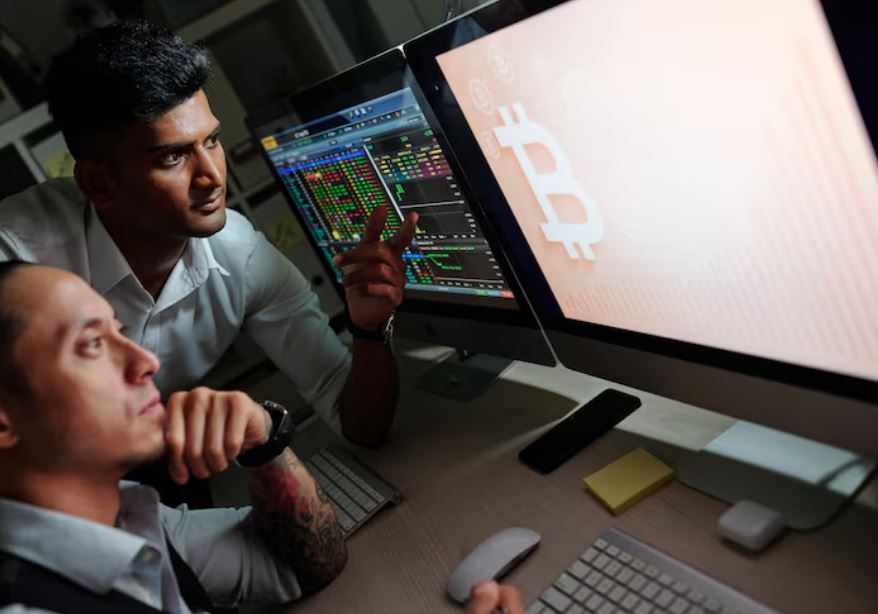
Some engineers in Islamabad, Faisalabad, and Rawalpindi are quietly successful, and they tend to have certain characteristics in common. They begin modestly. Before they deal with real money, they run paper trades for months. They are sufficiently aware of latency to rent an inexpensive virtual private server (VPS) in Singapore or Tokyo, which is closer to the exchange’s physical servers. In order to avoid the withdrawal delays that prevent cross-exchange trades, they develop triangle arbitrage strategies that move between three pairs on a single exchange. Additionally, they avoid discussing it in public. The final section is important. Posting screenshots is not necessary for those who are earning real money.
Concerning voices are frequently the ones that are louder. For months, the r/ethdev moderation team has been posting pinned warnings about “arbitrage bot” scams, which are YouTube tutorials and videos that promise passive income but drain every token from the viewer’s wallet when they copy and paste code into a phoney Remix clone. Pakistani developers are not exempt from this, either as victims or occasionally as middle-tier players offering repackaged tactics to eager foreign consumers. Sometimes it only takes three months of wallet losses and a pivot to distinguish an honest engineer from a con artist.
Speaking with those who actually construct in this field gives me the impression that the myth of easy money is causing more harm than the code could. If a real arbitrage bot is constructed correctly and operates on dependable infrastructure, it may produce modest, consistent returns that are sufficient to augment a freelance income. If the capital base is substantial and the risk management is strict, it may even be sufficient to quit a day job. It is feasible. It does occur. It’s also really difficult.
It’s difficult not to think that Pakistan’s generation of cryptocurrency developers is in a unique position as this develops. There is talent. There is the math. The infrastructure is available, including AWS, low-cost computing, and open exchange APIs. The regulatory clarity that would enable honest builders to carry out this work without having to deal with unofficial banking restrictions and the ongoing worry that every automated trade might violate some unwritten rule is what’s lacking. They continue to code for the time being. Mostly in silence. Throughout the night, the monitors continue to glow.



 Bitcoin
  Ethereum
  Tether
  BNB
BNB  USDC
USDC  XRP
XRP  Solana
  TRON
TRON  Lido Staked Ether
  Cardano
  Gram (prev. Toncoin)
  Avalanche