
The Coke Stock Story in 2026: A New CEO, a $12 Billion Cash Machine, and a Bet on Less Sugar

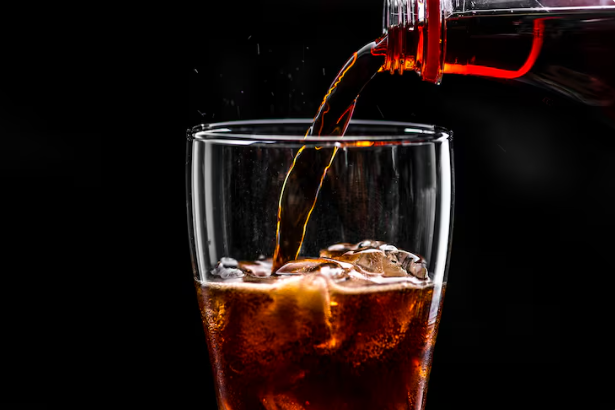
When you go through a grocery store in the South in late spring with the air conditioning turned up too high, you get a certain sense. The bottles in the Coca-Cola cooler near the register, which is nearly always close to a tiny wire rack of chips, glow slightly red under the fluorescent light. You don’t give the business behind it much thought. You simply purchase a Coke.
One of the main factors making KO an intriguing stock at the moment is its ordinariness. It’s not a tale of hype or disturbance. The narrative centers on an established business that continues to operate in the same manner, albeit with a subtle shift in leadership and a few new wagers hidden beneath.
| Category | Details |
|---|---|
| Company | The Coca-Cola Company |
| Ticker | KO (NYSE) |
| CEO | Henrique Braun (effective March 31, 2026) |
| Executive Chairman | James Quincey |
| Headquarters | Atlanta, Georgia |
| Founded | 1886 |
| Employees | 65,900 |
| Current Price (May 13, 2026) | $79.70 |
| Today’s Range | $78.30 – $80.32 |
| Market Cap | $344.63 billion |
| 52-Week Range | $65.35 – $82.00 |
| Volume (today) | 19.88M (avg. 14.42M) |
| P/E Ratio | 25.20 |
| Dividend Yield | 2.57% (recent quarterly dividend $0.53, payable July 1, 2026) |
| Q1 FY2026 Revenue | $12.47 billion (+12% YoY) |
| Q1 FY2026 Organic Revenue Growth | +10% |
| Q1 FY2026 EPS | $0.91 reported, $0.86 adjusted (+18%) |
| Global Volume Growth | +3% |
| Operating Margin | 35.0% (vs. 32.9% prior) |
| Full-Year 2026 Outlook | 4–5% organic revenue, 8–9% comparable EPS growth, ~$12.2B free cash flow |
| Consecutive Years of Dividend Increases | 64 |
| Key Pending Transaction | Sale of Coca-Cola Beverages Africa |
After fluctuating between $78.30 and $80.32 during the session, KO is currently trading at about $79.70 on Tuesday afternoon. Even though the price isn’t particularly strong, the volume is running at roughly 19.88 million shares, which is significantly more than the average of 14.42 million. Compared to other large-caps at the moment, the 52-week range—$65.35 to $82.00—tells a more subdued tale. The current market capitalization is $344.63 billion. By historical Coke norms, the P/E ratio of 25.20 is hardly inexpensive, but it also doesn’t indicate that anyone anticipates pyrotechnics. Many long-term investors find comfort in the dividend yield of 2.57%.
The shifting of the upper guard is the larger context. James Quincey’s nine-year tenure as CEO came to an end on March 31 when Henrique Braun took over. The fact that Quincey continued to serve as Executive Chairman softens the picture, but this is now Braun’s business. He rose through the operational ranks, spending a significant amount of time managing Latin America and Brazil, and most recently held the position of COO. Q1 2026, his first earnings report, was the kind of launch that gets the job done without being ostentatious.
At $12.47 billion, revenue increased by 12%. After deducting currency and divestitures, organic revenue increased by 10%. Adjusted EPS increased 18% to $0.86 while global volume increased 3%. The management increased its forecast for full-year EPS growth from 7 to 8 percent to 8 to 9 percent. Throughout the day, the stock increased by almost 6%.
The way Braun discusses the aspects of the company that investors had been most concerned about during the initial few weeks is subtly fascinating. Among them are GLP-1 medicines, the weight-loss pills that have scared investors in packaged foods over the past two years. Braun’s response is well-founded rather than defensive: according to Coca-Cola’s internal research, GLP-1 users switch to low- or zero-calorie choices rather than drinking less. He gestures to Diet Coke, Coke Zero, Fairlife, Core Power, and Smartwater.
In 2024, about 30% of the company’s worldwide volume had either no calories or very few. There are reduced-sugar or zero-sugar versions of eighteen of the top twenty brands. There is a headwind. Already, the portfolio is shifting. Compared to most consumer CEOs, he was more forthright about AI, informing shareholders that generative AI was used to create the company’s most recent Christmas marketing at a much lower cost. That kind of efficiency compounds at the marketing size of Coca-Cola.
The story also has some more delicate moments. While luxury brands like Fairlife and Topo Chico continue to expand, Braun was cautious during the Q1 call to highlight a divided consumer landscape, with lower-income buyers under significant pressure in many areas. Commodity costs for tea and coffee were deemed “manageable” by CFO John Murphy, although he noted that geopolitics may change that.
When the sale of Coca-Cola Beverages Africa closes, which is anticipated to happen in the second half, margins should rise once further. The 64-year dividend streak, which was just extended once more with the next quarterly payout of $0.53 scheduled for July 1, remains in the background as usual and is nearly too predictable to discuss.
Right now, it’s difficult to ignore the difference between Coke and the more glamorous segments of the market. With a free cash flow guidance of roughly $12.2 billion for 2026, a dividend that is about as reliable as one can find on the New York Stock Exchange, and a new CEO who, at least thus far, sounds less like a hype merchant and more like an operator, KO is sitting near record highs while mega-cap tech is being repriced due to concerns about AI spending. The real question is whether that dull quality will continue until the second half when the Africa sale closes and the FIFA World Cup activation period tests pricing power. However, there’s a feeling that dullness is just what many investors are looking for.


 Bitcoin
  Ethereum
  Tether
  BNB
BNB  USDC
USDC  XRP
XRP  Solana
  TRON
TRON  Lido Staked Ether
  Cardano
  Gram (prev. Toncoin)
  Avalanche