
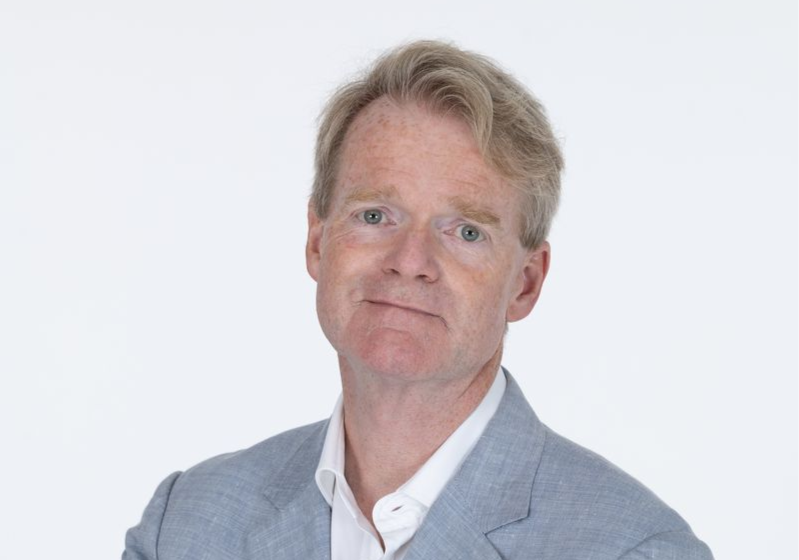
Paul Smith Built a Quarter-of-a-Billion-Pound Company Starting With £170 in a One-Bedroom Flat and Tens of Thousands of Students Have Followed His Exact Playbook

At age 17, most teenagers are thinking about what to study at university or landing their first part-time job. Paul Smith left home with £170 in his pocket and closed on his first property in London. The year was 1981. The price: just under £10,000. The flat was in terrible condition, the cheapest he could find in the city. But it wasn’t meant to stay that way.
While juggling a full-time engineering degree sponsored by Ford Motor Company, Smith worked 120 hours a week across multiple jobs. He spent 18 months refurbishing that flat with just hundreds of pounds in materials, doing the work himself, the same way he’d done with his father since the age of seven. When he sold it, the property fetched over £30,000. That early win set the trajectory for the next three decades: a career in corporate leadership by day, and a growing property portfolio by night. It wasn’t until 2014, 33 years after buying that first flat, that Smith founded Touchstone Education to teach others the wealth-building principles he’d quietly practiced for most of his adult life.
From Engineering Student to Managing Director
Smith’s route into property wasn’t born from privilege. He grew up in a Yorkshire mining village, the eldest of four children in a single-income household. His father, a teacher, refurbished houses on the side to support the family. By age seven, Smith was already taller than his mother and big enough to help with the work. He grew to 6 feet tall by age 11 and spent his childhood learning how to strip wallpaper, paint walls, and fix what was broken.
Despite earning a place at Oxford to study physics and philosophy, Smith turned it down. He wanted to make things, to work with his hands. He chose mechanical engineering instead and secured sponsorship from Ford. The degree structure alternated six months in university with six months in a factory. On his first day at the Ford engine plant in Dagenham, the superintendent told him he’d be running two production lines and managing 60 men. Smith was 17 years old and had no idea what a conrod or camshaft was. He learned fast. That early exposure to high-pressure environments, to making decisions without all the information, shaped how he approached every business move that followed.
After graduating, Smith climbed the ranks of British industry. He spent nine years at Cadbury, moved into an operations director role at Whitbread, and eventually became Managing Director of Allied Distillers, a multi-billion-pound business operating across 26 sites in more than 100 countries. But throughout it all, he never stopped investing in property. He lived by a rule he still teaches today: don’t leave your day job until your property income is at least three times your salary. For Smith, that discipline meant working both sides for two decades before stepping away from corporate life entirely.
Building the Portfolio That Came Before the Business
Between the ages of 17 and 39, Smith built a property empire while maintaining full-time employment. He refurbished homes, reinvested the profits, and moved into commercial property, serviced accommodation, and multi-unit residential buildings. By his late 30s, after being made redundant for the second time in his career, he had the financial cushion to focus entirely on his own ventures. He and his wife, Aniko, launched businesses in digital marketing, whisky bottling, and property services. They bought companies, scaled them, and sold them. The property portfolio continued to grow in the background, generating passive income that required little day-to-day involvement.
By 2010, Smith had reached a point most people dream about: enough passive income to step back entirely. He spent four years traveling, spending time with his children, and helping friends and family with one-on-one property guidance. But the guidance was free, and free education, as Smith learned, produces free results. People didn’t value it. They didn’t take action. In 2014, he and Aniko made a decision. If they were going to teach this, they’d formalize it, scale it, and charge for it. Touchstone Education was born.
The flagship offering, a two-day online course called Wealth Through Property, covers multiple income streams within property investment: lease options, rent-to-rent, deal packaging, joint ventures, serviced accommodation, and commercial property. The entry point is accessible. The curriculum is built around Smith’s core belief that property is not the end goal, but the vehicle that earns you the right to invest in other asset classes. For students who want deeper support, Touchstone offers Wealth Academy, a 12-month intensive program with six hours of live coaching per week, full course access, quarterly in-person events, and a substantial money-back guarantee if participants don’t generate equivalent returns in additional income during the first year.
The Three-Legged Milking Stool and the Mission to Create One Million Millionaires
Smith’s teaching philosophy is built on what he calls the three-legged milking stool: multiple streams of income that protect you if one fails. Relying solely on a job, no matter how senior or well-paid, leaves you vulnerable. Redundancy, in his view, is not a question of if, but when. He was made redundant twice early in his career, once at Ford and again at Rowntree. Those experiences taught him that security doesn’t come from a salary. It comes from owning assets that produce income without requiring your time.
Today, Touchstone Education is a multinational company that has trained tens of thousands of students across more than 150 countries. The collective value of their property portfolios is in the billions. The company holds thousands of top-tier reviews on Trustpilot and operates with a near-perfect customer satisfaction rating. Smith no longer delivers most of the training himself. He appears online for an hour or two each month, but the business is run by a very strong and experienced team of trainers and support staff. The model is designed to scale, to reach people Smith will never meet in person, and to deliver outcomes that don’t depend on access to the founder.
Smith’s stated mission is to create one million millionaires. Not through one-on-one mentorship, but through systems, courses, and community that allow ordinary people to follow the same path he walked. He doesn’t call himself a property guru. He views his role as a guide for wealth creation, protection, and legacy. And he’s clear about the limitations of his model: it only works for people who are ready. “When the student is ready, the teacher will appear,” he often says, quoting a lesson from a close friend. Touchstone isn’t built for people looking for a shortcut. It’s built for people willing to work both sides, hold a job and build assets, until the assets outpace the salary by a factor of three.
From Scotland to Monaco, and Why Money Is Like Oxygen
Smith and his wife moved to Monaco several years ago. The decision wasn’t about tax optimization, he’s quick to clarify. If saving tax were the goal, he says, he would have moved to Antigua or Dubai. Monaco offered something else: what he calls the three C’s. Culture, climate, and cuisine. Smith has been a Formula 1 fan for decades. The first time he attended the Monaco Grand Prix, he bought the cheapest ticket available and watched from the road up to Le Rocher, eating food from vans and looking out over the harbor. He fell in love with the principality that day. It took 25 years, but he eventually made the move.
Living in Monaco also solved a different problem. When Smith was still based in a small village in Scotland with a population of 1,800, he had no financial peers. He had built significant wealth, but no one around him was navigating the same challenges or opportunities. Monaco gave him a community of people who understood the life he was building. It gave him access to relationships and networks that didn’t exist in his former environment. And it gave him a base from which to continue running Touchstone, overseeing his international portfolio of companies, and expanding his wealth, maintaining and growing a net worth of £100m+ net worth across the UK, EU, and beyond.
Smith’s view on money is pragmatic. He compares it to oxygen. You don’t think about oxygen until it’s running out. Once you have enough, it stops being the focus. The real work, he says, begins after the money problem is solved. That’s when you can decide how you actually want to live. Money doesn’t buy happiness, but it removes the stress that blocks it. The biggest killer in the world, Smith argues, is stress. And the biggest cause of stress is money, or the lack of it. Wealth, in his definition, is not being rich. Rich means exchanging time for money. Wealth means owning assets that generate income without requiring your time. That distinction drives everything Touchstone teaches.
What Comes After £100m+ net worth and Tens of Thousands of Students
Smith still owns the estate agency business he launched years ago, the letting agency, the solicitors’ firm, the property management company, and the publishing arm. Touchstone Education is one part of a much larger structure. He doesn’t position himself as someone who operates in the day-to-day weeds of a property business. Instead, he acts as the architect of an international portfolio of companies, viewing his role as a guide for wealth creation, protection, and long-term legacy.
For Smith, the goal was never just about acquiring buildings; it was about securing the financial oxygen needed to live life on his own terms. Whether he is overseeing his businesses, analyzing the economic landscape, or filming content from his base in Monaco, the core philosophy remains unchanged. He built his £100m+ net worth not by taking reckless gambles, but by applying disciplined, structured principles over decades.
Touchstone Education exists to share that exact framework. However, Smith is always quick to remind his audience that his results are absolutely not typical, and there is no chance of replicating them without the right education, support, and guidance. There are no shortcuts. No one is coming to save you, and a salary alone will not protect you. But for those willing to learn the rules of wealth and put in the work to build multiple streams of income, the opportunity to build a life entirely free from financial stress is very real.


 Bitcoin
  Ethereum
  Tether
  BNB
BNB  USDC
USDC  XRP
XRP  Solana
  TRON
TRON  Lido Staked Ether
  Cardano
  Gram (prev. Toncoin)
  Avalanche